
Lieferung heute & morgen

Qualitätsgarantie

Willkommens-Angebote freischalten: KOSTENLOSE Lieferung | Bis zu 80 % RABATT | Kostenlose 30-Tage-JoyPlus-Testphase
App herunterladen
Biodegradable paper plates are practical for barbecues, picnics, birthday parties and buffets because they reduce washing-up. At the same time, disposable plates vary considerably in terms of material, strength, coating and disposal. A large pack is not automatically the right choice: a small dessert plate may be unsuitable for a main meal, while a deep bowl takes up unnecessary space when serving dry snacks.
The following criteria will help you assess marketing claims and choose the right option for your occasion.
This term initially describes a material property, but it does not automatically mean that the plates will completely break down in a home compost heap. The material, coating and local disposal regulations are all important. Sugarcane paper plates made from bagasse are often marketed as biodegradable or compostable. However, after use, food residues, grease and regional waste regulations may affect which disposal method is appropriate.
Before buying, you should therefore check the information on the product page and packaging. In particular, look for details about material, compostability, coating and disposal after use.
Very thin plates can bend or lose their shape when used with sauces, dressed salads or hot food. A grease-resistant surface does not necessarily prevent the plate from becoming soggy if it is left holding food for a long time. For barbecues, catering and buffets, models with a sturdier fibre structure or increased material thickness are therefore a better choice.
For biodegradable paper plates made from sugarcane fibre, the specific product description is more important than a general sustainability claim. Terms such as “sturdy”, “oil-resistant” or “leak-proof” should be supported by details of the intended use.
Disposable plates with a diameter of 23 cm are generally suitable for main courses, side dishes and larger portions. For cake, fruit or small snacks, however, 15 cm paper plates are sufficient. Deep disposable bowls with a capacity of 500 ml are designed for soups, stews, desserts or salads.
The quantity should also match the number of guests. Disposable plates in packs of 50 are practical for larger celebrations or several events. For a smaller household, 20 plates may be more economical and take up less storage space.
Sugarcane fibre, also known as bagasse, is made from the fibrous residue left over from sugarcane processing. These plates are often offered as an alternative to conventional plastic plates. For your purchasing decision, however, specific information about food use and the surface is what matters.
Look for:
A grease-resistant surface can be useful for barbecued food, chips or cream-topped cake. For soups and liquid foods, deep disposable bowls with a capacity of 500 ml are usually more practical than flat plates.
The specification “23 cm disposable plate” describes the outside diameter and does not automatically indicate the usable surface area. A high rim or compartments can reduce the available space. For main courses, barbecues and catering, flat plates with a wide usable surface are often practical. A 15 cm plate, on the other hand, is more suitable as a party plate for desserts, finger food and small portions.
Multi-compartment plates keep side dishes, salad and the main course separate. This can be helpful at buffets, for takeaway meals and at catering events when different foods should not mix.
For disposable bowls, the capacity should match the dish. A 500 ml bowl may be sufficient for a portion of soup or a salad; for very large portions, it is worth checking the actual internal dimensions and rim.
For planning quantities:
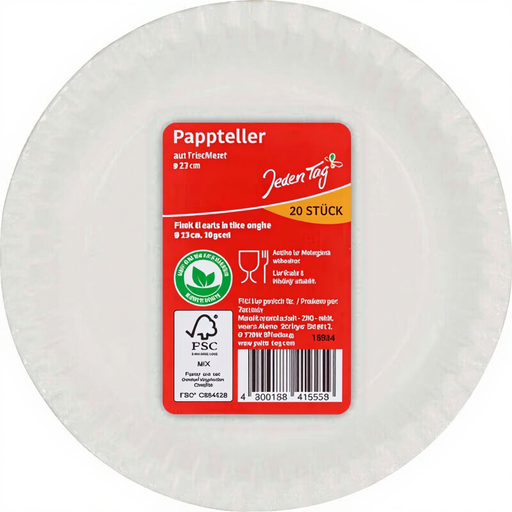
Why this product suits this profile: The pack contains 20 white paper plates with a diameter of 23 cm, making them suitable for smaller celebrations, picnics or occasional everyday use.
The clearly stated size and quantity make it easier to plan the right amount. According to the product description, the plate is intended for hot and cold food as well as greasy foods, but not for microwave use or boiling liquids.
23 cm diameter, 20 plates per pack and a food-safe inner coating according to the product details.
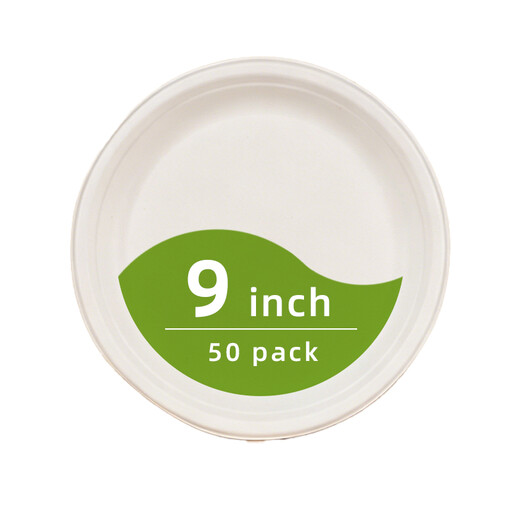
Why this product suits this profile: The 50 sugarcane paper plates are designed for larger barbecues, birthday parties and picnics with several guests.
The sugarcane fibre material specification addresses a common area of uncertainty with disposable tableware. According to the product description, the plates are intended for hot and cold food at picnics, birthday parties and barbecues.
23 cm diameter and 50 plates per pack; the product is described as a biodegradable sugarcane paper plate.
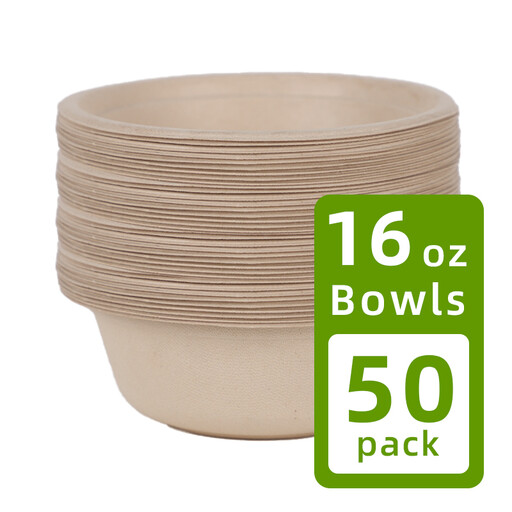
Why this product suits this profile: The deep bowls are intended for soups, stews, salads and more liquid foods at outdoor events, barbecues and gatherings.
The shape and stated capacity are designed for liquid food. The product details mention leak protection and heat insulation; however, the bowls should still be used within the manufacturer's guidelines.
500 ml capacity and 50 bowls per pack; described as a sugarcane fibre product designed to help prevent leaks.
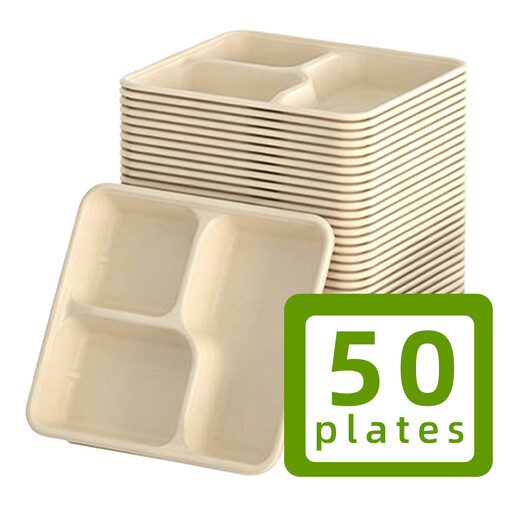
Why this product suits this profile: The three separate compartments are ideal for buffets, catering, takeaway meals and menus with several components.
The compartments stop sauce, side dishes and the main course from running into one another. Before buying, compare the 21.6 × 23.7 cm format with the space available.
Three compartments, sugarcane fibre and 50 plates per pack; according to the product description, they are oil-resistant and intended for catering and buffet services.
We have put together a complete, regularly updated list of products that fully meet these strict selection criteria and the safety regulations applicable in the EU.
That depends on the individual product. Many sugarcane paper plates are described as suitable for hot and cold food. For boiling liquids, very greasy dishes or food left on the plate for an extended period, you should follow the manufacturer's specific instructions. For soups, deep disposable bowls with a capacity of 500 ml are generally more suitable than flat plates.
The correct disposal method depends on the material, product labelling and the requirements of the local waste disposal provider. “Biodegradable” does not automatically mean that a plate belongs in the food waste bin or home compost. Food residues and coatings may affect disposal. You should therefore check the packaging instructions and local council regulations.
For a party, we recommend at least one plate per planned meal and guest. At a buffet, barbecue or longer picnic, additional plates are useful, particularly if the main course, dessert and snacks are served separately. For larger groups, disposable plates in packs of 50 are a good option; for smaller gatherings, packs of 20 may be sufficient.