
Lieferung heute & morgen

Qualitätsgarantie

Willkommens-Angebote freischalten: KOSTENLOSE Lieferung | Bis zu 80 % RABATT | Kostenlose 30-Tage-JoyPlus-Testphase
App herunterladen
Biodegradable disposable plates are a practical alternative to conventional plastic tableware for barbecues, picnics, birthdays, catering and larger family celebrations. However, the label alone does not protect you from making the wrong purchase. The material, strength, dimensions, heat resistance and correct disposal method are all important.
Our selection is aimed at private hosts, families, catering businesses and event organisers looking for hygienic, functional and plant-based party tableware.
The terms biodegradable, compostable and “made from plant fibres” do not mean the same thing. Sugarcane or bagasse plates may be compostable under suitable industrial conditions. Whether they can go in your food-waste bin or home compost depends on local regulations and the product’s specific labelling.
You should therefore check the following before buying:
A low price per plate can be misleading if the plates are too small or too flimsy for their intended use. A diameter of 15 cm is often sufficient for desserts and snacks. Main courses, salads and barbecue sides usually require around 23 cm or more.
For catering and buffet services, 3-compartment plates can be useful because sides, the main course and salad can be served separately. This reduces the need for additional packaging, although it is not necessary for every type of dish.
Hot, liquid or particularly oily foods place greater demands on disposable plates. A plate may be suitable for warm food without automatically being approved for use in a microwave, oven or for extended serving times.
When choosing microwave-safe disposable plates, follow the relevant manufacturer’s instructions. The duration and intensity of heating may also be important. Open flames, barbecue grates and ovens should generally be avoided with disposable plates unless their use is expressly permitted.
Sugarcane plates and bagasse plates are made from the fibrous residue left over from sugarcane processing. They are lightweight, stackable and often available for both hot and cold food. Even where products are described as “oil-resistant” or “water-resistant”, you should check that these properties are expressly stated in the product description.
Bamboo plates and disposable plates made from plant fibres differ considerably in how they are used. Bamboo-fibre products are often supplied in larger packs and are suitable for events with many guests. Reusable plates made from bamboo or dried palm leaves, on the other hand, usually need to be washed by hand and are not automatically disposable tableware.
The following guide sizes can help you choose:
A raised rim can be useful for sauces and liquid foods. Divided sections are practical when you want to keep different foods separate.
When reading a product description, details such as sturdy construction, oil-resistant, water-resistant and “suitable for hot and cold food” are useful points of reference. This is particularly important for barbecues and catering, where the plate should not start to bend as soon as it is lifted.
For very moist foods, it is advisable to carry out a quick practical test using a small portion. This allows you to check whether the shape, rim height and strength are suitable for your menu before placing a larger order.
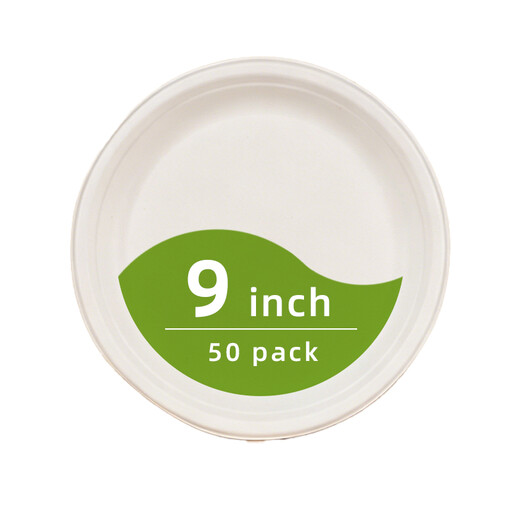
Why this product suits this profile: This pack of 50 sugarcane plates, each measuring 23 cm in diameter, is designed for typical main courses at private celebrations, picnics and barbecues.
The clearly stated size prevents you from accidentally buying a small dessert plate for complete meals.
50 plates, sugarcane construction and stated suitability for hot and cold food.
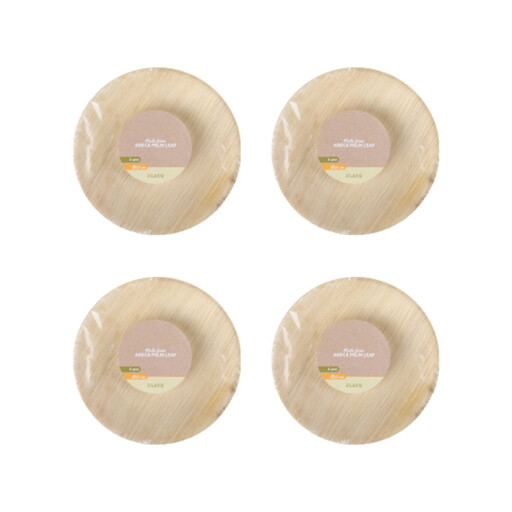
Why this product suits this profile: These plates made from dried palm leaves are designed for smaller gatherings, natural table settings and repeated use at home.
The product details state that the plates are suitable for microwaves and dishwashers, while also recommending careful handling.
23 cm diameter, stackable design and a natural palm-leaf texture.
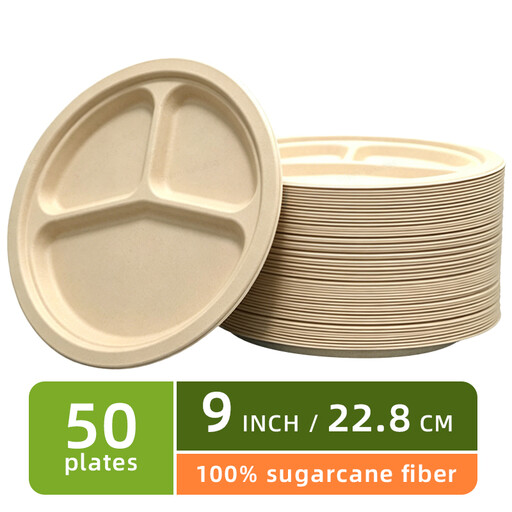
Why this product suits this profile: The three-compartment design and pack size are ideal for catering, buffets, takeaway and events serving a variety of dishes.
Separate compartments help prevent side dishes from mixing, while the product name also indicates oil-resistant properties.
50 bagasse plates with three sections and a 23 cm diameter for portioned meals.
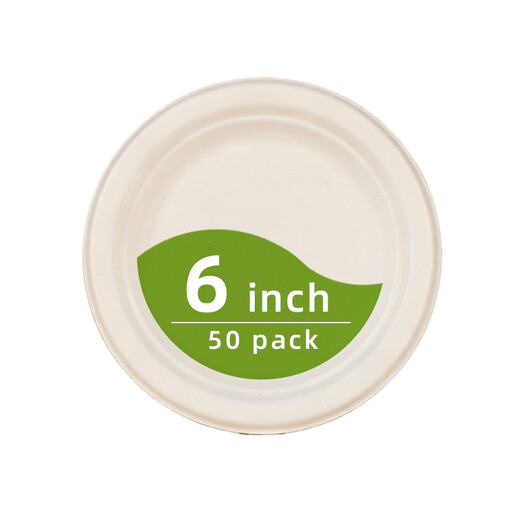
Why this product suits this profile: With a diameter of 15 cm, these plates are suitable for cake, fruit, snacks and desserts at birthdays, picnics or afternoon tea gatherings.
The compact size prevents small portion plates from being unnecessarily allocated for main courses.
50 plates, sugarcane construction and suitable dimensions for smaller portions.
We have put together a complete, regularly updated list of products that fully meet these strict selection criteria and the safety regulations applicable in the EU.
This depends on the material and the information provided for the specific product. Sugarcane and bagasse plates are often marketed for hot food. However, with very hot, liquid or oily dishes, you should still check the properties expressly stated by the manufacturer. For microwave use, only the approval given for the specific product applies.
They are normally designed to last for one meal when used as disposable tableware. Their actual serving time depends on the temperature, moisture, weight and fat content of the food. For example, a 15 cm dessert plate is not designed for a heavy barbecue meal. Reusable bamboo or palm-leaf plates can be used for longer, but must be cleaned and stored according to the manufacturer’s instructions.
To calculate the cost, compare the pack price, number of plates and required plate size. For an event, you should also allow for spare plates for second helpings, damage and additional guests. Small dessert plates can supplement your tableware, but they do not replace plates that are large enough for main courses. You should also check the correct disposal method in advance against local requirements.