
Lieferung heute & morgen

Qualitätsgarantie

Willkommens-Angebote freischalten: KOSTENLOSE Lieferung | Bis zu 80 % RABATT | Kostenlose 30-Tage-JoyPlus-Testphase
App herunterladen
Biodegradable disposable plates are a practical solution for picnics, parties, catering and takeaway. However, terms such as “sustainable”, “compostable” and “eco-friendly” do not automatically describe the same properties. If you focus only on the packaging or an attractive natural design, you may end up buying plates that become soft when used with hot food, are unsuitable for your preferred disposal method or are the wrong size for the occasion.
The following points will help you assess marketing claims objectively and choose sustainable disposable tableware that is suitable for its intended use.
A plate may be made from bamboo fibre, sugarcane or other plant fibres and biodegrade under suitable conditions. However, this does not necessarily mean that it can be processed in a home compost heap or disposed of in the food-waste bin. The manufacturer’s information, local disposal regulations and any relevant certification are the deciding factors.
When choosing compostable plates, check the following:
If specific information is missing, the plate should not automatically be disposed of in the food-waste bin.
Bamboo fibre plates, sugarcane plates and plates made from dried palm leaves differ in strength, surface finish, moisture resistance and heat tolerance. Products within the same material group can also vary considerably.
A sugarcane-fibre plate may be suitable for moist or oily food, while the product information for a bamboo-fibre product may state that it must not be used in a microwave. Conversely, some sugarcane plates are microwave-safe but are not intended for use in an oven or over an open flame.
A 50-pack of disposable plates may initially seem efficient for larger events. However, catering with several courses often requires different sizes and shapes. Small plates are suitable for desserts or snacks, while main courses generally require a diameter of around 22 to 26 cm. For meals with side dishes, divided plates or compartment trays are often more practical than a simple, flat plate.
Look for clear material information such as bamboo fibre, sugarcane fibre or bagasse or dried palm leaves. For direct contact with food, the product information should also explain the intended use.
“Biodegradable tableware” is not automatically suitable for every temperature. Information about hot, oily or liquid food is particularly important for takeaway, food trucks and catering. With coated paper plates, check the type of coating, as this may affect how the product can be disposed of.
For private use and disposable party plates, these guidelines are helpful:
A 9-inch plate is approximately 22.5 cm. A 10-inch plate is around 25.4 cm. When ordering for catering, you should also check that the plates, lids and transport boxes are compatible with one another.
Microwave-safe paper plates or fibre plates must be explicitly labelled as microwave-safe. This property does not automatically apply to bamboo-fibre plates. According to the product information, the RuiBamboo Disposable Bamboo Fiber Tray 43oz 5-Comp 50Pack, for example, is not intended for use in a microwave or at high temperatures. According to its product information, the Rui bamboo Disposable Bamboo Fibre Bento Box 36oz 50pack is suitable for reheating in a microwave, but not for use in an oven or over an open flame.
Reusable natural-fibre products have different care instructions. Plates made from bamboo or palm leaves may be intended for long-term use and therefore do not fall into the category of traditional disposable plates. Washing them by hand can extend their service life.
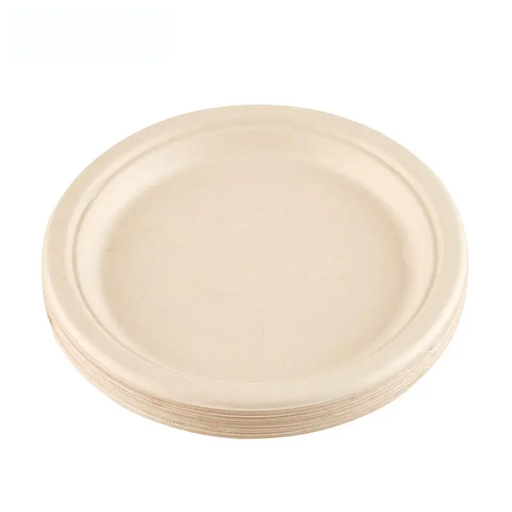
Why this product suits this profile: These 22.5 cm sugarcane-fibre plates are sized for smaller celebrations, picnics and everyday use at home. According to the product information, they are water- and oil-resistant and microwave-safe.
The product description clearly states the material, diameter and microwave suitability. This makes it easier to match the plates to your planned menu.
22.5 cm diameter; information on water and oil resistance and microwave use.
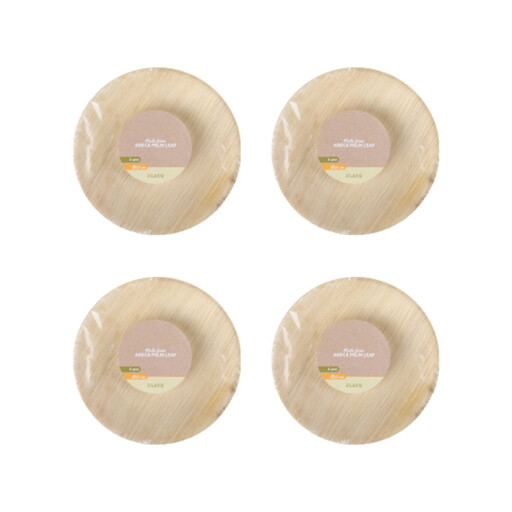
Why this product suits this profile: This set of 4 made from dried palm leaves is suitable for households that prefer a natural serving design and do not need a large quantity. With a diameter of 23 cm, the plates are suitable for main courses, salads and desserts.
The product information explicitly states that the plates are suitable for use in a microwave and dishwasher. At the same time, hand washing is recommended to protect the material.
23 cm diameter; stackable; each piece has a natural texture.
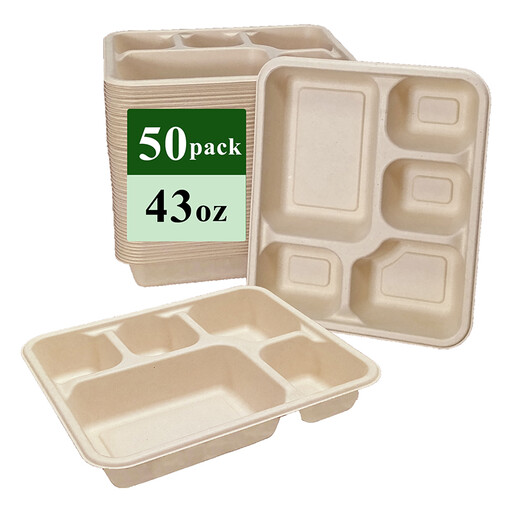
Why this product suits this profile: The 50-pack with five compartments is designed for catering, food trucks, takeaway and larger events where different foods need to be served separately.
The product information clearly states that it is for single use, has five compartments and is not microwave-safe. This helps prevent planning mistakes when serving hot food.
43 oz capacity; five separate compartments; 50 pieces per pack.
We have put together a complete, regularly updated list of products that fully meet these strict selection criteria and the safety regulations applicable in the EU.
Before ordering biodegradable disposable plates, compare the following points:
For restaurants and caterers, storage space, stackability, delivery quantity and compatibility with transport packaging are also important. Private households, on the other hand, can focus more on size, occasion and available disposal options.
This depends on the material and the information provided for the particular product. Sugarcane-fibre plates are often marketed for warm and moist food. However, this does not constitute a general approval for all uses. Check the information about temperature, microwave use and liquid resistance before buying.
Not necessarily. Many products require industrial composting conditions. The product labelling and the rules of the waste disposal service responsible for your local authority are decisive. If there is no clear approval, the plate should not automatically be placed in the food-waste bin.
Plan on at least one plate per person for each main meal. Additional plates are useful for buffets, desserts or changing courses. A 50-pack can be practical for commercial events, while smaller sets are sufficient for small private gatherings. Compartment plates or meal trays can hold several components and reduce the need for additional tableware.