
Lieferung heute & morgen

Qualitätsgarantie

Willkommens-Angebote freischalten: KOSTENLOSE Lieferung | Bis zu 80 % RABATT | Kostenlose 30-Tage-JoyPlus-Testphase
App herunterladen
Thin or fine hair, brittle nails, and the desire for a well-groomed complexion lead many adults to biotin for hair. On the market, you’ll find biotin supplements, biotin tablets, biotin capsules, liquid biotin, as well as shampoo and conditioner with biotin. However, these products differ significantly in dosage, composition, and application.
As a Joybuy Product Recommendation Officer, I filter market information according to clear, understandable criteria. What matters isn’t a flashy advertising claim, but whether a product suits your personal use, your preferred format, and your own nutritional or care needs.
Some preparations contain many times the daily reference value for biotin. However, a high dosage is not a general mark of quality. Dietary supplements do not replace a balanced diet and should be used according to the stated daily dose.
For very high-dose products, a practical note is also important: biotin can affect certain laboratory tests. If you have blood tests planned, you should inform your doctor or the laboratory. This applies, for example, to liquid preparations with 10,000 µg of biotin per serving.
A shampoo with biotin or a conditioner works externally on the hair and scalp. A dietary supplement, on the other hand, is taken orally. Both product groups serve different purposes and are not automatically interchangeable.
A conditioner can make hair easier to comb through or influence its visible fullness. Claims about maintaining normal hair in dietary supplements, however, must refer to the authorised nutrition or health claims.
“Biotin” in the name says little about the rest of the formulation. Also check:
Biotin tablets are practical for users who prefer a fixed daily routine. Capsules are also easy to dose, but may contain gelatine. If you find tablets difficult to swallow, liquid biotin or drinkable ampoules offer an alternative. However, liquid products require precise measurement and, after opening, sometimes special storage.
For fine hair, a conditioner for fine hair or a volumising mousse may also be suitable. These products primarily change the appearance and feel of the hair. This is different from internal nutrient supply.
Biotin is often combined with zinc. According to authorised EU claims, biotin contributes to the maintenance of normal hair and normal skin. Zinc contributes, among other things, to the maintenance of normal skin, hair, and nails. Vitamin C contributes to normal collagen formation for normal skin function.
These statements describe the contribution of a nutrient under the respective legal conditions. They are not a promise that a product will stop hair loss, thicken thin hair, or treat skin problems.
Follow the product instructions. For dietary supplements: do not exceed the recommended daily dose and keep preparations out of the reach of children. During pregnancy, breastfeeding, illness, medication use, or known allergies, medical consultation is advisable.
For cosmetics, avoid contact with the eyes and stop use if skin irritation occurs. A product with a strong fragrance or certain preservatives is not equally suitable for every scalp.
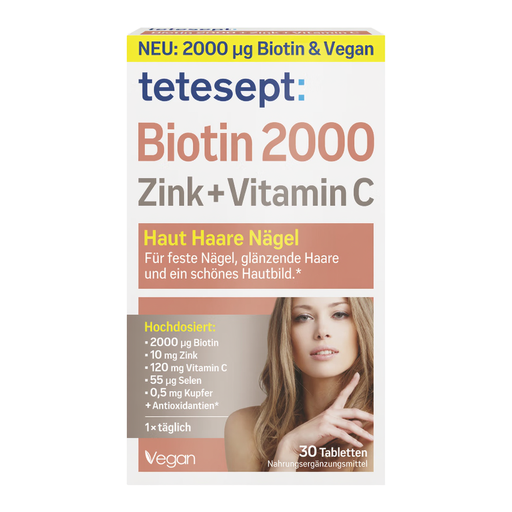
Why it fits: One tablet daily, a vegan recipe, and lactose- and gluten-free claims make it easy to start a consistent routine.
The nutrient amounts per tablet and the recommended intake are clearly stated; the combination contains zinc and vitamin C alongside biotin.
30 tablets, 2,000 µg biotin per tablet according to product information, 120 mg vitamin C, and 10 mg zinc.
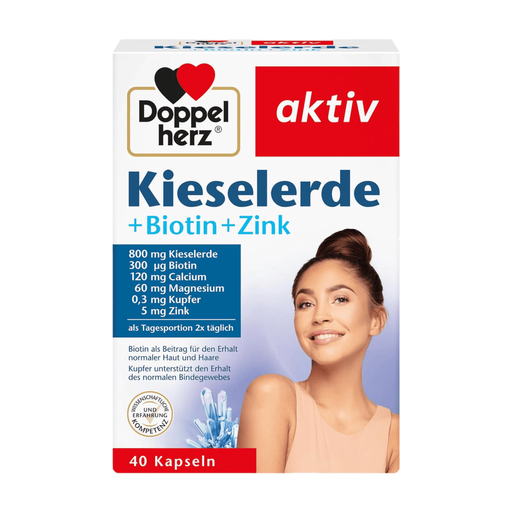
Why it fits: For adults who want to combine biotin with silicon, zinc, copper, calcium, and magnesium in a capsule routine.
The serving consists of two capsules daily and is therefore transparently stated, rather than highlighting amounts per single capsule only.
400 mg purified silicon per capsule, 0.15 mg biotin, and 2.5 mg zinc per capsule according to product data.
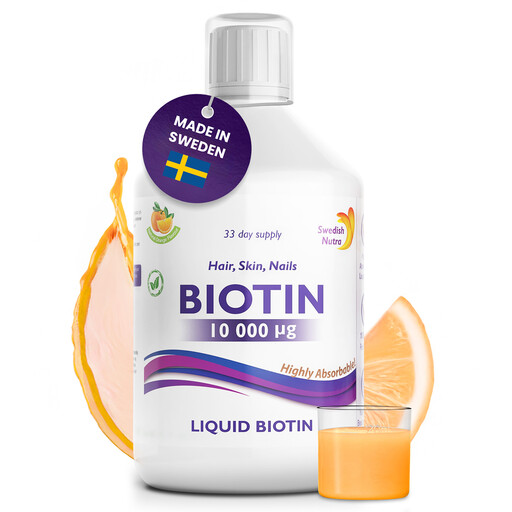
Why it fits: An option for adults who don’t want to take capsules or tablets and prefer a serving with a measuring cup.
The daily serving of 15 ml and the approximate number of 33 servings are stated. Due to the high biotin content, laboratory test notes should be observed.
10,000 µg biotin and 80 mg vitamin C per 15 ml; vegan, gluten-free, and lactose-free according to the product description.
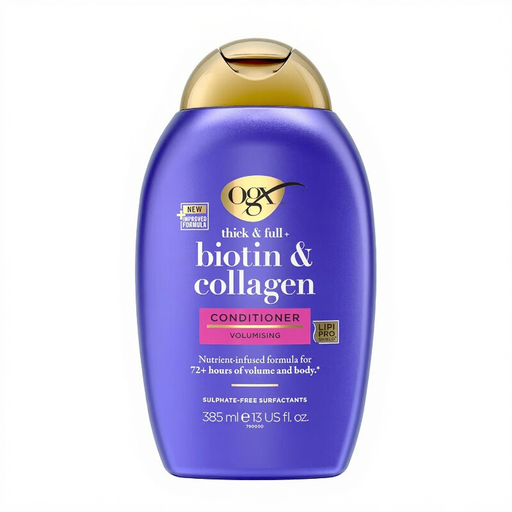
Why it fits: For people with fine hair who are looking for an externally applied care product to support a fuller-looking appearance.
Its use as a conditioner is clearly separated from dietary supplements. The product is left in the hair for 3 to 5 minutes after shampooing and then rinsed out.
385 ml content, biotin and hydrolysed collagen in the formulation, sulphate-free formula according to product information.
In our complete, up-to-date selection, you’ll find products by format, ingredients, and intended use.
The duration of use depends on the specific product and your personal situation. What matters are the instructions on the packaging and the recommended daily dose. Longer-term use is not a substitute for a balanced diet or medical clarification for persistent changes in hair, skin, or nails.
Not necessarily. Capsules and tablets mainly differ in form, excipients, ease of swallowing, and dosage. Check the ingredients list, the amount of biotin per daily serving, and possible components such as gelatine. For people who have difficulty swallowing, liquid biotin may be more practical.
For a temporary fuller-looking appearance, a conditioner for fine hair, a volumising mousse, or a shampoo with biotin may be suitable. Products like the Pantene Pro-V Perfect Volume Mousse or a biotin conditioner are applied externally. The effect depends, among other things, on hair type, styling, and method of use; a cosmetic volumising effect is not the same as a change in hair density.