Runners planning their carbohydrate intake
If you plan to take on carbohydrates per hour during longer sessions, the amount in each bar matters. A portion is just one part of your overall fuelling plan.


A portion-controlled biscuit bar can make a handy snack before or after an easy session. For long runs, however, a single bar is no substitute for a plan covering carbohydrates and fluids. What matters is the nutritional information per bar, the ingredients and whether you can tolerate that portion during training at a similar level of effort.
If you plan to take on carbohydrates per hour during longer sessions, the amount in each bar matters. A portion is just one part of your overall fuelling plan.
For a snack before or after an easy session, portion size, packaging and ingredients may matter more than a product name that sounds sporty.
If you need to avoid certain ingredients or allergens, check the specific pack. Choosing a suitable brand alone tells you nothing about all of its varieties.
First, decide whether you want an occasional snack or a portion you can plan around for a longer run. Then consider the ingredients and how easy it is to carry and eat the specific bar.
| Criterion | What to check when buying | Who it matters most to |
|---|---|---|
| Carbohydrates per bar | Compare the portion weight with the carbohydrates per 100 g, then work out the amount in each bar. | For a long run, I want to know how much each portion contributes to my fuelling plan. For around 50% of consumers, this ability to plan is the priority. |
| Tolerance and practicality | Check the fat per portion, packaging and storage instructions; try the bar during a run at a similar level of effort. | When I’m out running, I need to be able to carry and eat the portion rather than rely on how it works as an everyday snack. Around 30% of consumers prioritise tolerance and practicality. |
| Ingredients and labelling | Read the ingredients and allergen information on the pack, and check which sweeteners are used in sugar-free varieties. | If I need to avoid certain ingredients, checking the exact recipe is my first hurdle when buying. For around 20% of consumers, this check comes first. |
An article in Nederlands Tijdschrift voor Geneeskunde gives a guideline of 30–60 g of carbohydrates per hour for exercise lasting 1 to 2.5 hours. Based on the 28 g portion weight and 61 g of carbohydrates per 100 g listed by REWE, a Leibniz Pick Up! Original Choco works out at around 17.1 g per bar.
Factor the actual bar portion into your overall fuelling plan rather than working out how much you need based only on the number of bars you bring.
Fat, ingredients and how well you tolerate a product are also relevant when choosing something to eat while running. REWE lists 26 g of fat per 100 g for Leibniz Pick Up! Original Choco; EDEKA lists 29.6 g per 100 g for its GUT&GÜNSTIG chocolate biscuit bar.
Compare the figures for the portion you’ll actually eat, and try a new snack during a suitable training session.
Gullón lists isomalt and maltitol as sweeteners in Digestive Zero. The ‘sugar-free’ label tells you neither how many carbohydrates are in a portion nor how well you’ll tolerate it while running.
Read the ingredients and instructions on the pack, and don’t make your first trial of a new variety during an important run.
Online information may differ from the pack in front of you; ALDI SÜD also notes that its listed biscuit bar may vary between suppliers.
Before eating it, check the portion size, ingredients, allergens and nutritional information on the pack you’ve bought.
REWE lists Leibniz Pick Up! Original Choco as a chocolate biscuit bar, in a pack of five 28 g portions.
EDEKA describes its chocolate biscuit bar as a pack of nine individually wrapped bars.
Gullón offers a range of products for specific ingredient requirements. Digestive Zero and the wholegrain rice and chocolate variety labelled gluten-free are different types of product.
ALDI SÜD lists an organic biscuit bar in a 4 × 15 g format.
This selection includes biscuit sticks, biscuits, biscuit bars, a cereal bar and a wafer bar with stated pack or portion sizes. These are different types of product: if you’re specifically looking for an individually wrapped biscuit bar, check the format and packaging of the variety in question.
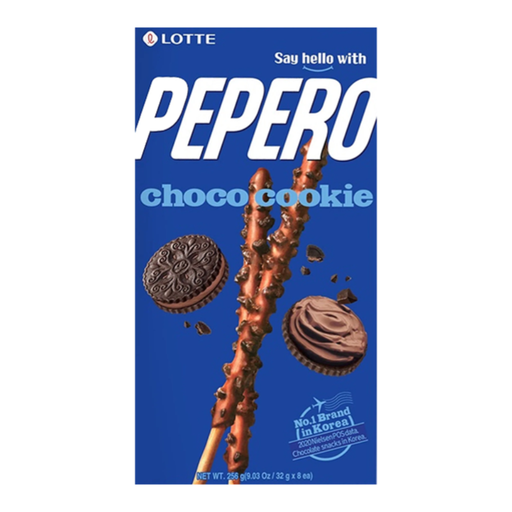 Image unavailable
A small pack of biscuit sticks may appeal if you’re looking for a snack. Before factoring them into a run, check the carbohydrates per portion and the ingredients on the pack; biscuit sticks aren’t the same as a single biscuit bar.
 Image unavailable
These biscuits could make a snack for when you’re not running. The product name gives the pack weight as 113 g; for planning purposes, check how much you actually eat rather than treating the full pack weight as one portion.
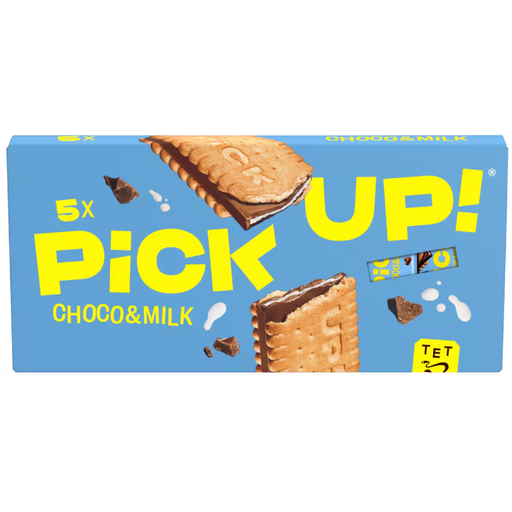 Image unavailable
The five 28 g bars make it easy to set a portion size. Check the nutritional information for this Choco & Milk variety, and whether each bar is individually wrapped. You can’t necessarily apply the figures for other PiCK UP! varieties to this one.
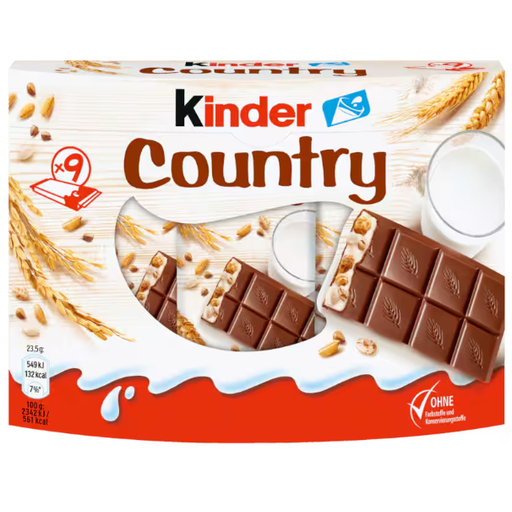 Image unavailable
If you’re looking for a clearly defined portion to take with you, this pack of nine 23,5 g bars may be useful. Kinder Country is a cereal bar, not a biscuit bar; check the nutritional information and ingredients for this specific product.
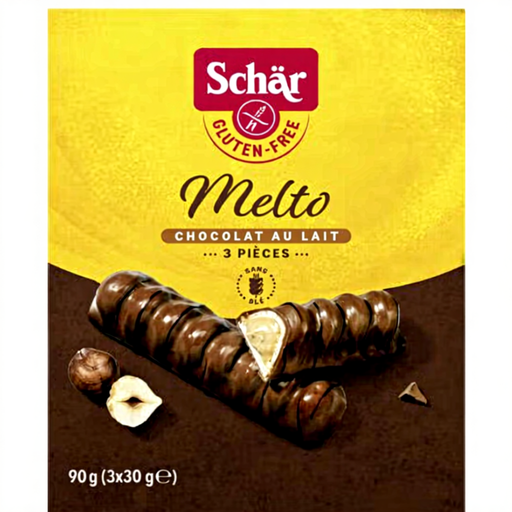 Image unavailable
If you’re considering an alternative labelled gluten-free, this wafer bar pack contains three 30 g portions. Check the ingredients and allergens on the specific pack, and whether the bars are individually wrapped; gluten-free doesn’t mean free from all allergens.
A single biscuit bar doesn’t automatically count as a full hour’s fuelling. An article in Nederlands Tijdschrift voor Geneeskunde gives 30–60 g of carbohydrates per hour as a guideline for exercise lasting 1 to 2.5 hours; the amount in a specific bar depends on its portion weight and nutritional information.
Try it in training during a session similar to the one you’re planning for, rather than taking it along for the first time on an important run. You can also see whether the portion and packaging are practical for you while you’re out.
No, what matters is the labelling on the specific variety and pack. REWE lists wheat, milk and hazelnuts among the ingredients in Leibniz Pick Up! Original Choco; the ingredients may be different in other bars from the same or another brand.
No, the ‘sugar-free’ label alone doesn’t tell you how many carbohydrates are in a portion or how well you’ll tolerate it while running. Gullón lists isomalt and maltitol as ingredients in Digestive Zero; read the pack information for products like these and try them in training before using them as planned.