Small baking batches
If you need crumbs for individual bases or toppings, a small appliance may be more practical than a large food processor. Pulse settings and portion guidance vary by model.


For small batches of biscuits and limited space, a mini chopper with easy-to-control operation and cleaning parts that are easy to access is usually a sensible place to start. A larger food processor is a better fit if you regularly chop or grate other ingredients too. A manual chopper could work if you’re happy to do without a motor and are comfortable with the hands-on effort and its specific cleaning requirements.
If you need crumbs for individual bases or toppings, a small appliance may be more practical than a large food processor. Pulse settings and portion guidance vary by model.
If you share worktop space and appliances, check which food-contact parts are easy to reach and how they can be cleaned.
If you regularly chop or grate ingredients as well as making biscuit crumbs, and have room for the appliance and its accessories, a larger food processor could suit your routine.
A good fit if: you usually chop small portions and want to control the process step by step. KitchenAid lists a pulse function and breadcrumbs as an example use for the 5KFC3516EWH model.
The trade-off: The bowl limits the amount you can process at a time; cleaning instructions vary by model and component.
A good fit if: you regularly do other food-preparation jobs as well as making crumbs. Bosch lists a 2,3-l bowl and accessories for slicing and grating for the MultiTalent 3 MCM3501M.
The trade-off: The appliance and accessories need storage space; bowl capacity does not tell you how many biscuits are suitable for each batch.
A good fit if: there’s no spare socket, or you’d prefer to work without a motor. Tefal describes the K13304 as having a pull cord, with repeated pulls letting you control how finely the ingredients are chopped.
The trade-off: It takes manual effort to use; Tefal says the pull-cord lid should not be immersed in water.
| What you’re looking for | What to check before buying | Who is this especially important to? |
|---|---|---|
| Control over crumb texture | Pulse or short-burst operation; the blade and permitted fill level for the specific model. | When I’m chopping small portions, I want to work gradually towards the texture I’m after. This is the main priority for around 36 % of consumers. |
| Cleaning between uses | Read the care instructions separately for the bowl, blade, lid and drive unit. | When an appliance is shared, I want to know how to clean each part after it comes into contact with food. Around 29 % of consumers put this concern first. |
| Worktop and storage space | Consider the appliance dimensions, bowl capacity and space for accessories. | If worktop and storage space are shared, the appliance should take up little room and be easy to put away. Around 21 % of consumers prioritise saving space. |
| Operation without a motor | Check how it is operated by hand and the filling instructions; don’t assume unsubstantiated noise comparisons. | If I don’t want to use a socket, a manual appliance could be an option, provided the amount involved makes the hands-on effort practical. This is the main concern for around 14 % of consumers. |
The instructions for the Tefal 5-Second Chopper say the bowl should be no more than half full. The stated capacity alone therefore doesn’t tell you how much you can process at once.
Check the filling and operating instructions for the specific model before you buy.
A limited fill level may mean you need to work in several batches.
Care instructions can differ for the bowl, blade, lid and drive unit. Tefal says the bowl and blade of its manual chopper can be washed, but the pull-cord lid must not be immersed in water.
Check the cleaning instructions for each removable part individually.
Some parts may need to be washed by hand.
A larger food processor can handle additional food-preparation tasks, but you may not need them if you only make small batches of biscuit crumbs occasionally.
First decide which jobs you do regularly, then choose your appliance and accessories.
The appliance and accessories take up space and need to be put away after use.
The 5KFC3516EWH mini chopper is described as suitable for small quantities.
The Easy Chop models are electric mini choppers; the CHP61.100WH and CHP62.400SI are different models.
The KÜCHENminis chopper is designed for small portions and limited storage space.
The MultiTalent 3 MCM3501M is a larger food processor designed for a range of kitchen tasks.
The 5-Second Chopper K13304 is a manual alternative for small quantities.
The selection below features electric mini choppers for smaller quantities. Check that the bowl size, operation and cleaning requirements suit the way you use an appliance in a shared kitchen.
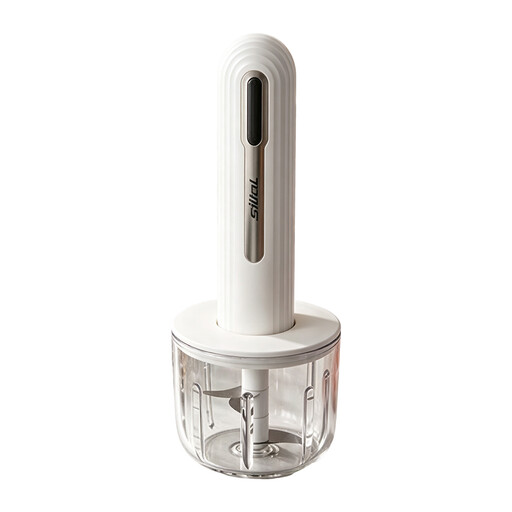 No image available
The transparent container lets you see how finely the ingredients have been chopped. According to the product description, the removable parts should be washed by hand.
 No image available
The two different-sized glass bowls give you options for smaller and larger quantities.
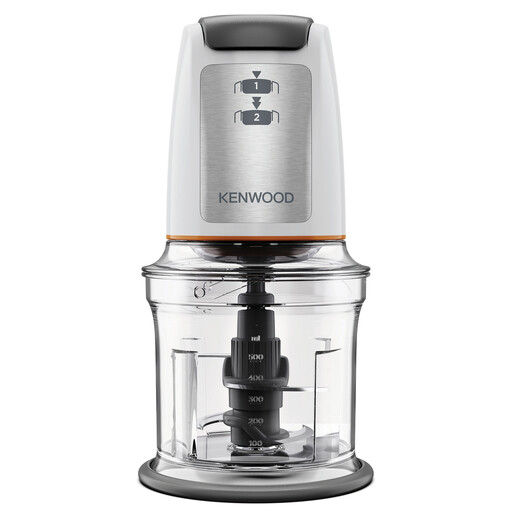 No image available
The stated bowl capacity and choice of speed settings are useful features for smaller portions.
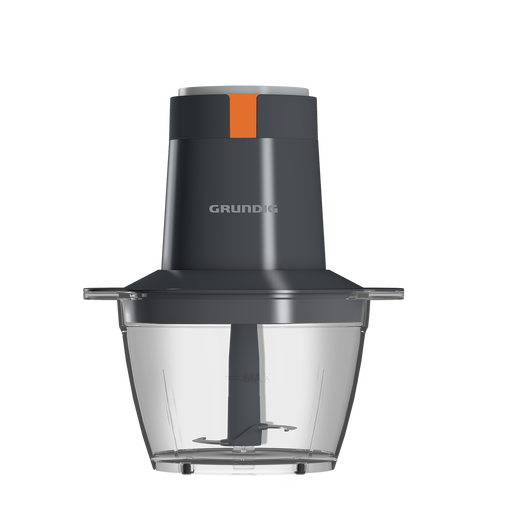 No image available
This multi-cutter could be an option for small chopping jobs. Before buying, check whether its specific features suit your other kitchen tasks too.
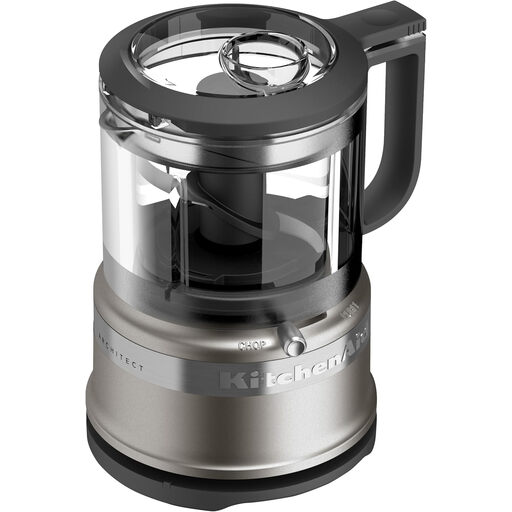 No image available
The stated bowl capacity is worth considering for smaller batches, while the choice of speeds may also help you decide.
Use short bursts and check the texture as you go. KitchenAid describes this approach using the pulse function on the 5KFC3516EWH and lists breadcrumbs as an example use; this doesn’t guarantee an even result with every type of biscuit.
Not necessarily: care instructions apply to specific parts and models. WMF describes the removable parts of its KÜCHENminis chopper as dishwasher-safe; Tefal says the pull-cord lid of its manual chopper should not be immersed in water. Follow the instructions for the appliance you own.
Clean food-contact surfaces thoroughly between uses, and check with anyone sharing the appliance whether separate utensils are needed. Germany’s Federal Institute for Risk Assessment recommends using separate kitchen utensils for raw and ready-to-eat foods to prevent microbiological cross-contamination. However, ordinary washing is not automatically proven to be sufficient for a particular severe allergy.
A larger food processor is a better fit if you regularly chop or grate other ingredients and have room for the appliance and its accessories. Extra features aren’t necessarily needed for occasional small batches of biscuit crumbs; also check the dimensions and cleaning instructions for the parts.
Electrical appliances must meet the applicable CE marking requirements if they are covered by the relevant harmonised EU legislation; the mark itself is not an independent quality seal. Food-contact parts are covered by Regulation (EC) No 1935/2004. Germany’s Federal Office of Consumer Protection and Food Safety notes that the glass-and-fork symbol does not have to appear on items that are clearly intended to come into contact with food.