Cookery class organiser preparing several batches
If you’re chopping biscuits for several participants one after another, plan the bowl size, number of batches and workflow together.


For repeated small batches, a compact chopper with pulse control and easy-to-clean removable parts is a sensible choice – but check that the specific model is suitable for biscuits. For larger quantities in a class, the usable capacity and any interruptions to the process matter more. If you’re making just one biscuit base, a clean, sturdy bag and a rolling pin may be enough. Bowl capacity and motor power alone don’t prove how good the crumbs will be or whether a chopper is suitable for the full quantity you need.
If you’re chopping biscuits for several participants one after another, plan the bowl size, number of batches and workflow together.
For smaller quantities, a compact appliance with a clear view of the contents and easy-to-control operation can be handy, especially if the crumb size matters and you’re short on worktop space.
If you only need a biscuit base for one or a few classes, first check whether a suitable bag and rolling pin will do the job.
A good fit if: you regularly process smaller batches and want to check the crumb size as you go.
Trade-off: A small bowl may mean extra batches and cleaning for class-sized quantities.
A good fit if: you need more bowl space for the quantities you have planned and have room for a larger appliance.
Trade-off: A larger capacity doesn’t automatically make an appliance better for biscuit crumbs or more suitable for your workspace.
A good fit if: you only need a small quantity occasionally and don’t want to buy another appliance.
Trade-off: You crush the biscuits by hand, so the bag must be sturdy, clean and suitable for food contact.
For any appliance or bag you use, check that it’s suitable for food contact. The Federal Office of Consumer Protection and Food Safety recommends looking for a relevant statement, a specific intended use or the glass-and-fork symbol.
| Consideration | What to look for when buying | Who will find this particularly important? |
|---|---|---|
| Batch size and number of batches | Compare the quantity of biscuits you plan to process with the permitted fill level for dry ingredients in the instructions. The stated capacity doesn’t automatically tell you how many biscuits you can process at once. | If I’m preparing several batches for a class, I want to be able to plan for refilling and interruptions. Around 36% of consumers put batch throughput first. |
| Control over crumb size | Check for pulse control, a clear view of the contents and guidance on suitability for biscuits. Good Food recommends short pulses in a food processor; this doesn’t prove how a particular mini model will perform. | If I want to make either coarse pieces or finer crumbs, I want to be able to check the contents as I go. Around 29% of consumers prioritise control over crumb size. |
| Cleaning and safe handling | Check the instructions to see which parts are removable and dishwasher-safe. Follow the safety guidance on the blades when taking the appliance apart and cleaning it. | If I use the appliance repeatedly in a class, I want to know which parts can be cleaned and how, and how to handle the blade. Around 21% of consumers prioritise cleaning and safe handling. |
| Whether buying an appliance is worthwhile | Think about how often and for how many batches you’ll need biscuit crumbs. If you use the bag method, it must be clean, sturdy and suitable for food contact. | If I only make a biscuit base occasionally, I want to check first whether a bag and rolling pin will be enough. Around 14% of consumers prioritise avoiding the purchase of an appliance. |
The stated bowl capacity doesn’t tell you how many dry biscuits you can process in one batch.
Plan the quantities for your class and check the fill-level and usage guidance for the specific model before buying.
A small bowl may mean extra batches and cleaning.
A general rating for a chopper doesn’t prove how evenly it chops biscuits or what quantity is suitable for each batch.
First decide what batch size and space you need; then check the details and usage guidance for the specific model.
A chopping or grinding attachment may require a compatible base appliance, so it isn’t automatically a stand-alone chopper.
Check the model number, what’s included and which base appliance you need, rather than relying on a similar product name alone.
An attachment may require an additional compatible base appliance to use it.
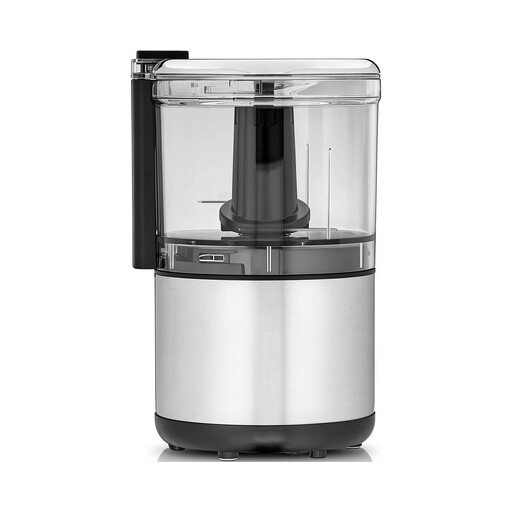
The KÜCHENminis chopper is a compact option for small batches, with a 0.3 l bowl.
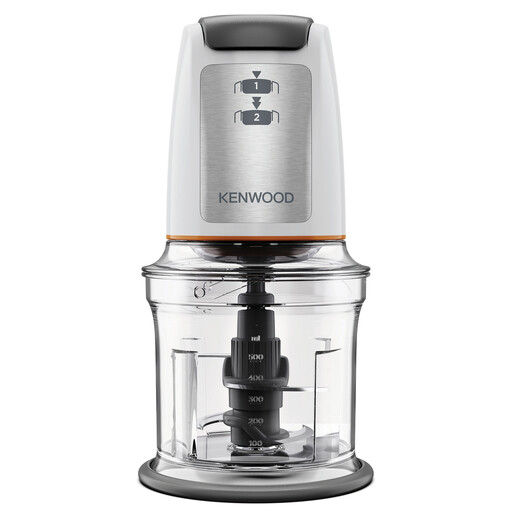
According to Kenwood, the Easy Chop CHP61.100WH is an electric mini chopper with a 500 ml capacity, two speed settings and a pulse function.
The MMR08A1 multi-purpose chopper is described as having a pulse switch and a plastic mixing bowl with a measuring scale.
The MZ 500 is a larger multi-purpose chopper with a glass bowl that the manufacturer says holds 1.5 l.
This selection includes compact electric choppers, a manual mini chopper and a larger appliance. For each model, check that it’s suitable for food contact, along with the capacity and cleaning guidance for your planned use.
 No image available
The 0.3 l bowl capacity can help you plan small chopping batches; check the instructions for the permitted fill level when processing biscuits.
It’s listed as having two stainless steel blades and removable, dishwasher-safe parts.
 No image available
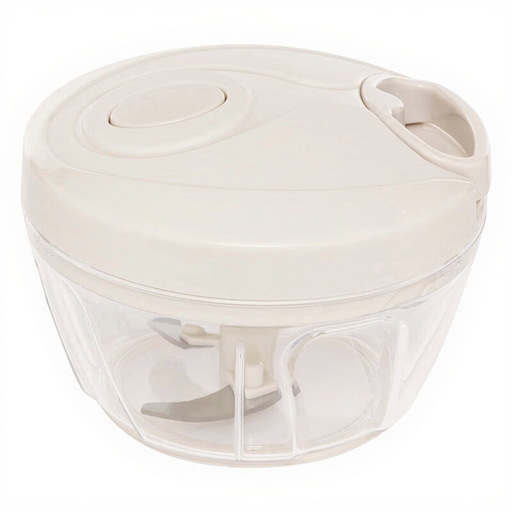
The manual pull-cord mechanism is an option if you want to chop without electricity; first check whether the instructions cover processing biscuits.
The description lists a transparent, BPA-free bowl and stainless steel blades.
 No image available
The two stated bowl capacities give you different sizes for food preparation; compare your planned quantity of biscuits with the usage guidance.
Capacities of 2 l and 0.6 l are listed, along with two speeds and two sets of blades. According to the description, the bowls and lids are not heat-resistant or microwave-safe.
 No image available
The product description lists biscuit crumbs as a possible use, but doesn’t guarantee a particular consistency. Check the instructions and keep an eye on the contents while processing.
The model is listed with a 0.5 l bowl, two speed settings and 500 W of power.
 No image available
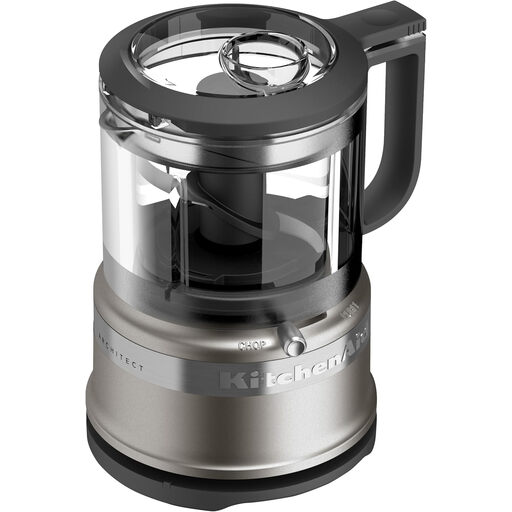
The pulse function lets you process in short bursts; check the crumb size between pulses and follow the instructions for biscuits.
It’s listed with a capacity of 0.83 l, 240 W of power and two speeds. The bowl, lid and blade are described as dishwasher-safe; the motor base is not.
Yes. For a biscuit base, you can crush biscuits in a sturdy, clean bag with a rolling pin. Good Food describes this method; make sure the bag is suitable for food contact.
With a suitable appliance, work in short pulses and check the contents in between. Good Food recommends short pulses for biscuits in a food processor. For a mini chopper, also check the instructions: no particular crumb consistency is confirmed for the models mentioned here.
It depends on the model and the individual parts. WMF describes the bowl, lid and blade of the KÜCHENminis chopper as dishwasher-safe. For other appliances, follow the relevant instructions and handle blades with care.
For online purchases from a trader in the EU, you generally have a 14-day right to cancel from the date you receive the goods; exceptions and possible return costs should be taken into account. Your Europe also explains that faulty goods are covered by a legal minimum guarantee of two years. These consumer rights are separate from a voluntary manufacturer’s guarantee.
Check that the specific appliance or bag you use is expressly intended for food contact. The Federal Office of Consumer Protection and Food Safety refers to the relevant rules in Germany and at EU level, including Regulation (EC) No 1935/2004. According to the European Commission, the manufacturer uses the CE marking to declare that a product complies with the applicable requirements; it doesn’t guarantee a particular crumb quality.