For making biscuit bases and desserts
If you want to crush biscuits for a base, you don’t necessarily need a large multifunction machine. A REWE cheesecake recipe describes crushing the biscuits and then mixing them with butter.


For the occasional small batch of biscuit crumbs, a compact chopper is usually enough, provided its bowl and controls suit your recipe. A food processor may be worth considering if you also regularly chop, slice or grate ingredients in your shared kitchen; a larger bowl alone doesn’t guarantee a particular crumb texture. If you share the appliance, also plan for cleaning and hygienic handovers: the German Federal Institute for Risk Assessment recommends using separate utensils for raw and cooked foods.
If you want to crush biscuits for a base, you don’t necessarily need a large multifunction machine. A REWE cheesecake recipe describes crushing the biscuits and then mixing them with butter.
If several people use the same kitchen one after another, easy-to-clean parts and a planned handover matter. The German Society for Home Economics identifies ease of use, cleaning suitability and bowl capacity as relevant considerations; the German Federal Institute for Risk Assessment recommends using separate utensils for raw and cooked foods.
If you regularly prepare other ingredients as well as biscuit crumbs, extra functions and suitable accessories may be useful. The German Society for Home Economics highlights ease of use, cleaning and container capacity, among other factors.
First decide how fine you want the crumbs and how much you need to make. Then weigh up ease of use, cleaning, storage space and any extra functions that could be useful in a shared kitchen.
Best for: Making smaller portions, or if you want an appliance that’s easier to put away between cooking sessions.
Consider: Larger recipes may need to be processed in several batches. The stated bowl capacity doesn’t guarantee a particular quantity of crumbs.
Best for: Making several portions when you don’t need slicing or grating discs.
Consider: A larger bowl also takes up more worktop and storage space, and doesn’t tell you how many biscuits can be processed effectively at once.
Best for: Shared kitchens where slicing or grating is also a regular task, alongside chopping.
Consider: Extra attachments mean more parts to clean and store.
| Buying priority | What to look for | Who is it important to? |
|---|---|---|
| Control over crumb texture | Check whether you can operate the appliance in short bursts or at different speeds, and whether you can see the contents while it’s running. | If I’m aiming for a particular crumb texture for a biscuit base, I want to be able to check the progress as I go. Around 25% of consumers put control over crumb texture first. |
| Cleaning and handover | Check each part individually to see whether it’s removable and whether the manufacturer says it’s dishwasher-safe. Remember to include any extra attachments when considering cleaning. | If I’m handing the appliance over to the next person cooking, I want to leave it clean and ready for the next ingredient. Around 25% of consumers put cleaning and a hygienic handover first. |
| Suitable portion size | Compare your usual recipe quantity with the instruction manual, and plan for several batches if needed. | If I’m making a particular recipe quantity, I want to know whether it can be processed in one batch. Around 19% of consumers prioritise a suitable quantity per batch. |
| Worktop and storage space | Check the appliance dimensions and consider where the parts and attachments will go between cooking sessions. | If shared worktop and storage space is limited, I want to avoid the appliance and its accessories getting in the way of other people cooking. Around 19% of consumers put available space first. |
| Other food preparation tasks | Check which attachments are actually included with the model and whether you expect to use them regularly. | If you also want to slice or grate ingredients with the same appliance, weigh up the extra functions against the additional cleaning and storage involved. Around 12% of consumers prioritise versatile food preparation for shared use. |
The capacity in litres describes the size of the bowl, not a guaranteed quantity or consistency of biscuit crumbs.
Compare your usual recipe quantity with the instruction manual for the specific model, and allow for several batches if needed.
Several batches can take extra time and may mean more cleaning between cooking sessions.
Extra attachments may allow you to prepare food in more ways, but in a shared kitchen they also need to be available and clean.
Choose accessories for tasks you do regularly, and check the cleaning instructions for each part individually.
More attachments mean extra cleaning time and storage space.
Micro-organisms can be unintentionally transferred from raw foods to other foods. The German Federal Institute for Risk Assessment recommends using separate kitchen utensils for raw and cooked foods.
Agree on the order of tasks, and use suitable separate utensils for raw foods and foods that will be eaten without further cooking.
The range includes everything from the Easy Chop CHP61.100WH mini chopper to the more versatile MultiPro XL Weigh+ FDM72.990SS.
The MZ 500 is a larger chopper for households that don’t need a range of food processor discs.
The MultiTalent 3 MCM3501M is a compact food processor for a range of food preparation tasks.
The Food Processor 5KFP1319EAC in Crème is designed for versatile preparation, with slicing, grating and dicing accessories.
The KM 3866 is a cordless chopper for worktops where you can’t rely on having a free socket.
The Joybuy products below are compact electric choppers. Before using bowl capacity as a guide to how many biscuit crumbs you can make, check your recipe quantity against the instruction manual for the specific model.
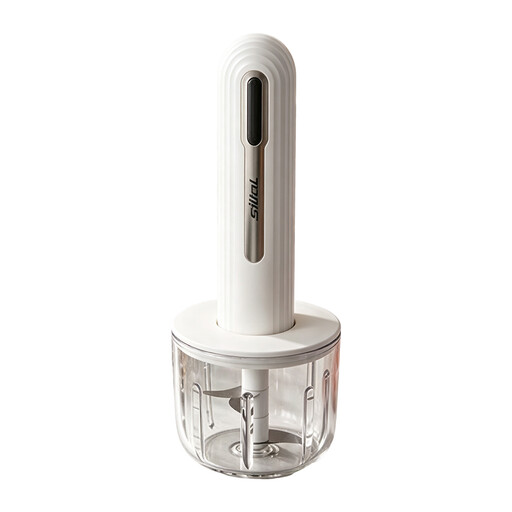 No image available
The product description says it’s suitable for small portions; the transparent bowl can help you keep an eye on how finely the ingredients have been chopped.
It’s cordless, and the removable parts are hand-wash only. Check whether that suits the way your shared kitchen works.
 No image available
Two bowl sizes may be useful for different quantities of food; check the relevant recipe quantity against the instruction manual.
The product details list 0.6-l and 2-l glass bowls, two speed settings and 300 W. The bowls are described as dishwasher-safe. The blades are very sharp, so take extra care when cleaning and assembling the appliance.
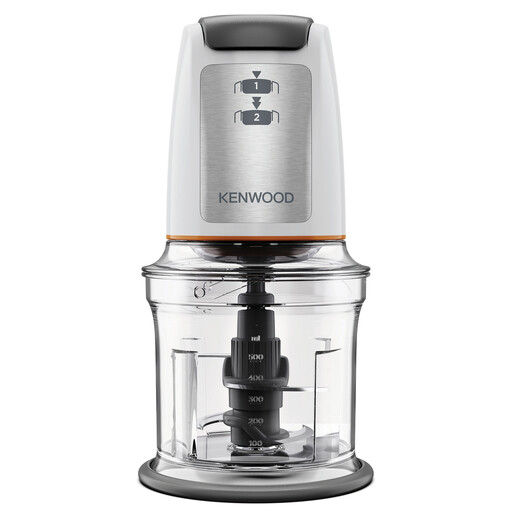 No image available
This compact model is described as suitable for smaller chopping tasks; the product description also lists breadcrumbs as one of its uses.
Kenwood lists a 0.5-l bowl and two speed settings for this model. The product name gives its power as 500 W. These specifications don’t guarantee a particular result with your biscuit recipe.
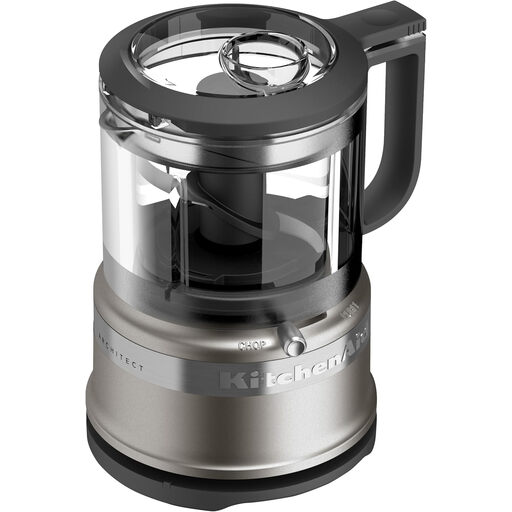 No image available
The pulse function and two speeds give you options for chopping in stages; check the crumb texture you want against your recipe.
The product details list a 0.83-l work bowl, 240 W and a stainless steel multipurpose blade. All parts except the motor unit are described as dishwasher-safe. Do not immerse the motor unit in water; the blade is very sharp.
No. If biscuit crumbs are your main task, you could start by considering a chopper with controls and a bowl size that suit your needs. A food processor is more useful if you also regularly slice or grate ingredients; bowl capacity alone doesn’t guarantee a particular crumb texture.
Make sure the parts are clean and suitable for the next ingredient. If the appliance has been used for raw food and will then be used to make crumbs for a dessert that won’t be cooked further, follow the German Federal Institute for Risk Assessment’s recommendation to use separate utensils for raw and cooked foods.
No, don’t assume they are. Check the instruction manual for your specific model and each part individually; the information about removable parts for the Rommelsbacher MZ 500 doesn’t automatically apply to the motor unit.
Online purchases generally come with a right to cancel, usually within 14 days of receiving the goods; you must notify the other party to the contract that you’re cancelling. If something is faulty, your statutory rights are against the seller and are separate from any voluntary guarantee. The Verbraucherzentrale explains these rights in Germany.
For the specific listing, check, among other things, whether the product and manufacturer can be identified and whether it comes with German-language instructions containing the necessary warnings. The German Federal Network Agency refers to this information in connection with its market surveillance; a brand or model name alone doesn’t confirm that an individual item complies with the requirements.