If you only freeze a few portions of dough now and then, your existing freezer compartment should be enough, as long as there’s room for the portions when they’re properly wrapped. A separate chest freezer is most worthwhile if you regularly freeze larger quantities. In a small kitchen, check that the specific model will fit in the space, can be moved along the route to its final position and has enough clearance for the lid to open fully. Remember that usable capacity and freezing capacity per 24 hours are not the same thing. A chest freezer is loaded from the top, while a small upright freezer can make individual portions easier to reach in its compartments. Always compare the annual energy consumption of each appliance you’re considering, too.
Who is a chest freezer suitable for?
Bakers short on space
If you want to keep dough in stock, first check that the appliance will fit in your small kitchen, including the route for getting it there and the space needed to open the lid. The Verbraucherzentrale recommends choosing a freezer that suits your actual needs.
Bakers making large batches of dough
If you regularly prepare several portions, compare the freezer’s capacity with the amount of fresh dough you want to freeze, as well as checking its storage space. Manufacturers’ figures for usable capacity and freezing capacity describe different things.
Bakers stocking up with energy use in mind
If you’re adding another appliance, check its declared annual energy consumption, particularly if the freezer will be running all the time. Make sure its storage space and freezing capacity suit your needs, rather than leaving most of it unused.
What should you look for when buying?
Existing freezer compartment
A good fit if: you only add a few portions now and then, and there’s enough room in your freezer.
Things to consider: You won’t need another freestanding appliance, but whether larger batches will fit depends on the space available.
Compact chest freezer
A good fit if: you regularly freeze larger quantities of dough and have a suitable space, with enough room to open the lid.
Things to consider: The extra storage space will use electricity all the time; keep stacked portions organised so they’re easy to reach.
Small upright freezer
A good fit if: you often take out small portions individually and prefer the organisation offered by compartments or drawers.
Things to consider: Compare the annual energy consumption on the energy label for the specific appliance, rather than assuming it from its design alone.
The Verbraucherzentrale recommends choosing an appliance size that suits your needs; the Bundeszentrum für Ernährung recommends packing and labelling frozen food in portions.
| What matters |
What to check before buying |
Who should consider this? |
| Space and lid clearance |
Check the external dimensions, route to its final position and room to open the lid. Allow for the wall clearance specified in the instructions for the specific model. |
If my kitchen is short on space, the freezer needs to fit along with room to open it and a clear delivery route. Around 36% of consumers put the available space first. |
| Freezing capacity for fresh batches |
Compare the largest amount of dough you plan to freeze at once with the figure in kg per 24 hours; assess usable capacity in litres separately. |
I freeze larger quantities repeatedly and want to know whether the appliance can handle a fresh batch. Around 29% of consumers prioritise batch size. |
| Energy use during continuous operation |
Compare the kWh/year figures on the energy labels of suitable models, then calculate your own costs using your electricity tariff. |
If an extra appliance will be running for a long time, I want to weigh its energy use against the storage space I need. Around 21% of consumers focus mainly on running costs. |
| Portioning, access and maintenance |
Check for baskets, defrosting instructions and space for labelled, freezer-safe portion packaging. |
I want to keep lots of small portions organised and take them out individually. Around 14% of consumers prioritise easy access and portioning. |
The Verbraucherzentrale lists kWh/year as a relevant figure on the energy label. The Bundeszentrum für Ernährung recommends suitable freezer packaging, portioning and labelling. However, this does not establish a fixed storage time for every biscuit dough recipe.
Avoid common buying mistakes
-
Measuring only the cabinet depth
For the Exquisit GT100-050E weiss, the manufacturer gives the appliance depth as 48 cm, but the depth with wall clearance is 58 cm. So the cabinet depth alone isn’t enough when planning a space for this model.
Check the dimensions, including the clearances required for the specific model, and leave enough room to open the lid fully.
-
Assuming capacity in litres equals freezing performance
A usable capacity of 100 l describes the storage space. For the Bomann GT 7355, the manufacturer lists freezing capacity separately as 4.5 kg per 24 hours.
If you’re freezing a fresh batch of dough, compare both figures for the exact model you’re considering.
-
Choosing a chest freezer that’s too large for occasional baking
The Verbraucherzentrale points out that a freezer that’s too large for your needs can use electricity unnecessarily.
First check how much space is free in your existing freezer compartment and how much extra dough you regularly want to freeze.
-
Assuming similar model names mean the same appliance
WELT.de’s comparison features the CHiQ FCF98D. A similar model name, such as FCF98DE, doesn’t prove that it’s the same version.
Check the full model number, data sheet and version on offer before applying product information to a different model.
Brands to consider
Exquisit
According to the manufacturer, the GT100-050E weiss is a freestanding chest freezer with a 99 l capacity that can switch between fridge and freezer modes.
- The manufacturer gives the cabinet dimensions as 54.5 × 83.5 × 48 cm and energy consumption as 169 kWh/year.
- The stated depth with wall clearance is 58 cm. Measure your space using the information for the specific model.
Bomann
The GT 7355 and GT 7337 models show why it’s important to check the full model number when buying a chest freezer.
- According to the manufacturer, the GT 7355 has a usable capacity of 100 l, a freezing capacity of 4.5 kg per 24 hours, a noise level of 40 dB and energy consumption of 135 kWh/year.
- For the GT 7337, the manufacturer gives energy consumption as 169 kWh/year and a noise level of 41 dB. These declared figures aren’t independent real-world test results and don’t automatically apply to other models.
Beko
According to the manufacturer, the freestanding HSM10440 is a slim alternative to compare, with a usable capacity of 104 l.
- The manufacturer gives its dimensions as 53.7 cm wide, 86 cm high and 58.5 cm deep, with an E energy rating.
- If you regularly freeze larger batches of fresh dough, also check the freezing capacity for the specific model on offer.
Freezers at Joybuy
This selection includes chest freezers for storing dough, plus a small upright freezer as an alternative for limited space and frequent access.
 No image available
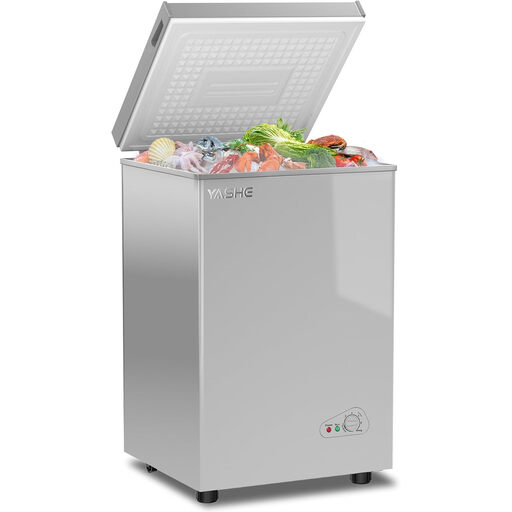
YASHE BC-100Q-EU chest freezer, 100 l, silver
For compact food storage, provided the stated external dimensions fit your space.
Usable capacity of 100 l; 53.5 cm wide and 50.2 cm deep.
E energy rating and 185 kWh/year; six temperature settings and two removable baskets.
View at Joybuy
 No image available
CHiQ chest freezer, 99 l
For fresh batches of dough, if the stated freezing capacity suits the amount you need to freeze.
Usable capacity of 99 l and freezing capacity of 4.5 kg per 24 hours; E energy rating.
External dimensions: 54.5 × 47.6 × 83.5 cm; with wire shelf and counterbalanced lid.
View at Joybuy
 No image available
Exquisit chest freezer, 142 l
For larger stocks of food, if you have the extra floor space in your kitchen.
Usable capacity of 142 l and freezing capacity of 7 kg per 24 hours; 70.5 cm wide.
182 kWh/year; manual defrost with water drain, electronic temperature control and removable basket.
View at Joybuy
 No image available
AUCMA chest freezer, 291 l
For large quantities of food, if your kitchen has room for the stated width of 110 cm.
291 l; can be used as a fridge or freezer; E energy rating and 226 kWh/year.
Digital temperature control, integrated lighting and removable basket.
View at Joybuy
 No image available
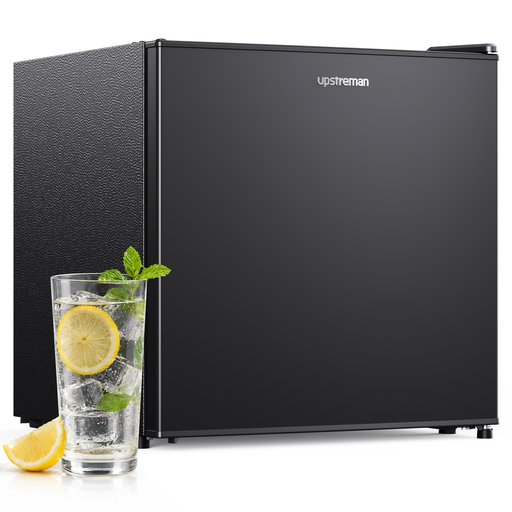
Upstreman UF35 upright freezer, 35 l, black
A compact alternative if a small upright freezer better suits your available space and need to store smaller quantities.
Usable capacity of 35 l and 4-star freezing; external dimensions: 47.5 × 44.2 × 48.8 cm.
41 dB, reversible door and removable inner compartment.
View at Joybuy
Frequently asked questions
Is my existing freezer compartment big enough for biscuit dough?
Yes, as long as there’s enough room for your wrapped portions. A separate chest freezer is more likely to be worth considering if you regularly freeze larger quantities. Assess the capacity of your current appliance based on the portions you actually want to freeze.
How should I pack and organise prepared portions of dough?
Divide the dough into portions before freezing, then use packaging labelled as suitable for freezing and mark it with the contents and date. The Bundeszentrum für Ernährung gives this general advice for frozen food, but it doesn’t establish a fixed storage time for every biscuit dough recipe.
What should I measure before placing a freezer in a small kitchen?
Measure the appliance and the route to its final position, as well as the available space. Allow for the wall clearance specified for the model and enough room to open the lid. For the Exquisit GT100-050E weiss, the manufacturer gives the appliance depth as 48 cm, compared with 58 cm including wall clearance.
How can I compare energy consumption?
Compare the declared annual energy consumption in kWh on the energy labels of suitable appliances. To estimate your own costs, multiply kWh/year by your electricity price in €/kWh. According to the Verbraucherzentrale, actual energy use also depends on how the appliance is used and where it is installed.
What rights apply when buying online in Germany?
For a typical online purchase, the Verbraucherzentrale explains that you generally have a 14-day right of withdrawal. You must notify the other party to the contract that you wish to withdraw. This is separate from any additional manufacturer’s guarantee, which may be subject to specific purchase conditions.


