
Lieferung heute & morgen

Qualitätsgarantie

Willkommens-Angebote freischalten: KOSTENLOSE Lieferung | Bis zu 80 % RABATT | Kostenlose 30-Tage-JoyPlus-Testphase
App herunterladen
A black 60 cm cooker hood fits most standard hobs and can be integrated into small to medium-sized kitchens. However, choosing the right appliance isn't just about width and colour. The design, extraction rate, operating mode, noise level and filter maintenance all determine whether the hood will be practical in everyday use.
Figures like 580 m³/h or 650 m³/h usually refer to the highest setting or a boost function. In normal operation, the extraction rate is often lower. What really matters is whether there are multiple power levels and whether your kitchen has an external vent for extraction.
With a recirculation and extraction cooker hood, you should also check which accessories are actually included. An extraction hose, non-return flap or charcoal filter can vary depending on the model.
A quiet cooker hood shouldn't just be marketed with a buzzword. What's more meaningful is the stated maximum noise level in dB. The models in this selection range, for example, from 58 to 64 dB on the highest setting, depending on the version. For an open-plan kitchen, this difference can be significant.
Black glass and painted metal can look understated in many kitchens, but they also show fingerprints, grease film and dust. A smooth front is usually easy to clean with a soft, damp cloth. Abrasive cleaners and scouring sponges are not suitable.
Equally important is the grease filter: a washable metal filter means fewer regular replacement purchases than a disposable filter. In recirculation mode, the charcoal filter must be checked and replaced according to the manufacturer's instructions.
A 60 cm cooker hood should at least match the width of your hob. For heavy frying, a slightly larger hood can offer better side coverage; in this case, the 90 cm extraction hood category is a possible alternative.
In extraction mode, steam and odours are vented outside through a suitable duct. This can be useful for intensive cooking, but requires an existing or professionally installable connection. In rented properties, structural alterations aren't always possible.
In recirculation mode, the air first passes through a grease filter and then through a charcoal filter. The cleaned air remains in the room. This solution is more flexible, but incurs ongoing costs for replacement filters. With appliances rated at 650 m³/h, you should check whether the high performance is available in your chosen operating mode.
Mechanical push or rocker switches are clear and straightforward to use. A cooker hood with touch control, on the other hand, offers a smooth front that's easy to wipe clean. With a cooker hood with Wi-Fi, you get app control and additional settings. This is particularly relevant if you'll actually use remote control or timer functions.
An integrated LED light illuminates the hob directly. For energy comparison, the energy efficiency class and annual energy consumption in kWh/year are more important than a general marketing claim. In the product data for this selection, you'll find models in classes from A+ to A+++, for example.
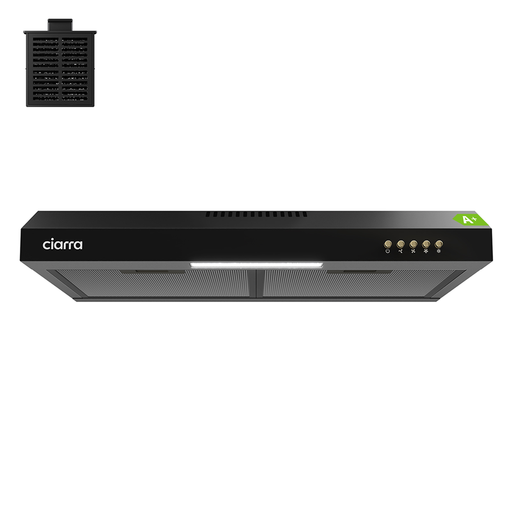
Why this product fits the profile: The compact under-cabinet or built-in solution is designed for small kitchens, rented properties and low wall cabinets. Three power levels, push buttons and LED lighting keep operation straightforward.
The product data states specific extraction rates of 138 to 184 m³/h and a maximum noise level of 61 dB, rather than vague noise claims.
Washable aluminium filters, recirculation and extraction options, energy efficiency class A+ and dimensions of 596 × 440 × 85 mm.
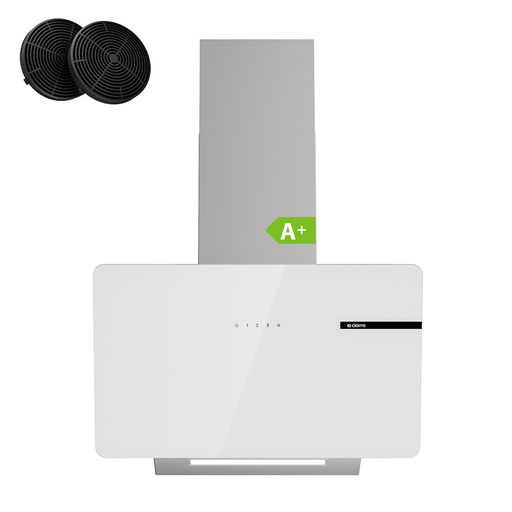
Why this product fits the profile: The angled glass and stainless steel construction creates extra headroom. Touch control, LED lighting and three power levels appeal to users who value operating comfort and material quality.
The manufacturer states 580 m³/h, around 64 dB, a washable five-layer aluminium grease filter and both operating modes as concrete product data.
LED lighting, touch control, dishwasher-safe grease filter according to the product description and energy efficiency class A+.

Why this product fits the profile: This 60 cm wall-mounted hood is aimed at households that cook and fry frequently, and at those who want to use app control, a boost function and flexible installation.
Alongside the maximum output of 650 m³/h, it states 59 dB, three or four power levels depending on the version and an annual consumption of 12 kWh/year.
A+++ according to product data, Wi-Fi and app control, booster, washable aluminium filters and both recirculation and extraction modes.
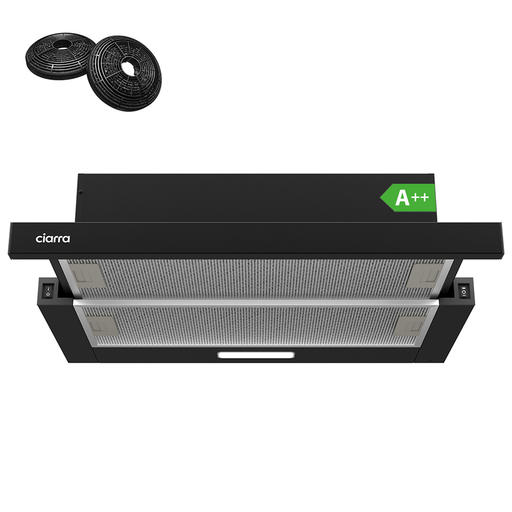
Why this product fits the profile: The pull-out design can be useful in small work areas and with existing wall cabinets. The memory function recalls the last used speed and lighting setting.
The product description states the specific level values of 215 and 355 m³/h, and 49 and 61 dB. This makes it easier to assess the performance in relation to room size.
370 m³/h maximum output, energy efficiency class A++, LED light, two washable aluminium filters and a charcoal filter included.
We've put together a complete, regularly updated list of products that fully meet these strict selection criteria and the safety regulations in force in the EU.
Before ordering, compare the width, depth, height and fixing distance with your existing hob and installation location. Different minimum clearances apply for gas and electric hobs, depending on the appliance. Always follow the installation manual and local regulations.
For daily use, we recommend:
For a small kitchen, a lower extraction rate may be sufficient, while frequent frying or an open-plan kitchen makes higher reserves worthwhile. The figure 650 m³/h usually describes the maximum setting and not necessarily continuous operation. Noise level and operating mode should always be considered together.
Extraction requires a suitable external vent, but removes odours and moisture directly from the room. Recirculation is more flexible to install, but requires regular replacement charcoal filters. Which option is cheaper depends on your existing installation, how often you cook and the cost of filters.
It's not possible to guarantee a specific lifespan. Regular grease filter maintenance, correct installation and careful handling of the glass, controls and electronics can all help extend the life of the appliance. Before buying, also check the warranty details, replacement filter availability and any installation components you might need.