Greyscale retouchers
When editing black-and-white portraits, you’ll want to assess tonal transitions and dark areas without colour casts. EIZO Germany notes that a black-and-white display should be free of colour casts.


Choose a monitor based on whether you mainly edit digital portraits or regularly check prints, and consider how much desk space you have. For print work, calibration, consistent display and a suitable print workflow matter; for detailed retouching, higher resolution and more screen space can be useful, provided the larger monitor fits on your desk. A black-and-white mode or a stated colour gamut does not, on its own, guarantee reliable greyscale performance from the specific device.
When editing black-and-white portraits, you’ll want to assess tonal transitions and dark areas without colour casts. EIZO Germany notes that a black-and-white display should be free of colour casts.
If you study and edit photos at the same desk, you’ll need to weigh the monitor’s footprint against the screen space and workspace you want.
If you regularly make prints, plan how you’ll assess the screen alongside calibration, your print profile and the conditions in which you view your prints.
First decide whether you’ll mainly work digitally or check prints on paper. Then compare the monitor’s footprint, the screen space you need and, if relevant, its connection to your laptop.
| What matters when buying | What to check | Who should consider it? |
|---|---|---|
| Assessing greyscale | Check calibration and profiling options, as well as how the display looks under your room lighting. | If I want to assess dark tones and transitions without a colour cast, the performance of the specific device matters. Around 33% of consumers put greyscale assessment first. |
| Desk and workspace | Compare the monitor’s width and depth, including its stand, with your desk; assess resolution and your preferred window layout separately. | With limited space, I want to fit the monitor alongside my other work essentials without buying more screen space than my desk can accommodate. Around 27% of consumers prioritise available desk space. |
| Matching screen and print | Consider the calibration method, the measuring device you need, your print profile and the viewing light used in your workflow. | If I regularly print portraits, I want to assess the on-screen image as part of the printing process. Around 20% of consumers put matching their screen to prints first. |
| Connecting a laptop | Check your laptop’s output, the monitor’s input, the cable and the charging power required—all together. | For a tidy study space, I want to know whether my laptop can handle both video and power through the connection. Around 20% of consumers prioritise a suitable laptop connection. |
A selectable mode doesn’t prove that the specific device displays greyscale without colour casts or display errors. EIZO Germany also notes that panel uniformity issues can’t be corrected through calibration.
Check the specific monitor under the lighting conditions you work in, and find out whether it can be calibrated for your workflow.
A colour gamut figure doesn’t describe the entire journey from screen to print. Print profiles and the light you view your prints in matter too.
Before buying, work out how you’ll match your monitor, output profile and viewing light as part of your printing workflow.
A measuring device or extra steps to profile your printing workflow may require additional equipment and time.
The casing and stand take up desk space, which you may also need for studying and other work.
Measure the available width and depth, then compare them with the dimensions of the specific model.
Video and power are separate requirements; a port alone doesn’t confirm that both will work with your laptop.
Check your laptop’s output, the cable, the monitor’s input and the charging power required.
An unsuitable cable or incompatible charging power may mean you need a different connection or an additional power supply.
The PhotoVue range includes the SW242Q, a 24.1-inch option for compact photo-editing setups with a black-and-white preview.
The ProArt PA279CRV is a 27-inch 4K option if you’re looking for more screen space and a laptop connection.
ColorEdge is aimed at buyers who want to calibrate photo and print workflows precisely; the CS2400S is a 24.1-inch model.
The 27-inch U2725QE is a 4K Thunderbolt hub option if you want a versatile laptop workstation as well as a monitor for portrait editing.
The UltraFine 27UP850K-W is a 27-inch 4K option for a combined photo-editing and study space.
These monitors include compact and portable FHD options, as well as a 27-inch 4K model with more workspace. Check calibration options and greyscale performance separately, as size and resolution don’t prove either of these qualities.
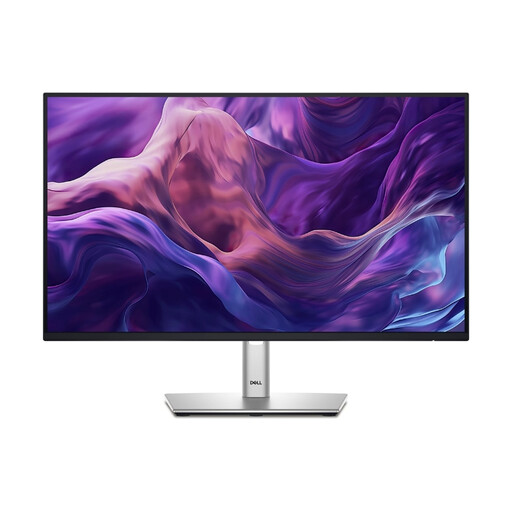 No image available
Its compact size may suit a desk with limited space; check that the laptop connection works with your device.
24-inch, FHD, IPS and USB-C according to the product name. FHD resolution offers fewer pixels for fine portrait details than a 4K model.
 No image available
The 24-inch size may suit a small desk; check its greyscale performance separately for your portrait work.
The product name lists FHD, IPS, 144 Hz, HDMI and DisplayPort. FHD resolution offers fewer pixels for fine portrait details than a 4K model.
 No image available
Its portable design and smaller size may suit a space-saving setup; bear in mind the limited room for details and tool windows.
The product name lists 18.5-inch, FHD, a matte IPS display, 120 Hz, USB-C and Mini-HDMI.
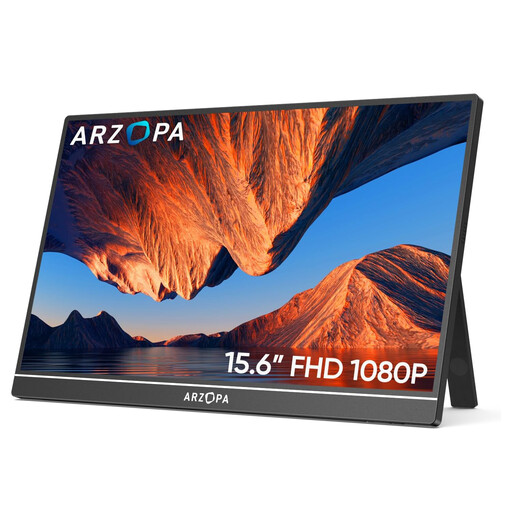 No image available
The portable size may work well if you have limited desk space; allow for the smaller area when viewing portrait details and tool windows.
The product name lists 15.6-inch, FHD, IPS, USB-C and HDMI. FHD resolution offers fewer pixels for fine portrait details than a 4K model.
 No image available
This model may suit you if you want more space for detailed retouching and tool windows, and have enough room on your desk.
The product name lists 27-inch, 4K UHD, 3840 × 2160 pixels, IPS, 120 Hz and USB-C with 90 W Power Delivery. Check laptop compatibility and greyscale performance separately.
No. A black-and-white mode alone doesn’t guarantee reliable greyscale display. BenQ lists this mode for the SW242Q; also check whether the specific device displays greyscale without colour casts or display errors. EIZO Germany notes that calibration won’t correct panel uniformity issues.
Set up the display to suit your output and ambient lighting, and calibrate or profile the monitor if you want to compare views reliably. For paper prints, the printer profile and viewing light are also part of the workflow; a monitor profile alone won’t ensure that the screen matches the print.
Check whether you need a measuring device for your calibration process, and review what’s included. For the usual cancellation of an online purchase within the EU, you have 14 days from delivery; you may have to pay the return costs unless the seller covers them and has informed you of this in advance. This rule applies to cancellations and doesn’t replace your rights if goods are faulty.
Under EU consumer rules, when you buy from a trader, you have a minimum two-year legal guarantee from the date you receive the goods; this is separate from a voluntary manufacturer’s warranty. According to Germany’s Federal Ministry for the Environment, waste electrical equipment should be taken to an authorised collection point, not put in household rubbish; a retailer’s take-back obligation depends on the applicable legal requirements.
Compare the energy label and model information for the specific devices. The European Commission lists electronic displays, including computer monitors, on an energy efficiency scale from A to G.