For waterfalls in strong backlight, an interchangeable-lens system is a good fit if you want to choose your exposure, shoot in RAW and select your lens. Check bright areas of the water on the histogram, and consider exposure bracketing for still parts of the scene. If you want to capture soft-looking water or shoot in changeable weather, an ND function and stated weather sealing may be more important, although filters and lenses add to your luggage. A compact camera saves you changing lenses, while an action camera is better suited to robust, moving perspectives.
Which camera is right for you?
Landscape photographers shooting into the light
If you want to capture bright spray and shaded woodland together, check your exposure and histogram. Canon Europe explains how to spot clipped highlights. If you plan to merge multiple exposures into an HDR image, bear in mind that Adobe warns movement can cause ghosting.
Photographers capturing waterfalls with long exposures
To make water look soft, you’ll need a longer exposure time. Canon Europe describes ND filters as a way to let less light reach the sensor in bright conditions. Factor in the extra equipment and the need for a stable setup.
Hikers who want to travel light or keep their kit weatherproof
If you’re taking photos on accessible trails, weigh up a fixed zoom, interchangeable lenses and stated moisture protection. According to the Black Forest National Park Authority, visitors must stay on the paths when taking photos in the national park; this rule does not automatically apply outside the park.
What should you look for when buying?
Full-frame mirrorless camera
A good fit if: you want to choose lenses to suit your field of view and edit your shots afterwards. Sony lists the α7C II as having 33.0 MP.
The trade-off: the cited α7C II offer is for the body only, without a lens, so you’ll need to add a suitable lens to your luggage.
APS-C mirrorless camera
A good fit if: you want RAW and interchangeable lenses without committing to full frame. Fujifilm documents RAW and in-body image stabilisation for the X-S20; Canon lists an RF mount for the EOS R10.
The trade-off: check the lens, mount and what’s included, as these vary by model and kit. Canon states that the EOS R10 does not have sensor-shift stabilisation.
Outdoor-focused Micro Four Thirds mirrorless camera
A good fit if: long exposures and weather sealing on the camera body matter to you. OM SYSTEM lists a Live ND function and IP53 rating for the OM-5 Mark II body.
The trade-off: the body’s protection does not automatically cover the attached lens, and Live ND is not a substitute for a physical filter in every situation.
Compact camera with a fixed zoom
A good fit if: you want to switch between wide views and close-up details from the same spot. Sony lists the RX100 VII as having a fixed 24–200 mm full-frame equivalent zoom.
The trade-off: you can’t change the lens. Check filter compatibility and splash protection for the specific kit you’re considering.
Action camera
A good fit if: robust, moving perspectives matter more to you than the freedom to choose lenses on a mirrorless camera. GoPro lists the HERO12 Black as waterproof to 10 m.
The trade-off: framing and mounting differ from an interchangeable-lens system. GoPro says a microSD card is required and is not included.
The right priority for you depends on whether you want to focus first on backlighting, the movement of the water, moisture protection or keeping your luggage light.
| Consideration |
What to check before buying |
Who should pay particular attention? |
| Detail in backlit scenes |
Check RAW shooting, accessible exposure controls and the histogram. Canon Europe explains how to spot blown highlights; if you merge exposures into an HDR image, bear movement in mind. |
Exposure control is key if you want to retain detail in bright spray and dark woodland in the same shot. Around 33% of consumers prioritise detail in both highlights and shadows. |
| How the water looks in your photos |
Compare adjustable exposure times, suitable ND options and stable support. Canon Europe describes ND filters as a way to achieve longer exposures in bright conditions. |
If you want to capture water as a soft blur rather than a brief moment of movement, exposure time and having enough control over the light are important. Around 27% of consumers prioritise how the water looks in motion. |
| Protection from spray and weather |
Check the protection ratings for the body and lens separately, and follow the stated conditions of use. OM SYSTEM lists an IP53 rating for the OM-5 Mark II body. |
If you’re taking photos close to the water, check the protection ratings for the exact camera kit you’ll be using. Around 20% of consumers prioritise moisture protection. |
| Portability and framing |
Compare the total travel weight, including the lens, and check whether the zoom covers the framing you want from permitted viewpoints. Sony lists a 24–200 mm full-frame equivalent zoom for the RX100 VII. |
If you want to carry less on your hike and change your framing without changing lenses, consider the weight of your full kit. Around 20% of consumers put portability and easy framing first. |
Common buying mistakes
-
Confusing an ND filter with a solution for backlighting
An ND filter reduces the amount of light reaching the sensor, allowing you to use longer exposure times. You’ll still need to check your exposure and review your images to see whether bright areas of the water retain detail.
First decide whether you need a longer exposure, less light or better control over highlights and shadows.
A suitable filter is an extra accessory and must fit your lens.
-
Assuming the camera body’s weather sealing protects the whole kit
OM SYSTEM’s IP53 rating applies to the OM-5 Mark II body and does not automatically tell you anything about the attached lens.
Check the protection ratings for the specific camera body and lens, along with their stated conditions of use.
Depending on your kit, you may need a lens with a different protection rating or extra protection from moisture.
-
Considering only the body and camera weight
The cited Sony α7C II offer is for the body only, without a lens. GoPro says the HERO12 Black requires a microSD card, which is not included.
Compare complete kits and include all the items you actually want to take with you.
A lens, filter or memory card can all add to your luggage.
-
Assuming exposure bracketing for HDR will be free of artefacts
Adobe notes that movement between individual shots can cause ghosting when you merge them into an HDR image.
Pay particular attention to moving water, and consider taking a suitable single exposure if artefacts are a problem.
Selecting and editing multiple shots takes extra time.
Key brands at a glance
Sony
The α7C II represents a full-frame interchangeable-lens system, while the RX100 VII is a compact camera with a fixed travel zoom.
- Sony lists the α7C II as having 33.0 MP; the specifications mentioned here apply to this model.
- The cited α7C II body-only offer does not include a lens. The RX100 VII’s fixed 24–200 mm full-frame equivalent zoom cannot be changed.
Fujifilm
The X-S20 is an APS-C interchangeable-lens camera for shooting in RAW with in-body stabilisation.
- Fujifilm documents 14-bit RAW and five-axis sensor stabilisation.
- The stated 7.0-stop effect applies under specified CIPA conditions and with a particular lens; it is not guaranteed for every combination or for moving water.
OM SYSTEM
The OM-5 Mark II is an outdoor-focused interchangeable-lens camera with a documented Live ND function.
- OM SYSTEM lists a weight of 418 g, including the battery and SD card, and an IP53 rating for the body.
- Check the lens and its protection rating separately. The OM-5 featured in an older travel ranking is a different model.
Canon
The EOS R10 is an APS-C interchangeable-lens camera with an RF mount.
- Canon lists RAW support for the EOS R10.
- Canon lists sensor-shift stabilisation for this model as “No”; check the lens and what’s included before buying.
GoPro
The HERO12 Black is an action camera alternative for robust, moving perspectives by the water.
- GoPro lists HDR for photos and video, as well as waterproofing to 10 m.
- GoPro says a microSD card is required and is not included; an action camera does not offer the same lens choice as a mirrorless camera kit.
Joybuy products
This selection includes action cameras for compact, moving perspectives and shooting close to water. They’re one option for this kind of photography, but they don’t offer the flexible lens choice of a mirrorless camera kit.
 No image available
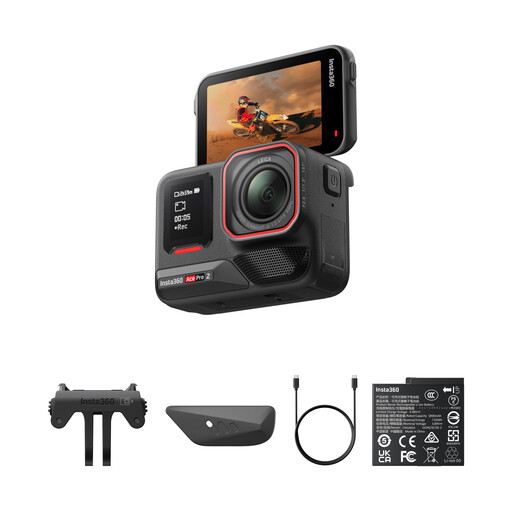
Insta360 Ace Pro 2 Dual Battery Bundle
This action camera could be a good choice if you want a compact perspective for moving shots; for traditional landscape photography, your lens choice is more limited.
8K action camera with a 1/1.3-inch sensor; the kit is described as a Dual Battery Bundle.
View on Joybuy
 No image available
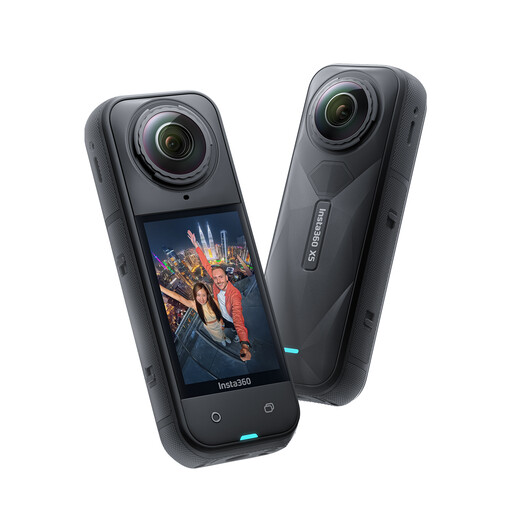
Insta360 X5 Waterproof 8K 360° Action Camera
This 360° action camera could be a good choice if you want to adjust the framing of your videos afterwards; check that this style of shooting suits your waterfall subjects.
8K 360° video; the product title describes a waterproof housing design and a replaceable lens.
View on Joybuy
 No image available
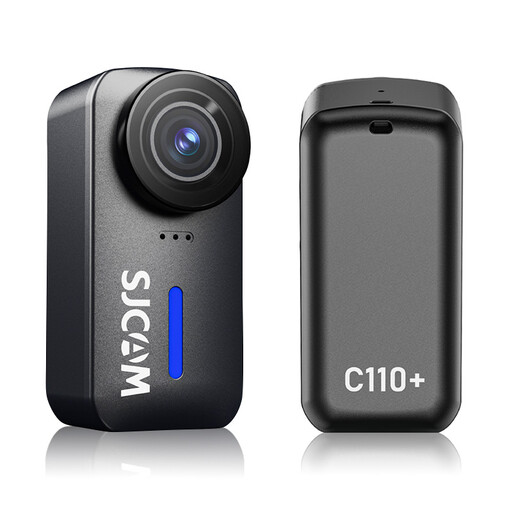
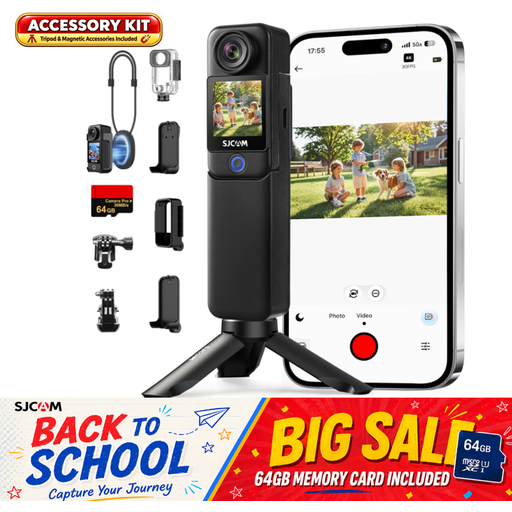
SJCAM C110+ 4K Action Camera
This compact action camera could suit you if you want a wide-angle perspective for moving shots; it offers a different viewpoint from a freely chosen interchangeable lens.
The product title lists 4K, a 170° wide-angle lens and 20 MP photos. Waterproofing to 30 m is specified with the housing.
View on Joybuy
 No image available
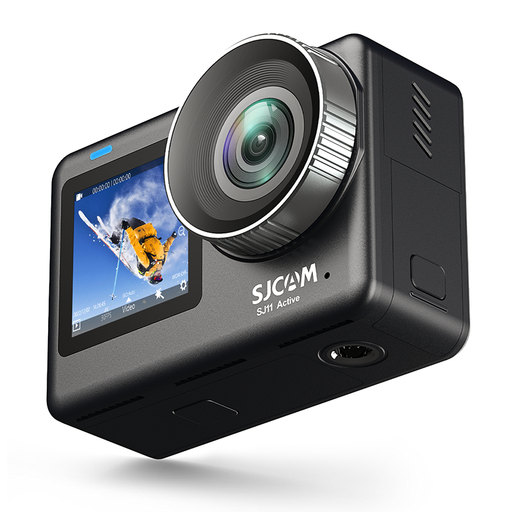
SJCAM SJ11 Active Dual Screen Action Camera
This could be a good option if you’re looking for an action camera with two screens for moving shots; note the difference in water protection with and without the housing.
The product title lists 4K at 30 fps, 6-axis EIS and 20 MP photos. Water protection: 5 m without the housing or 30 m with it.
View on Joybuy
 No image available
SJCAM C300 4K Action Camera
This action camera could be a good choice for moving shots if you’re looking for a model with two touchscreens; check which accessories are included in the specific kit.
The product title lists 4K, 6-axis stabilisation and two touchscreens. According to the description, waterproofing to 30 m requires the supplied housing.
View on Joybuy
Frequently asked questions
How can I stop white water from blowing out when shooting into the light?
Check the histogram for clipped highlights and adjust your exposure. Canon Europe explains how to spot overexposed highlights. If a single shot doesn’t capture the range of brightness as you’d like, you could try exposure bracketing and merge the shots into an HDR image afterwards; moving water can cause ghosting.
Do I always need an ND filter to capture softly flowing water?
No. First, decide how long you want your exposure to be. If the light is too bright, a suitable ND filter can reduce the amount of light reaching the sensor. OM SYSTEM also documents a Live ND function for the OM-5 Mark II. A stable setup is important for long exposures, too.
What should I look for when buying a lens for a mirrorless camera?
Check the mount and exactly what’s included. Canon lists an RF mount for the EOS R10; the Sony α7C II offer discussed here is for the body only, without a lens. If you want to use a screw-on filter, it must also fit the specific lens.
Can I leave the path to take a photo in the Black Forest National Park?
No. According to the national park authority, visitors must stay on the paths when taking photos within the park; seasonal closures must also be observed. This rule does not automatically apply to waterfalls outside the national park.
Do I need a permit to take private photos of waterfalls in the national park?
According to the national park authority, non-commercial photos are exempt from the requirement to obtain prior permission for photo and film reporting, as long as you stay on the designated paths. If you’re reporting or working commercially, check your specific plans with the authority.


