
Lieferung heute & morgen

Qualitätsgarantie

Willkommens-Angebote freischalten: KOSTENLOSE Lieferung | Bis zu 80 % RABATT | Kostenlose 30-Tage-JoyPlus-Testphase
App herunterladen
A black fridge-freezer can look right at home in a modern kitchen, office or small flat. But colour alone tells you little about how practical it will be day to day or what it will cost to run. The key things to consider are capacity, noise level, energy efficiency, door opening and cooling system.
A model with a compact footprint may offer less storage space inside than you expect. So check more than just the height, width and depth: look at how the space is divided between the fridge and freezer compartments, too. A small fridge-freezer may be enough for one person, while families usually need a larger fridge-freezer.
Also check:
No Frost and Low Frost are different systems. A No Frost fridge-freezer circulates chilled air and reduces ice build-up in the freezer compartment. According to product specifications, manual defrosting is not required. Low Frost reduces ice build-up, but occasional defrosting may still be needed.
If you use the freezer frequently, check the product specifications carefully. A fridge-freezer without automatic defrosting can lose usable storage space more quickly if it is not used correctly.
Noise levels are measured in dB(A). A rating of around 35 to 40 dB(A) is generally considered relatively quiet in many home settings, but you may still hear the compressor, fan or defrost cycle. A quiet fridge-freezer with a low dB rating is especially important for an open-plan kitchen, bedroom or home office.
As a rough guide:
Total capacity isn’t the only thing that matters. A 70/30 model with a larger fridge compartment suits households that mostly store fresh food. If you regularly stock up on frozen food, choose a model with a larger freezer compartment.
The EU energy label uses classes A to G. You should also check the annual energy consumption in kWh. A simple way to estimate electricity costs is:
Annual consumption in kWh × your electricity price per kWh = annual electricity costs
For example, a model that uses 141 kWh a year will, in theory, use less energy than a comparable model that uses 300 kWh. Actual consumption also depends on factors such as room temperature, how full the fridge-freezer is, how often you open the door and the temperature setting.
So an energy-efficient fridge-freezer isn’t defined by its class alone. Always compare the energy class, annual consumption and capacity together.
Useful features can include:
A water dispenser or app control will usually add more features, increase the cleaning required and may raise the purchase price. The important thing is whether you’ll actually use these features day to day.
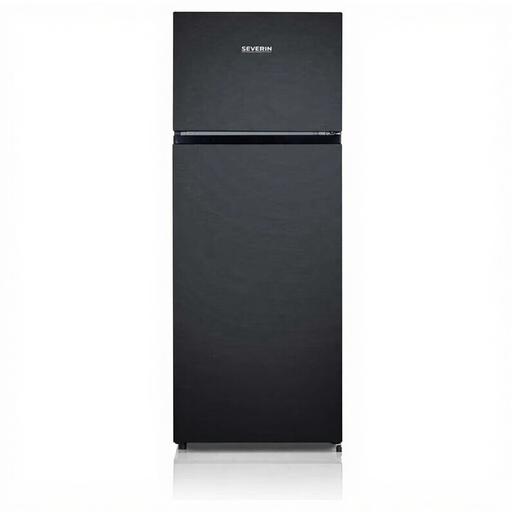
Why it suits this household: With a total capacity of 205 litres, including a 165-litre fridge compartment and a 40-litre freezer compartment, this model is designed for smaller households. Its dimensions and reversible door make it easier to fit into compact kitchens.
The capacity is clearly divided between the fridge and freezer compartments. Two height-adjustable glass shelves and LED lighting help keep everyday essentials organised.
40 dB operating noise, annual consumption of 176 kWh, a 4-star freezer compartment and a humidity-control vegetable drawer.
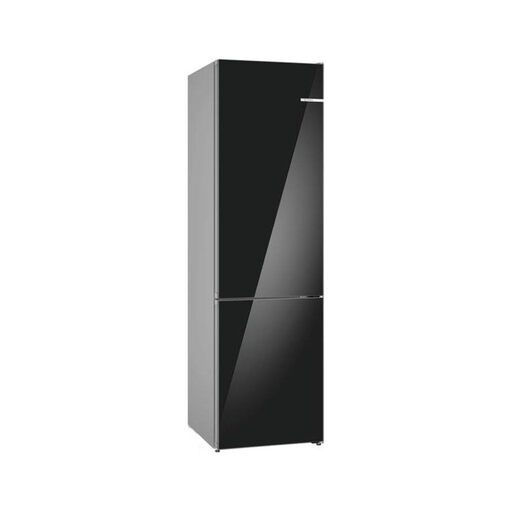
Why it suits this household: This model combines 260 litres of fridge space with 103 litres of freezer space. Its features are designed for households looking for an organised interior and automatic defrosting support.
NoFrost reduces ice build-up in the freezer compartment. The reversible door and PerfectFit design make it easier to adapt the appliance to different kitchen layouts.
Energy efficiency class C, annual consumption of 162 kWh, 35 dB and five shelves for a flexible interior layout.
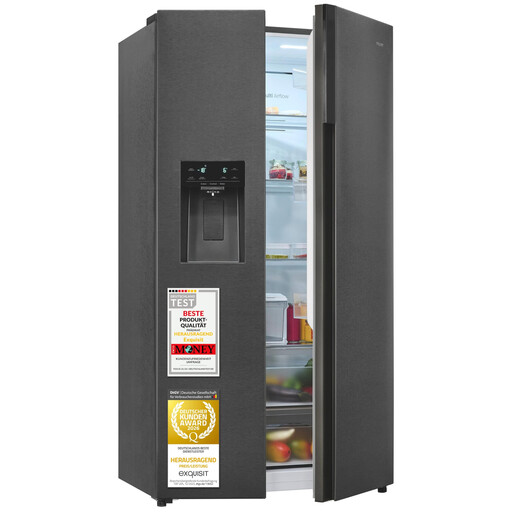
Why it suits this household: With 347 litres of fridge space and 181 litres of freezer space, this black fridge-freezer is well suited to larger households and bigger food shops.
The product specifications clearly state the capacity, noise level and energy class. No Frost reduces the need for manual defrosting, while the water tank means you don’t need a mains water connection.
528 litres of usable capacity, 37 dB, energy efficiency class C, plus a water and ice dispenser with a removable 4.5-litre tank.
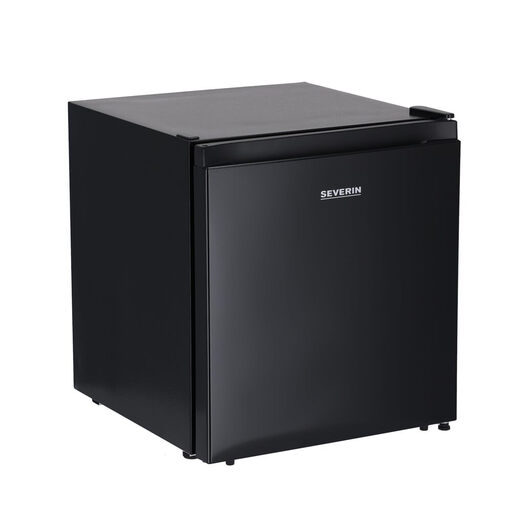
Why it suits this household: With a total capacity of 45 litres and a 5-litre freezer compartment, this model is ideal for drinks, snacks and a few essentials in a spare room.
Its compact design means you won’t need to set aside more floor space than necessary for a secondary fridge. The door can be reversed.
39 dB, annual consumption of 80 kWh, automatic defrosting and an adjustable thermostat, all in a compact design.
We’ve put together a complete, regularly updated list of products that meet these strict selection criteria and comply fully with the safety regulations in force in the EU.
Consumption depends on size, energy class, technology and usage. The product details for the models in this selection, for example, show annual consumption figures of between 80 and 176 kWh for compact appliances. Larger models may use considerably more. So always compare annual consumption in kWh, not just the energy efficiency class.
The required clearance is specified in the installation instructions from the manufacturer. Don’t block the ventilation openings. Freestanding appliances in particular need enough space at the sides, above and behind. Make sure there’s also enough room for the door to swing open.
Lifespan depends on build quality, usage, ambient temperature and maintenance. Good ventilation, following the recommended temperature settings and regular cleaning can all help support reliable operation. If you notice unusual noises, damaged cables or problems with the cooling system, contact an authorised service centre.