
Lieferung heute & morgen

Qualitätsgarantie

Willkommens-Angebote freischalten: KOSTENLOSE Lieferung | Bis zu 80 % RABATT | Kostenlose 30-Tage-JoyPlus-Testphase
App herunterladen
A modern black LED ceiling light can completely transform the ambience of a room. It creates bold accents and integrates seamlessly into minimalist or industrial interior design styles. However, the vast selection of designs and technical specifications can make the decision difficult. Often, unclear product descriptions or exaggerated marketing claims lead to a purchase that fails to meet expectations. This guide will help you understand the essential features and avoid common pitfalls.
Before we delve into the selection criteria, it's helpful to know the most common mistakes. Avoiding them not only saves money but also prevents disappointment over unsuitable lighting.
To find the right modern black LED ceiling light for your needs, you should carefully examine three core parameters. These determine the light's function, atmosphere, and durability.
The colour temperature, measured in Kelvin (K), has a direct impact on the mood of a room. There are three main categories:
Some models, offered as a dimmable LED ceiling light, allow you to adjust the colour temperature as needed, providing maximum flexibility.
As mentioned, the luminous flux (lumens) is the measure of a lamp's brightness. The power in watts only indicates energy consumption. An efficient LED light produces a high lumen value with low wattage.
The following guidelines can help you determine the required brightness:
For a 20 m? living room, a light with around 2000–3000 lumens would be a good choice.
Modern ceiling lighting is characterised by clean lines and high-quality materials. Black lights are often made from aluminium or powder-coated metal. These materials are robust, corrosion-resistant, and retain their colour. Look for a clean finish with no sharp edges.
The design should complement the room. A square black ceiling light or a round black ceiling lamp enhances a minimalist style. In contrast, more playful, floral, or geometric shapes can serve as a deliberate focal point in the room.
Based on the criteria mentioned, we have compiled a selection of products for different user profiles and applications.
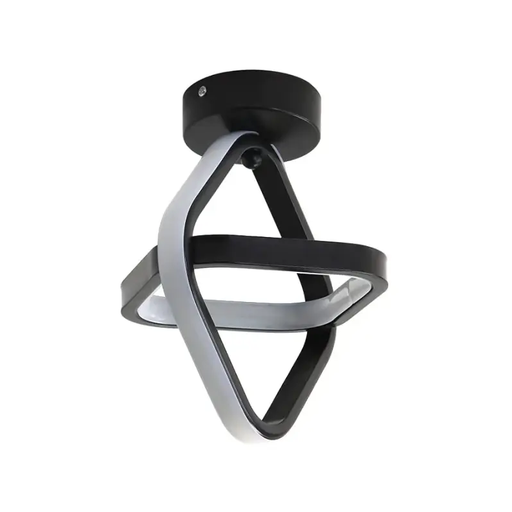
Why it's a good fit: Ideal for users seeking functional and discreet lighting for hallways, balconies, or small rooms up to 15 m?. The simple, square design and compact size blend discreetly into the ceiling.
The warm white colour temperature of 3000K creates an inviting atmosphere and avoids the sterile feel of cool white light in transitional areas. The brightness is clearly stated at 2700 lumens.
The metal housing offers greater stability and a more premium feel than all-plastic models in this price range. It is designed for direct surface-mounting on the ceiling.
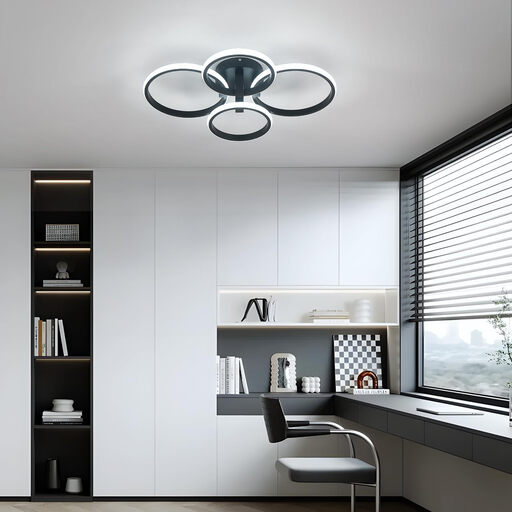
Why it's a good fit: For those who see their ceiling light as a central design feature in the living room or bedroom. The sculptural design of four offset rings creates a striking three-dimensional effect and becomes a focal point.
Instead of simple plastic, this model uses an aluminium base with a matte black, heat-resistant, and rust-proof finish. The acrylic rings ensure even, glare-free light distribution.
The high output of 48W provides bright illumination even in larger rooms (15–20 m?). The cool white light (6500K) emphasises the modern aesthetic and makes rooms appear larger.
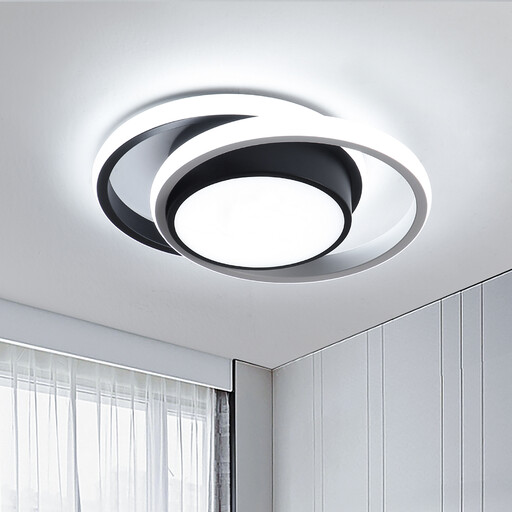
Why it's a good fit: Perfect for users who want full control over their lighting. Whether it's bright task lighting in the kitchen or dimmed ambient light in the living room, this model adapts to any situation.
This model solves the problem of choosing the wrong colour temperature. The remote control allows you to continuously adjust the colour temperature from 3000K (Warm White) to 6000K (Cool White). This makes a wrong choice impossible.
In addition to the colour temperature, the brightness (up to 4500 lumens) is also dimmable. This allows for precise adjustment to the time of day and activity, helping to optimise energy consumption.
We have compiled a complete, up-to-date list of products that fully meet these strict selection criteria and UK safety regulations.
For an average living room, a base brightness of 100 to 150 lumens per square metre is recommended. For a 25 m? room, you should plan for one or more lights with a total output of 2500 to 3750 lumens. A dimmable light offers the greatest flexibility here.
In most modern LED ceiling lights, the LED modules are permanently integrated and cannot be replaced like a conventional light bulb. However, this is generally not a drawback, as high-quality LEDs have a lifespan of 20,000 to 50,000 hours. With four hours of daily use, this equates to a durability of over 13 years.
No, not every LED light is dimmable by default. If this feature is desired, you must specifically look for the "dimmable" label. Dimmable models often come with a remote control or can be controlled via a compatible wall switch. Attempting to operate a non-dimmable light with a dimmer can lead to flickering or damage to the electronics.