
Lieferung heute & morgen

Qualitätsgarantie

Willkommens-Angebote freischalten: KOSTENLOSE Lieferung | Bis zu 80 % RABATT | Kostenlose 30-Tage-JoyPlus-Testphase
App herunterladen
A blackout blind without drilling is practical for rental homes, children’s bedrooms and frequently changing living arrangements. Installation usually involves clamp brackets or adhesive pads on the window frame. This avoids drill holes – provided the frame, dimensions and fixing method are suitable for the particular product.
However, many purchasing decisions fail not because of the design, but because important details are overlooked. If you only look for the term “Blackout” or “Thermo”, you may end up with a blind that does not fit the window, lets light in at the sides or becomes difficult to operate after only a short time.
A blackout fabric can significantly reduce the amount of light entering the room. Even so, bright areas may appear at the sides, top or bottom if the blind is narrower than the window pane. When choosing a blind for a rental home, you should therefore consider not only the fabric quality, but also the amount of coverage.
With pleated blinds for windows and doors, it is also important to distinguish between light-filtering, opaque and blackout fabrics:
With clamp-fit blinds, the stated width may include the brackets. The usable fabric width is then smaller. According to WOLTU’s product information, the fabric of the 80 cm-wide blind is approximately 4 cm narrower than the overall dimensions. Before buying, you should therefore check the window glass width, frame width and product dimensions separately.
A clamp-fit pleated blind is hooked onto the window sash. This is particularly suitable for compatible frame thicknesses and windows that can be opened without difficulty. Adhesive installation, on the other hand, only holds reliably on clean, smooth and sufficiently load-bearing surfaces. Rough, damp or heavily textured surfaces may impair adhesion.
Measure the width of the glass pane and the height of the window sash at several points. For a blind fitted inside the frame, you should also check whether handles, seals or protruding fittings could obstruct installation.
Operation is particularly important for doors and floor-to-ceiling windows. A pleated blind for windows and doors should be easy to adjust and sit securely on the frame. For larger areas, a blackout curtain may be more suitable, provided a sturdy curtain pole or track is available.
Polyester is widely used for blinds and curtains because it retains its shape and is relatively easy to care for. A coating on the back can affect the amount of light and heat entering the room. According to WOLTU’s product information, the corresponding thermal blind for windows has a silver-coated backing and cord-free operation.
Curtain headings vary:
Pay attention to the care instructions and check whether the fabric may only be wiped clean or can also be washed. For blinds, soft cloths and mild cleaning products are usually more suitable than harsh agents.
Pull cords and moving parts should be kept out of the reach of young children. Curtains and blinds should also not come into contact with naked flames, heaters or other sources of ignition. These instructions apply regardless of colour, fabric thickness or installation method.
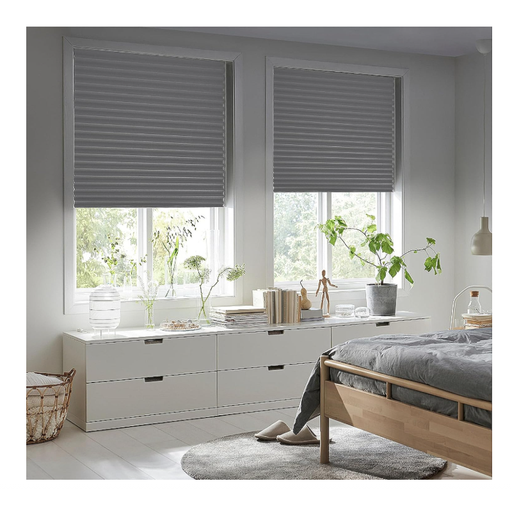
Why this product suits the profile: This light-filtering pleated blind offers clamp-fit installation without drilling and is designed for windows and doors. The 90 × 120 cm size is suitable for small to medium-sized areas.
The product information distinguishes between light filtering and complete blackout. This makes it easier to set realistic expectations for room brightness.
Clamp-fit installation without drilling, adjustable height and gentle cleaning with a cloth.

Why this product suits the profile: For buyers who want to assess installation compatibility and operating comfort in detail. The blind offers clamp or drill installation and, according to the product information, is suitable for frame thicknesses of 16 to 22 mm.
The frame thickness and the difference between overall width and fabric width are clearly addressed in the product information.
According to WOLTU’s product information: cord-free operation, OEKO-TEX-certified polyester fabric and a wipe-clean surface.
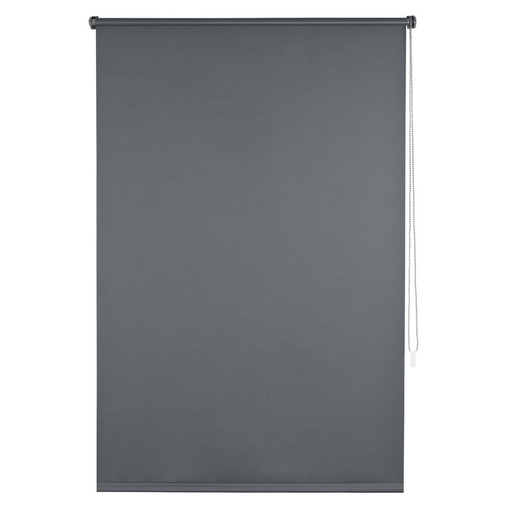
Why this product suits the profile: The combination of an aluminium headrail, polyester blackout fabric and clamp brackets is aimed at frequently used windows or doors where privacy and sun protection are important.
Installation uses the supplied Clip-Fix accessories. The care instructions advise against abrasive products and harsh cleaners.
Aluminium headrail, coated polyester fabric and suitability for windows and doors according to the product description.
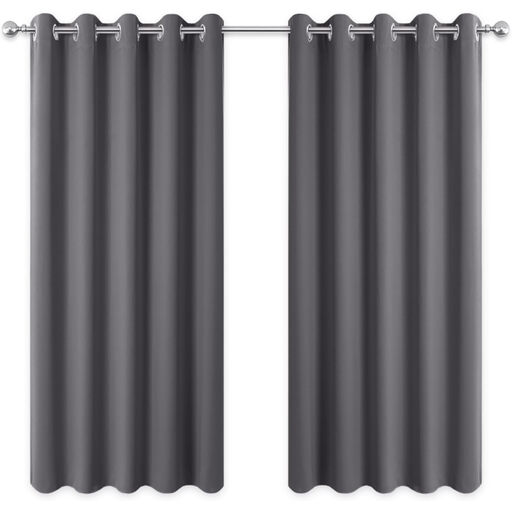
Why this product suits the profile: The two curtain panels are ideal for users who prefer a fabric-based solution with eyelets and want to continue using an existing curtain pole.
The product information states the required pole width in relation to the fabric width. This makes it possible to check whether sufficient gathering and coverage will be achieved.
Eight metal eyelets per panel, 100% polyester and machine-washable care according to the product description.
We have put together a complete, regularly updated list of products that fully meet these strict selection criteria and the safety regulations applicable in the EU.
A blackout blind without drilling is particularly suitable when you want to cover a specific window area and prefer compact installation. A pleated blind can be adjusted flexibly in height and, with suitable models, can also be used on doors.
A thermal blind for windows is worth considering if, in addition to controlling light, you want a coated backing or a multi-layer fabric construction. However, the effect depends on the window glass, installation distance and gaps at the sides, so general claims about room temperature should be assessed critically.
Curtains, on the other hand, provide a larger fabric surface and can be combined decoratively with light-filtering curtains. When choosing one, the key factors are the panel dimensions, heading, fabric weight and the load-bearing capacity of the pole or track.
Depending on the model, it is either hooked onto the window sash using clamp brackets or attached to the cleaned frame with adhesive pads. Check the frame thickness, surface condition and supplied instructions beforehand. With clamp-fit models, the bracket must not prevent the window sash from closing properly.
Its service life depends on the materials, frequency of use, installation and cleaning. Correctly fitted fixings, gentle operation and following the care instructions help reduce unnecessary strain. Adhesive pads should be checked regularly to ensure they remain firmly attached, particularly in warm conditions and high humidity.
The blind itself does not require electricity. It can reduce direct sunlight, but it is not a replacement for technical air conditioning or heating. When choosing sun protection for windows, relevant factors include the backing, fabric colour, window orientation and gaps where light can enter at the sides.