
Lieferung heute & morgen

Qualitätsgarantie

Willkommens-Angebote freischalten: KOSTENLOSE Lieferung | Bis zu 80 % RABATT | Kostenlose 30-Tage-JoyPlus-Testphase
App herunterladen
Undisturbed sleep and a comfortable home aren't a given, especially when streetlights, sunlight, or noise disrupt your daily life. A blackout curtain promises a solution. However, the market is flooded with products whose names often promise more than they deliver. Many buyers invest in curtains that only partially darken a room or lack crucial additional features.
This guide will help you identify the key features and avoid making the wrong purchase. We'll show you what to look for to find a curtain that not only darkens your bedroom but also contributes to energy efficiency and peace and quiet in your home.
Before you make a decision, you should be aware of three common problems that can lead to disappointment:
To avoid the pitfalls mentioned above, focus on the following three objective criteria. These determine the actual performance and longevity of your curtain.
A curtain's ability to block light is directly related to its material properties. Look for the following features:
A dense fabric naturally offers other advantages. Curtains that are opaque and sound-dampening significantly improve living comfort.
The correct size and easy installation are essential for functionality.
Here are some product recommendations tailored to different needs and use cases, all of which meet the criteria mentioned above.
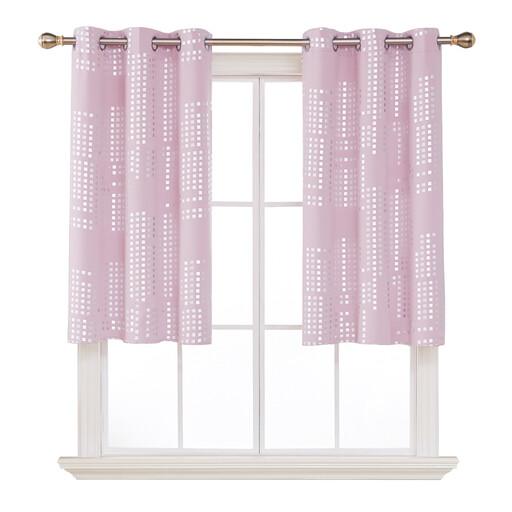
Why it's a good fit: This set of 2 offers a functional yet decorative solution for a child's or guest room. The "New Sandwich Technique" ensures reliable darkening, which is important for children's naps, while the foil print design adds a playful touch.
The model is more than just a thin, decorative curtain. It combines darkening, UV protection, and thermal properties, thus avoiding the trap of focusing only on aesthetics.
Comes as a practical set of 2 and is machine washable, which makes it easy to care for, especially in households with children.
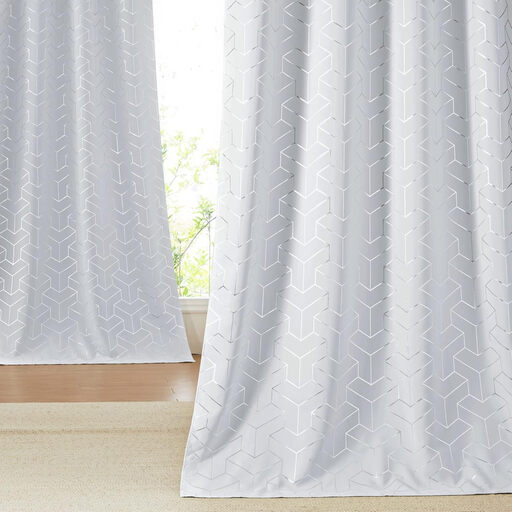
Why it's a good fit: For those who want to combine functionality with aesthetics. According to the manufacturer, the curtain blocks 85-95% of light and features a modern geometric pattern with silver foil, adding an elegant accent to any living room or bedroom.
The Triple Weave Technology ensures that this is a genuine blackout curtain and not just a decorative piece of fabric. The high level of light blockage is a clear performance feature.
Combines a high degree of darkening with a sophisticated design that enhances the room's decor.
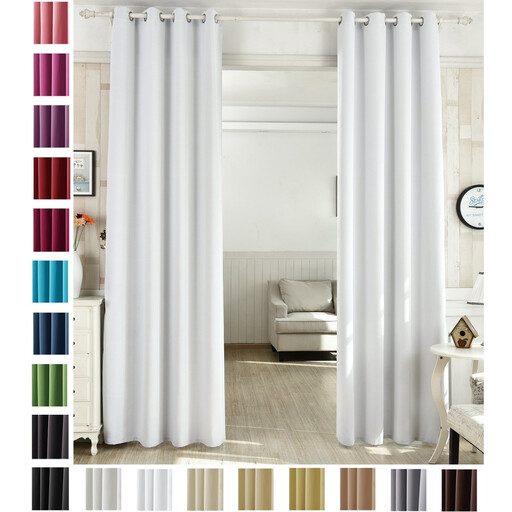
Why it's a good fit: Ideal for shift workers or people in noisy environments where maximum light and noise reduction is a priority. The curtain is made from a heavy blackout fabric with an integrated black interlining for a high degree of light-blocking.
This model avoids the "blackout" trap by explicitly mentioning a black interlining. This is a technical solution specifically designed for maximum darkening.
The combination of heavy fabric and an interlining provides good sound-dampening and energy-saving properties in addition to blackout capabilities.
We have compiled a complete, up-to-date list of products that fully meet these strict selection criteria and all applicable safety regulations.
The degree of darkness varies. A simple opaque curtain can reduce light by about 70–80%, which is sufficient for most living spaces. A true blackout curtain, especially models with triple-weave technology or a black interlining, can achieve a light reduction of 95% or more. For near-total darkness, darker colours (black, dark blue, grey) are often more effective than light colours.
Yes, a thermal curtain can contribute to energy efficiency. The dense fabric structure creates an insulating layer of air between the window and the room. In winter, this reduces heat loss through the cold glass; in summer, it blocks incoming solar heat. The actual savings depend on factors such as window quality, outside temperature, and the correct installation of the curtain.
Most polyester blackout curtains are easy to care for. However, always check the manufacturer's care label. Typically, a machine wash on a gentle cycle at a low temperature (e.g., 30°C or 86°F) is recommended. Use a mild detergent and avoid bleach. To dry, the curtains should be hung, as a tumble dryer could damage the coating or fabric. Ironing is usually possible at a low temperature.