
Lieferung heute & morgen

Qualitätsgarantie

Willkommens-Angebote freischalten: KOSTENLOSE Lieferung | Bis zu 80 % RABATT | Kostenlose 30-Tage-JoyPlus-Testphase
App herunterladen
A black blackout curtain is more than just a decorative element. It's a functional solution for undisturbed sleep, enhanced privacy, and an improved room climate. However, the market is filled with products whose marketing promises often fail to deliver. Incorrect material specifications or inadequate construction can quickly lead to a poor purchase. This guide will help you identify the crucial features and make an informed choice.
Before you make a decision, you should be aware of two common marketing traps that often lead to disappointment:
To avoid the problems mentioned above, focus on two verifiable technical specifications. These determine the actual performance of a blackout curtain.
A curtain's ability to block light, noise, and temperature depends directly on its construction.
The functionality of a curtain depends entirely on its fit.
Based on the criteria above, we have identified several products suitable for different user profiles and requirements.
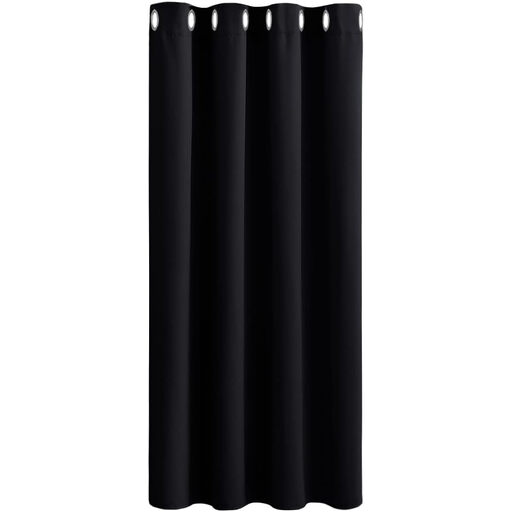
Why This Fits Their Persona: Ideal for smaller windows or when only a single curtain panel is needed. It provides a functional solution without the cost of a full set, making it perfect for students or a first apartment.
The product uses triple-weave technology and states a realistic light blockade of 85–95% instead of advertising an unrealistic 100%.
Easy installation thanks to integrated metal eyelets and solid value for a single curtain panel.
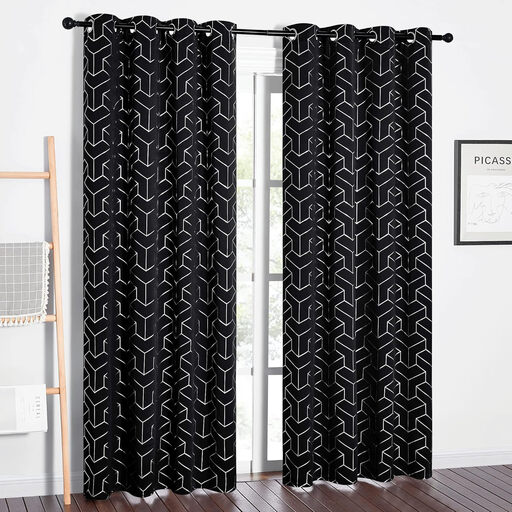
Why This Fits Their Persona: For anyone who wants to combine functionality with modern aesthetics. The geometric silver foil print adds a stylish accent to the room, setting it apart from purely functional, solid-coloured curtains.
The thermal properties are based on the verifiable triple-weave technology, not a thin, ineffective coating. This ensures a noticeable insulating effect.
Combines blackout performance with a decorative pattern. Delivered as a complete 2-panel set for an immediate, symmetrical window treatment.
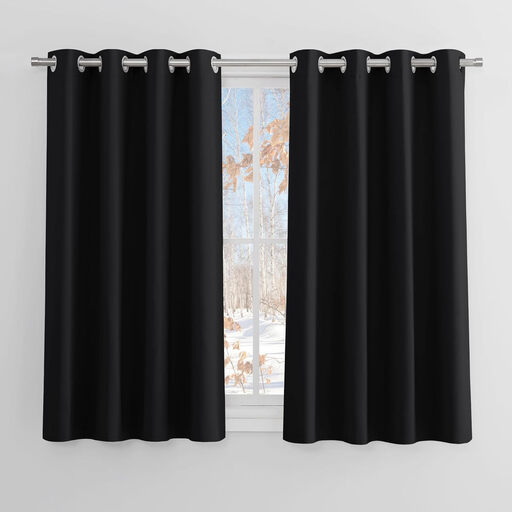
Why This Fits Their Persona: Engineered for high performance with a fabric density of 230 g/m?. Ideal for shift workers, light-sensitive individuals, or for use in a home theatre where maximum darkening of the bedroom curtain is required.
The product provides transparent specifications like fabric weight and certifications (GRS, OEKO-TEX), which prove high quality and sustainable production, rather than relying on vague marketing claims.
High fabric density (230 g/m?) for improved light, noise, and thermal insulation. Made with at least 50% recycled materials, according to the manufacturer.
We have compiled a complete, up-to-date list of products that fully meet these strict selection criteria and UK regulations.
Measure the width of the curtain rod from end to end (excluding the decorative finials). Multiply this measurement by 1.5 to 2.5 to get the recommended total width for your curtains. For the length, measure from the top of the curtain rod to the point where you want the curtain to end (e.g., windowsill, radiator, or floor).
No, a 100% value is practically unattainable. High-quality blackout fabrics with a triple-weave construction typically block 85–95% of light. To achieve near-total darkness, it is crucial to choose a curtain that is wide and long enough to minimise light gaps at the sides, top, and bottom.
Most polyester blackout curtains are machine washable at low temperatures (usually 30°C) on a gentle cycle. However, it is essential to always check the manufacturer's care label. Avoid bleach and tumble drying to prevent damage to the fabric and its functionality. Creases can often be removed by washing or ironing at a low temperature.