
Lieferung heute & morgen

Qualitätsgarantie
App herunterladen
Kategorien
A blackout curtain's primary function is to reduce light ingress in a room. However, its functionality extends beyond simple room darkening to include thermal insulation, sound absorption, and privacy. Selecting the right model is based on an analysis of technical parameters such as material composition, weave, blackout level, and mounting system. This guide breaks down the relevant criteria and presents a selection of recommended products.
A blackout curtain's effectiveness is determined by a combination of material, construction, and fit.
Most high-performance blackout curtains are made of polyester, often using Triple-Weave Technology. This weaving technique interlaces three layers of fabric: two outer decorative layers and a central layer of black yarn. This middle layer is crucial for light absorption.
The degree of darkness is expressed as a percentage, describing how much light is blocked.
A thermal curtain acts as a passive climate control system. The dense fabric structure forms an insulating air pocket in front of the window.
The hanging method affects both the appearance and the handling of the curtain.
Certificates such as OEKO-TEX STANDARD 100 indicate that the textile has been tested for harmful substances and was manufactured using safer chemical processes. This is a relevant factor for health-conscious consumers and families with children.
The following products have been selected based on their technical specifications and functional properties.
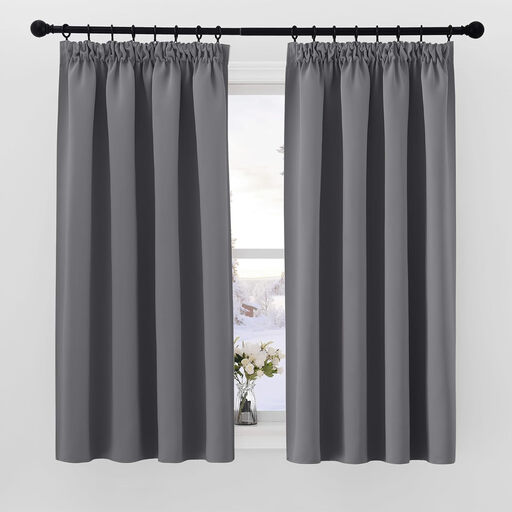
Why We Recommend This Product This model combines effective light control with a flexible hanging option. The pencil pleat tape allows for attachment to both curtain rods and tracks, ensuring high compatibility with existing systems. Furthermore, its construction from at least 50% recycled polyester addresses the aspect of sustainability.
Key Features
Best For Users who need a versatile mounting solution for different hanging systems and value the use of recycled materials.
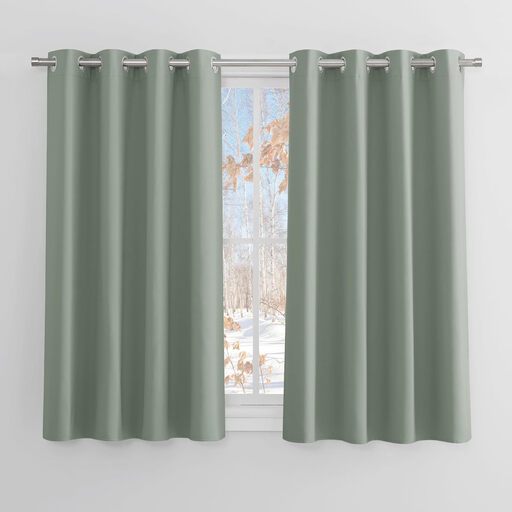
Why We Recommend This Product This product stands out with its high fabric weight of 230 g/m² and dual certification. The OEKO-TEX STANDARD 100 and the Global Recycled Standard attest to its material quality and sustainable manufacturing process. The simple metal grommets allow for quick and straightforward installation.
Key Features
Best For Individuals who prefer a straightforward installation and have high standards for material certifications and fabric density. Ideal for rooms where a slight reduction in noise is also desired.
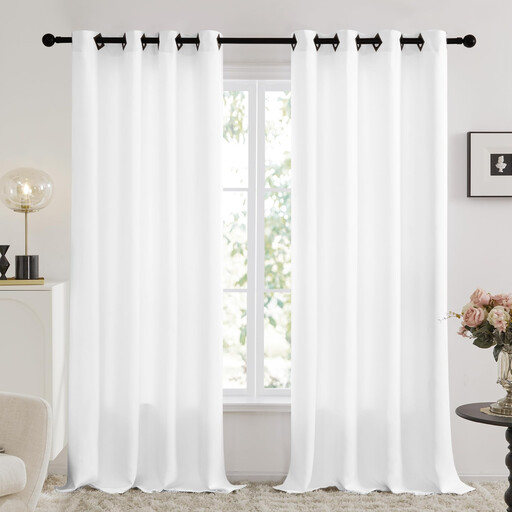
Why We Recommend This Product With a light blockage of 98%, this model offers nearly complete darkness. The OEKO-TEX certification ensures that no harmful chemicals were used, making it a safe choice for bedrooms and children's rooms. The wrinkle-resistant fabric also simplifies maintenance.
Key Features
Best For Users who require maximum darkness, such as shift workers, parents of young children, or home cinema enthusiasts. Also suitable for those seeking a product certified to be free of harmful substances.
Should the featured models not precisely meet your requirements in terms of dimensions or colour variations, a wider selection is available. For specific needs, such as models for particular room designs, you can find more options in our category for men's blackout curtains.
1. What is the difference between a privacy curtain and a blackout curtain? A privacy curtain (or opaque curtain) primarily prevents people from seeing in from the outside, thus protecting privacy, but it generally still allows daylight to pass through. A blackout curtain is designed to significantly reduce or completely block light ingress. All blackout curtains are privacy curtains, but not all privacy curtains are blackout curtains.
2. How much energy can a thermal curtain save? The energy savings from a thermal curtain depend on several factors, including window quality, outside temperature, and the fit of the curtain. The insulating air layer between the curtain and the window slows down heat exchange. This can reduce heating needs in the winter and cooling needs in the summer. While an exact quantification is not possible without on-site measurement, the physical principle is well-established.
3. How wide should a blackout curtain be? For optimal coverage and an appealing drape, it is recommended to choose a curtain width that is 1.5 to 2.6 times the width of the curtain rod or window. A greater width ensures better light-blocking at the sides and a fuller, more luxurious appearance.
Written by: Joybuy Product Recommendation Officer