
Lieferung heute & morgen

Qualitätsgarantie

Willkommens-Angebote freischalten: KOSTENLOSE Lieferung | Bis zu 80 % RABATT | Kostenlose 30-Tage-JoyPlus-Testphase
App herunterladen
A blackout clamp-fit pleated blind without drilling can quickly provide privacy and sun protection in rented and owner-occupied flats, as well as offices. But choosing the right colour or looking for the word ‘blackout’ isn’t enough. The fitting method, fabric properties and precise measurements all determine whether your blind will stay securely in place and provide the light protection you want.
The terms opaque, ‘light-filtering’ and ‘blackout’ are not always used consistently. A light-filtering pleated blind reduces visibility from outside and cuts glare, but still lets daylight through. A blind described as blackout is usually a better choice for bedrooms or children’s rooms. However, light can still come in at the sides if the blind is narrower than the glass.
Before you buy, check:
A clamp-fit pleated blind is usually attached to the window sash using adjustable clamp brackets. This fitting method is particularly suitable for rented homes, provided the frame thickness is compatible with the brackets. A pleated blind with adhesive fittings, on the other hand, is attached to a clean, smooth surface.
Adhesive brackets aren’t suitable for rough, uneven or heavily soiled surfaces. The area to be stuck should also be dry and free from grease before fitting. So ‘no drilling’ doesn’t automatically mean that every surface is suitable.
Many listings give sizes as width × height, for example, pleated blind 70x130 cm or pleated blind 90x200 cm. Before ordering, check which order the retailer uses.
To find the right size for your window blind:
For some Dream-seeker models, a general guide is to choose a width of around 4 cm more than the glass width, and a height that matches the full window frame. Don’t assume this guidance will suit every window.
Polyester is commonly used for pleated blinds. It can generally be cleaned with a soft, slightly damp cloth. Check the specific product description: an opaque pleated blind can provide privacy without making the room completely dark.
Options that reduce more light are a good choice for bedrooms and rooms where you work at a screen. A light-filtering fabric may be enough for a living room, kitchen or bathroom. Water-resistant doesn’t mean waterproof. Products described as water-resistant shouldn’t be exposed to splashes over long periods.
A clamp-fit pleated blind needs enough space on the window sash and compatible clamp brackets. The brackets mustn’t block the handle or press against the window when it’s closed.
For adhesive fittings, bear the following in mind:
Always follow the fitting instructions for your model. Some of the models mentioned here are specifically unsuitable for roof windows or sloping roof windows.
Many pleated blinds can be adjusted from the top or bottom using a sliding handle. Check that the controls suit your window, balcony door or patio door. Keep controls and cords out of reach of young children, and follow the manufacturer’s safety guidance.
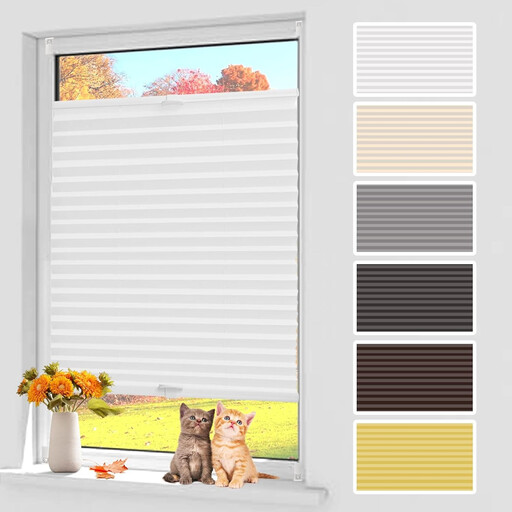
Why this product suits you: Its compact size and described adhesive or clamp-fit options make it suitable for smaller standard windows in rented homes, living rooms or offices.
The product description specifies light-filtering fabric that provides privacy, rather than making a blanket promise of complete darkness. This gives you a more realistic idea of how much light it will block.
White polyester fabric, internal fitting for windows and doors, and height-adjustable operation.

Why this product suits you: Its double honeycomb structure, metal frame and clamp brackets for frame thicknesses of 10 to 23 mm will appeal to buyers who pay close attention to construction and fitting requirements.
The stated frame thickness makes it easier to check whether the blind will fit. The product is also explicitly described as unsuitable for roof windows.
Made from 100% polyester, according to the product details, with top and bottom operating handles and fabric described as moisture-repellent for indoor use.
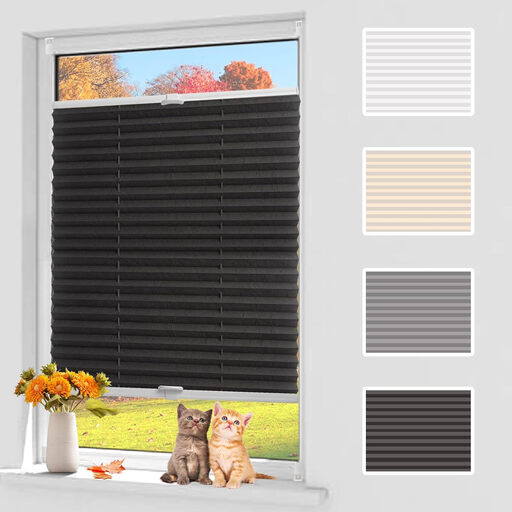
Why this product suits you: At 200 cm high, it’s a good option for larger windows, balcony doors or internal doors. Charcoal makes a striking contrast in living rooms, offices and hallways.
The product description says the fabric provides privacy but doesn’t block out all light. This helps set realistic expectations about how much light it will reduce.
90 × 200 cm, adjustable clamp brackets and suitable for use on windows and doors, according to the product description.
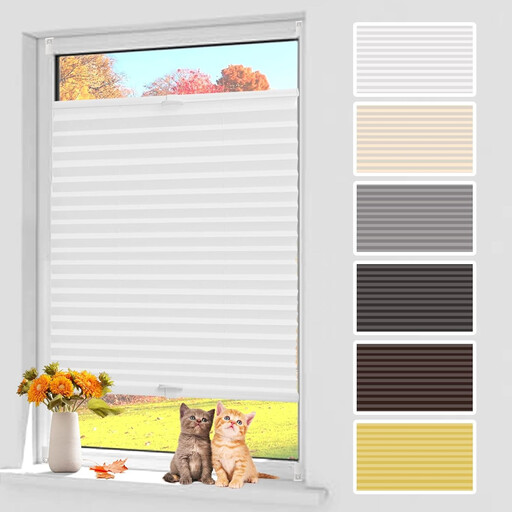
Why this product suits you: Described as offering blackout, privacy and sun protection, it’s aimed at anyone looking to reduce the light coming into a bedroom, children’s room or home office.
The product page mentions both clamp-fit and adhesive fitting. Before you buy, check which brackets are included and make sure they’re suitable for your surface.
70 × 130 cm, white polyester fabric and adjustable height, according to the product description.
We’ve put together a complete, regularly updated list of products that meet these strict selection criteria and fully comply with the safety regulations in force across the EU.
Careful alignment is particularly important for large doors and windows that are opened frequently. The blind mustn’t catch on the handle or any adjacent parts when you open or close the window or door.
How long it lasts depends on the fabric, how it’s operated, exposure to sunlight, cleaning and the fitting. It’s not possible to give a reliable one-size-fits-all estimate. Check the clamp or adhesive brackets regularly, and move the handle without pulling or jerking it. If the blind starts to come loose, realign or replace the fittings.
A clamp-fit pleated blind is generally a renter-friendly option, as you don’t need to drill into the wall or window frame. With adhesive fittings, however, how well the adhesive holds and how easily it can be removed can vary depending on the surface. If you have delicate frames or specific terms in your tenancy agreement, check which fitting methods are permitted.
An opaque pleated blind reduces visibility from outside but may still let daylight through. A blackout pleated blind is designed to reduce the amount of light more significantly. The actual effect also depends on the fabric construction, the size of the window and any gaps at the sides. Always check the product description and choose the right size.