Which freezer option is right for you?

Shared household with a large pea harvest

If you’re freezing several fresh batches at a time on a regular basis, the batch size for each freezing cycle needs to work alongside the space required for other food. The Verbraucherzentrale and the Federal Centre for Nutrition explain the key considerations when choosing an appliance and freezing food.

Small shared household with limited space

You’ll want a well-organised layout that doesn’t block a doorway or worktop in the shared kitchen. The Verbraucherzentrale and Exquisit can help you assess whether you need an appliance and check its dimensions.

Occasional pea freezer

If you only freeze the odd portion, first check whether your existing freezer compartment is suitable and has enough space. The Federal Centre for Nutrition explains the difference between a freezer function and storing food that’s already frozen.

What matters when freezing peas?

Existing four-star freezer compartment

A good fit if: it can hold occasional portioned batches and its stated freezing capacity is sufficient.

The trade-off: you won’t need another appliance running all the time, but shared space and freezing capacity may be limited.

Compact upright freezer

A good fit if: your existing compartment isn’t big enough, but space is limited and you want to keep portions neatly organised.

The trade-off: drawers make it easier to organise food, but make sure the door has room to open and that the freezing capacity and annual energy consumption suit your needs.

Larger upright freezer

A good fit if: several people regularly freeze larger quantities at once and need separate sections.

The trade-off: more interior space takes up more room; an oversized appliance can use more electricity than necessary, warns the Verbraucherzentrale.

Chest freezer

A good fit if: you regularly have large quantities to store, have enough floor space and can label containers clearly.

The trade-off: the Verbraucherzentrale considers this design more energy-efficient than an upright freezer, but individual portions may be harder to find and reach.

What you need What to check before buying Who will find this especially important?
Freezing capacity Check that the exact model is suitable for four-star freezing, then compare its freezing capacity in kg/24 h with the amount you plan to freeze at a time. If we’re freezing several fresh portions at once, the freezing capacity needs to match the batch; around 33% of consumers put this first.
Organising your supplies Choose drawers and compartments to suit the containers you use; label portions with their contents, quantity and date. If you share supplies with others, you’ll want to identify and find individual portions quickly; around 25% of consumers prioritise keeping a shared freezer organised.
Available space Check the dimensions, route into the room and space in front of the open door for the exact model. If the kitchen is shared, the appliance needs to fit without blocking a doorway or worktop; around 25% of consumers check the available space first.
Energy use and maintenance Compare annual energy consumption in kWh, suitable usable capacity and defrosting method. If the kitchen is also a living space, check the noise levels too. If you’re running an additional appliance all the time, you’ll want to avoid unnecessary energy use and extra maintenance; around 17% of consumers prioritise these ongoing considerations.

Common buying mistakes

  • Confusing usable capacity with freezing capacity

    Litres tell you how much the appliance can store, not how much fresh peas it can freeze in 24 hours.

    Compare the largest batch you plan to freeze, in kilograms, with the model’s stated capacity in kg/24 h, then decide on portion sizes that suit.

  • Buying an especially large appliance “just in case”

    An oversized freezer can use more electricity than necessary. A smaller model isn’t automatically more energy-efficient, either.

    First work out how much shared storage space you need, then compare the annual energy consumption of models with a suitable capacity.

  • Checking only the external dimensions with the door closed

    In a shared kitchen, you also need to be able to open the door fully. For example, the manufacturer lists a depth of 107 cm with the door open for the Exquisit GS81-040B.

    Measure the space, route into the room and door clearance for the exact appliance model.

  • Assuming NoFrost and a static chest freezer need the same maintenance

    Liebherr lists NoFrost for the FNd 4625, while Beko describes the HSM14550 as a static chest freezer. The two models also differ in how they’re defrosted.

    Compare the defrosting method, how easy it is to reach labelled portions and annual energy consumption, rather than choosing based on volume alone.

    A static appliance may take time to defrost manually.

Brands and product ranges at a glance

Exquisit

Compact upright models for smaller spaces; the GS81-040B is one example.

  • Exquisit lists a capacity of 87 l, three drawers, a freezing capacity of 4,4 kg per 24 hours and annual energy consumption of 84 kWh for the GS81-040B.
  • Check whether 4,4 kg/24 h is enough for the largest batch of peas you’ll prepare at once; these figures apply to this model only.

Liebherr

According to the manufacturer, the FNd 4625 is an upright freezer with NoFrost and a total capacity of 199 l.

  • Liebherr lists a noise level of 37 dB for the FNd 4625.
  • At 145,5 × 59,7 × 67,5 cm, this model needs more vertical space than a compact under-counter appliance; manufacturer specifications aren’t an independent performance comparison.

Beko

The range includes different designs, including the HSM14550 chest freezer and the RFNE312E43WN upright freezer.

  • Beko lists a capacity of 148 l and external dimensions of 91,2 × 75,5 × 67,5 cm for the static HSM14550 chest freezer.
  • For the RFNE312E43WN, the same product page lists 275 l in the title and 282 l in the technical specifications. Check the usable capacity on the current product data sheet for the exact model.

Haier

According to the manufacturer, the H4F240WEE is an upright freezer with a capacity of 240 l and four drawers.

  • Haier lists Total No Frost and a switchable fridge and freezer function.
  • To store blanched peas, the appliance needs to be set to freezer mode; manufacturer specifications alone don’t prove it’s better than other models.

Joybuy products for peas and shared supplies

This selection of Joybuy products includes compact and larger upright freezers, as well as chest freezers, to suit different quantities of peas and available spaces.
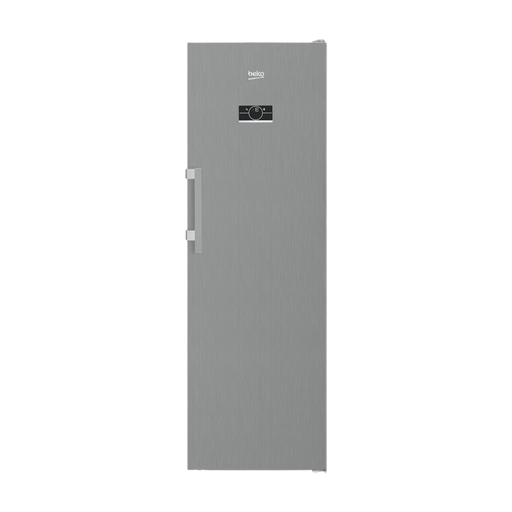
Beko B7RFNE315XP freezer

Beko B7RFNE315XP freezer, 286 l, No Frost, energy class D

For regularly freezing larger batches, the product description lists a freezing capacity of 17 kg per 24 hours.

286 l capacity; five drawers, three compartments and two door shelves.

Freestanding; according to the description, suitable for unheated rooms down to −15 °C.

View on Joybuy

CHiQ chest freezer with a capacity of 99 l

CHiQ chest freezer, 99 l, four-star freezing

For a compact footprint, the product description lists a capacity of 99 l and a floor area of 0,26 m².

Four-star freezing; freezing capacity of 4,5 kg per 24 hours.

Includes a wire basket and castors, and the lid stays open at an angle according to the description.

View on Joybuy

COMFEE RCU60WH2(E) freezer

COMFEE' RCU60WH2(E) freezer, 60 l

For a tight space, the description lists a capacity of 60 l and three storage areas.

Four-star freezer compartment; freezing capacity of up to 6 kg per 24 hours.

Dimensions: 44,5 × 47,5 × 84,5 cm. Freestanding, with a reversible door hinge according to the description.

View on Joybuy
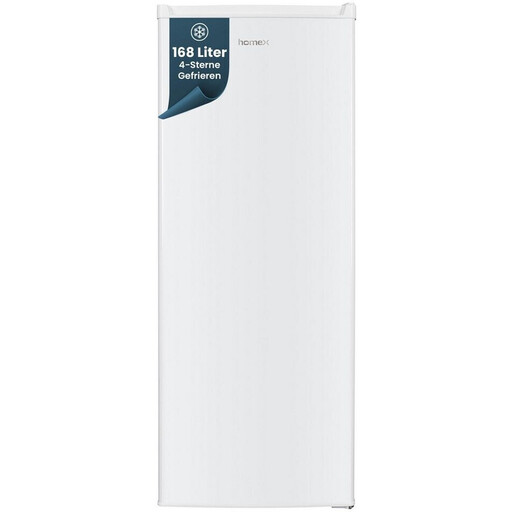
homeX FS1681E-W upright freezer

homeX FS1681E-W upright freezer, 168 l, energy class E

For regularly freezing larger batches, the product description lists a four-star compartment and a freezing capacity of 7,8 kg per 24 hours.

Four drawers and a flap compartment; annual energy consumption of 190 kWh.

Dimensions: 54,4 × 57,1 × 142,6 cm; 40 dB and a reversible door hinge according to the product specifications.

View on Joybuy

Exquisit chest freezer with a capacity of 142 l

Exquisit chest freezer, 142 l, four-star freezing

For freezing larger batches at a time, the description lists a freezing capacity of 7 kg per 24 hours.

142 l capacity, removable basket and fast-freeze function.

Dimensions: 70,5 × 84,5 × 55 cm. Manual defrosting is required.

View on Joybuy

Frequently asked questions

Can I freeze blanched peas in a three-star compartment?

The Federal Centre for Nutrition recommends a four-star compartment for freezing food. A three-star compartment is for long-term storage of food that’s already frozen and can’t replace this freezing function.

What should I do with peas after blanching?

The Federal Centre for Nutrition recommends cooling vegetables in iced water after briefly blanching them, then putting them into suitable freezer containers in portions and noting the contents, quantity and date. Try not to put newly frozen food directly on top of food that’s already frozen.

How do I compare the energy consumption of freezers?

For appliances with a suitable usable capacity, compare the annual energy consumption in kWh shown on the EU energy label. To estimate your own costs, multiply this figure by your electricity price per kWh. The label figure is measured under standardised conditions, so actual usage may differ.

Which energy labels apply to freezers, and what happens to my old appliance?

According to the European Commission, the EU energy label with classes A to G has applied to the household freezers covered by the rules since 1 March 2021. The Umweltbundesamt lists local collection points for disposal. When buying a new appliance of the same type and size, you may also be able to return your old appliance free of charge under the conditions described, including for online purchases with delivery.

Is a manufacturer’s guarantee the same as your statutory rights?

No. Your statutory rights are against the retailer, while a guarantee is a voluntary promise governed by its own terms and conditions. Check the retailer’s details and the guarantee terms separately.