
Lieferung heute & morgen

Qualitätsgarantie

Willkommens-Angebote freischalten: KOSTENLOSE Lieferung | Bis zu 80 % RABATT | Kostenlose 30-Tage-JoyPlus-Testphase
App herunterladen
Depending on how it is used, a blanket should keep you pleasantly cool, provide comfortable warmth, be easy to care for or serve as a stylish home accessory. This is where buyers often make the wrong choice: a duvet advertised as “breathable” may still be too warm for summer nights, while a decorative sofa throw can lose its shape after just a few washes.
That is why it is worth looking at measurable specifications before buying, rather than relying on general marketing claims.
Terms such as “extra warm”, “breathable” or “for all seasons” are difficult to compare without further information. For a summer duvet, the fill weight and material composition provide better guidance. A value of, for example, 200 g/m² or 200 GSM describes the amount of filling per area. This cannot replace your personal judgement, but it does allow for a more objective comparison.
A 150 x 200 cm blanket is typically suitable as a sofa throw, bedspread or for a single bed. It may be too narrow for a double bed. A 180 x 200 cm blanket offers more coverage, but as a purely decorative throw it will also be heavier and bulkier. When choosing a duvet, you should also check your mattress size, the amount of overhang you want and your duvet cover dimensions.
Natural fillings, such as those used in a down duvet or feather duvet, often require different care from polyester and fleece materials. For a machine-washable blanket, the washing temperature, spin cycle, drying method and avoiding bleach are all important. If specific care instructions are missing, cleaning the blanket in everyday use may be more time-consuming than expected.
A down duvet contains a higher proportion of down, while a feather duvet has a higher proportion of feathers. Down is lighter and particularly fluffy; feathers give the filling more structure. The exact composition should always be stated as a percentage.
Synthetic blankets made from polyester, flannel or fleece are practical for sofas and living areas, as they are often easy to clean. A fleece blanket or cosy blanket can be suitable for relaxed evenings, the guest room or as an extra layer. For sensitive skin and allergies, information about fabric density, material compatibility and care is more relevant than blanket promises.
The OEKO-TEX label refers, depending on the underlying standard, to tested textile components and possible limits for harmful substances. Check which specific standard is stated. Labels such as RDS or Downpass relate to requirements concerning the origin and treatment of down and feathers. They should not be confused with medical suitability.
Descriptions such as “hypoallergenic blanket” should be viewed as a product feature based on the individual product description. They do not provide a general guarantee for all allergy sufferers. If you are sensitive to house dust, a densely woven cover and regular care may be helpful; however, your individual requirements remain the deciding factor.
For beds and sofas, you should compare these details directly:
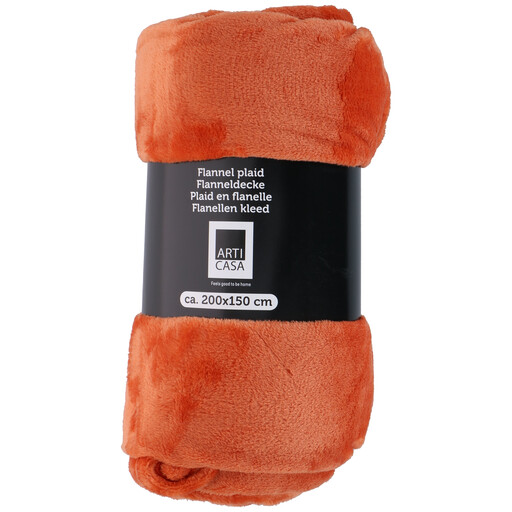
Why this product suits the profile: The 150 x 200 cm fleece blanket can be used on the sofa, on the terrace or as a decorative layer on the bed.
The product description states polyester and fleece as the materials and mentions machine washing and colourfastness. This makes the material and care requirements clearer.
150 x 200 cm, polyester fleece material and machine washable according to the product description.
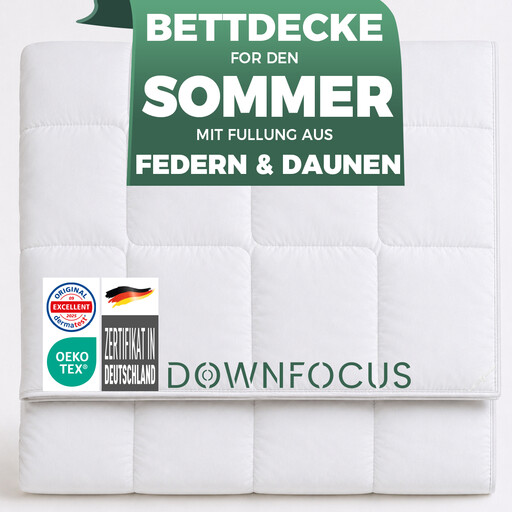
Why this product suits the profile: This summer duvet is designed for warm nights and offers extra length with its 155 x 220 cm size.
According to the product details, it has a 200 GSM fill comprising 90% feathers and 10% down. This makes the warmth and materials easier to assess.
155 x 220 cm, 200 GSM, OEKO-TEX information and RDS and Downpass references according to the product description.
Why this product suits the profile: The more compact size is intended for a single bed, while the fill weight stated in the product description is designed for warm nights.
At 135 x 200 cm and 200 GSM, with the stated filling blend, the relevant dimensions and material details can be compared directly.
Single-bed size, 90% feathers and 10% down according to the product details, plus OEKO-TEX and RDS references.
When buying a lightweight duvet, you should consider your room temperature and personal sleeping habits as well as the fill weight. People who feel the cold easily may need a different option from those who often feel warm at night.
A cosy blanket or fleece blanket for the sofa can be larger if it needs to cover several people. For decorative purposes, colour, texture and shape retention are important. Families should pay particular attention to clear washing instructions. A machine-washable blanket can be more practical for everyday use if it needs to be cleaned regularly.
We have put together a complete, regularly updated list of products that fully meet these strict selection criteria and the safety regulations applicable in the EU.
A summer duvet with a lower fill weight may be suitable for warm nights. Look for details such as GSM, filling material and cover fabric. No blanket can be recommended universally, as room temperature and individual perceptions of warmth vary.
For a single bed, 135 x 200 cm or 155 x 220 cm are often suitable options. A 150 x 200 cm blanket is often used as a sofa throw, bedspread or single-bed blanket. For larger areas, a 180 x 200 cm blanket may be a sensible choice. The key factors are the bed width, your height and the amount of overhang you want.
Its lifespan depends on the material, workmanship, use and care. Regular airing, the correct washing temperature and thorough drying can help maintain its performance. You should follow the care instructions particularly carefully for down and feather duvets; synthetic and fleece blankets are often easier to wash in a machine.