
Lieferung heute & morgen

Qualitätsgarantie

Willkommens-Angebote freischalten: KOSTENLOSE Lieferung | Bis zu 80 % RABATT | Kostenlose 30-Tage-JoyPlus-Testphase
App herunterladen
Reading glasses with a blue-light filter can be a practical addition for adults with age-related long-sightedness, whether you’re reading, doing crafts or working at a screen. But the label “blue-light filter” isn’t the only thing that matters. Fit, lens strength, coatings and build quality all determine whether the glasses are genuinely comfortable to wear day to day.
With lower-priced options in particular, three common marketing pitfalls can lead to the wrong purchase:
Ready-made reading glasses are designed for a specific close-up range. Common strengths are +1.50 to +3.00, but the right choice depends on your individual vision and how far away you hold your reading material.
You’ll usually hold a book or newspaper at a different distance from a monitor. So, reading glasses for older people shouldn’t be chosen based on age alone. If you already wear prescription glasses, need different strengths, or experience double vision or ongoing discomfort, ask an eye-care professional to check your prescription.
The products below are ready-made reading glasses and are not a substitute for individually tailored vision correction.
A blue-light filter changes how much light of certain wavelengths passes through the lenses. Anti-glare reading glasses, on the other hand, reduce distracting reflections on the surface. A pair of glasses can have both features, but they serve different purposes.
For the selected 3-packs, the product information states a light transmission of over 91.2%. This figure comes from the respective product descriptions and should be treated as information supplied by the manufacturer or retailer. It is not evidence of a medical benefit. A blue-light filter also doesn’t guarantee that eye discomfort will be prevented.
For computer work, monitor brightness, text size, viewing distance and regular breaks are still important. Screen glasses aren’t automatically the same as individually prescribed glasses for working at a screen.
Lightweight reading glasses may feel more comfortable if you wear them for long periods. The models featured here are described as weighing 24.3 g and combining metal with plastic or TR plastic.
Other features that can make a difference to everyday use include:
Clean the lenses with a soft microfibre cloth and keep the glasses in a case when you’re not wearing them. Paper towels, clothing and abrasive cleaning products can damage the coatings.
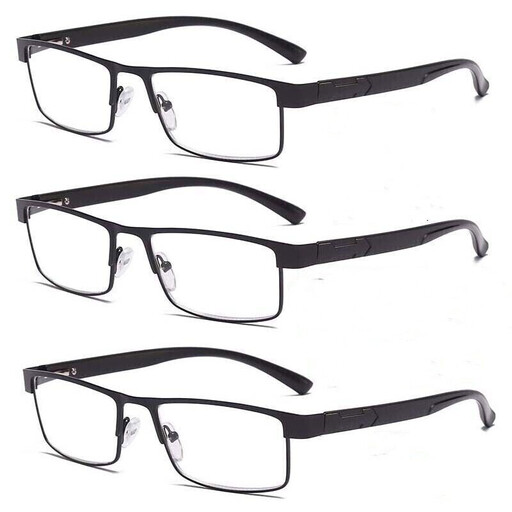
Why this product suits this profile: Three identical pairs with +1.50 lenses are a good option if you want simple reading glasses for several regular spots and would prefer to start with a moderate strength.
The product description clearly states the strength, glasses format and number of pairs included. This makes it easier to check whether they match your needs.
3-pack, 24.3 g according to the product information, anti-glare coating and +1.50 strength.
Why this product suits this profile: The +2.00 version is for buyers looking for a specific mid-range strength, while also considering coatings and care features for regular reading and screen use.
The product description lists the strength, lens dimensions, weight and coating features. This makes it easier to check the details before using the glasses for computer work or reading.
+2.00, 3 identical pairs, double-hardening treatment, water-repellent coating and anti-glare lenses according to the product information.
Why this product suits this profile: If you use reading glasses regularly in several places, the +2.50 version gives you three identical pairs, with details about the frame, coatings and care.
The higher strength isn’t recommended as a one-size-fits-all choice; it should suit your personal reading distance. The stated dimensions also help you check the fit.
+2.50, three pairs, 57 × 35 mm lens size, plus scratch-resistant and water-repellent coating according to the product description.
We’ve put together a complete, regularly updated list of products that meet these strict selection criteria and fully comply with the safety regulations in force in the EU.
Don’t leave your reading glasses loose in a bag with keys or other hard objects. To help them last longer:
A 3-pack can make everyday use more convenient, but it won’t automatically extend the life of each pair. The condition of the coatings and plastic lenses still depends on how they’re handled, cleaned and stored.
They may be suitable for short to medium viewing distances, as long as you choose the right strength. However, a monitor is often further away than a book. If you spend long periods working at a screen every day, individually prescribed screen or workplace glasses may be a better choice.
There’s no single strength that suits everyone. Your choice depends on your reading distance, existing prescription and personal comfort. The options in this range go from +1.00 to +3.00. If you’re unsure, ask an eye-care professional to check the right strength for you.
It depends on the material, coating and how well you look after them. A hardening treatment can improve scratch resistance, but won’t prevent scratches in all conditions. A case, microfibre cloth and gentle cleaning can help keep your glasses in good condition for longer.