
Lieferung heute & morgen

Qualitätsgarantie

Willkommens-Angebote freischalten: KOSTENLOSE Lieferung | Bis zu 80 % RABATT | Kostenlose 30-Tage-JoyPlus-Testphase
App herunterladen
A blender has become a cornerstone of the modern kitchen. Whether for a quick morning smoothie, a creamy soup for lunch, or preparing baby food—the applications are incredibly versatile. However, the sheer variety of models, from compact smoothie makers to high-performance blenders, can be overwhelming.
This guide is here to help. We'll introduce different types of blenders and break down their technical features to provide you with an objective basis for your purchasing decision.
The right blender for you depends on your individual needs. Three key criteria will help you find the perfect appliance.
The motor's power, measured in watts (W), is a crucial factor in a blender's performance.
The quality and design of the blades also play a significant role. Multi-pronged stainless steel blades are standard and contribute decisively to the blending result.
The volume of the blender jar should suit your household size.
For the material, you typically have a choice between plastic (often Tritan) and glass. Tritan is lightweight, shatterproof, and usually BPA-free. Glass containers are heavier, resist odours and stains, and are often suitable for processing hot ingredients.
For some tasks, an immersion blender can be a practical alternative or supplement. A hand blender is versatile, allowing you to purée soups directly in the pot or prepare dips in smaller containers. It has a small footprint but can't achieve the same smoothness as a powerful blender when processing fibrous ingredients or ice. However, some sets include accessories that significantly expand their functionality.
Here are three models that cater to different user profiles.
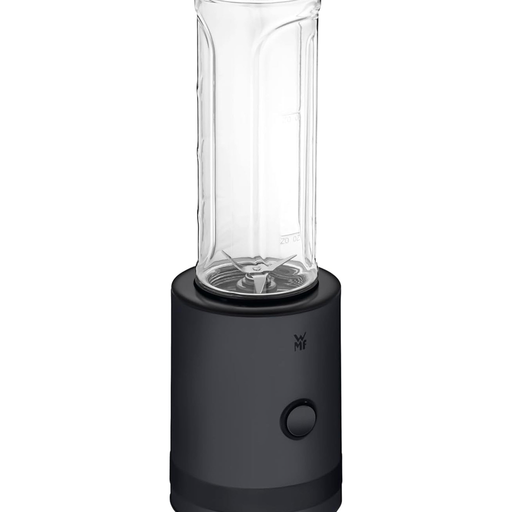
Why it stands out: This model is specialised for one clear task: making smoothies quickly and easily for on-the-go consumption. Its compact design in matte stainless steel and simple operation make it a practical everyday tool.
Pros:
Who is it for? Ideal for individuals, professionals, and students looking for a straightforward blender for smoothies who value quick preparation and portability.
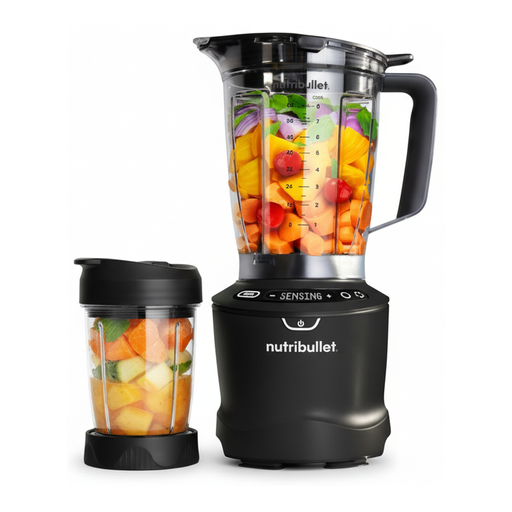
Why it stands out: The nutribullet SmartSense is a versatile high-performance blender that combines power with intelligent controls. With its touchscreen display and automatic programs, it's aimed at users who want to make more than just smoothies.
Pros:
Who is it for? A great choice for families and home cooks who need a powerful and versatile blender for a wide range of recipes—from green smoothies and hot soups to nut butters.
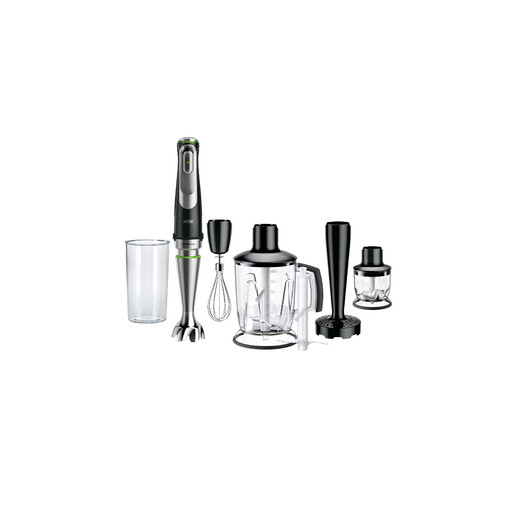
Why it stands out: The Braun MultiQuick 9 isn't a traditional blender, but an extremely powerful immersion blender that, thanks to its extensive accessories, takes on many functions of a standard blender and a food processor. Its flexibility makes it a true all-rounder.
Pros:
Who is it for? For users seeking maximum flexibility in a minimal footprint. Anyone who wants a single device to purée, chop, whisk, crush, and blend will find a multifunctional solution here.
If these models aren't quite what you're looking for, or if you want to filter by other features, you can find more appliances in our collection.
Discover our full range of Black Blenders.
The term smoothie maker usually refers to a smaller, less powerful blender designed specifically for making drinks. It's often a personal blender with a container that doubles as a travel bottle. A traditional blender is typically larger, more powerful, and more versatile for various kitchen tasks like preparing soups, sauces, or batters.
The required wattage depends on its intended use. For simple shakes and smoothies made from soft fruits, 300–600 watts is often enough. To regularly process ice, frozen fruit, nuts, or fibrous vegetables into a smooth consistency, a high-performance blender with 1000 watts or more is recommended. More power generally results in a finer texture and shorter blending times.
This depends on the model and the container material. Hot liquids can usually be processed without issue in glass blender jars. For plastic containers, you should check the manufacturer's specifications; many are only rated for liquids up to a certain temperature (e.g., 60°C or 140°F). A vented lid is also crucial to allow steam pressure to escape and prevent the lid from popping off. Never fill the container to the maximum line when using hot ingredients.