
Lieferung heute & morgen

Qualitätsgarantie

Willkommens-Angebote freischalten: KOSTENLOSE Lieferung | Bis zu 80 % RABATT | Kostenlose 30-Tage-JoyPlus-Testphase
App herunterladen
A blender can make smoothies, purée soups, crush ice and process ingredients for sauces and baby food. In practice, however, appliances vary considerably in design, capacity, cleaning requirements and permitted operating time. A high wattage rating alone therefore does not determine whether a model is right for your household.
The Joybuy Product Recommendation Officer selection focuses on transparent product data and common purchasing challenges. This makes it easier to assess whether a jug blender, hand blender, smoothie blender or compact smoothie maker is the right solution.
Motor power is often prominently advertised. However, it does not by itself indicate how well a kitchen blender can handle frozen ingredients or thick mixtures. The blade design, speed control, container size and operating times specified by the manufacturer are equally important.
A 300-watt personal blender may be suitable for small portions of soft fruit. For family-sized portions, frozen fruit or frequent ice crushing, an appliance with a larger container and higher rated power may be more practical.
A 1.5-litre container does not automatically hold 1.5 litres of liquid during operation. Ingredients can rise, and many appliances have a separate mark for the maximum fill level. Hot liquids are often subject to additional restrictions.
Therefore, consider whether you want to prepare individual portions or several glasses at once. For families, a blender with jug holding around 1.2 to 2.1 litres may be a sensible choice. For a small kitchen, 0.5 to 0.6 litres is often sufficient.
A blender with accessories can make it possible to slice, chop and whisk. However, attachments you do not need take up storage space and have to be cleaned regularly. Focus on the functions you will actually use: a whisk is useful for cream or egg whites, while a chopper is designed for herbs and smaller ingredients. An additional grinding cup may be intended for spices or coffee beans.
A jug blender has a fixed container. It is suitable for smoothies, shakes, salsas and, depending on the manufacturer’s specifications, ice. The ingredients are generally processed more evenly without having to hold the appliance in your hand.
A hand blender is used directly in a saucepan, cup or measuring jug. This saves space and makes it easier to purée soups and sauces. With non-stick cookware, the foot or blade guard should be designed to prevent direct contact with the bottom of the pan. A 4-in-1 hand blender can replace several individual appliances with its whisk, chopper and measuring jug.
Compare rated power, speed settings and the pulse function together. A pulse setting works in short intervals and can provide greater control when processing ice or coarse ingredients. A blender with an ice-crush function is designed for frozen drinks and ice cubes, provided this is explicitly stated in the product description.
Follow the operating instructions: some appliances may only be run for a short time at once and then require a cooling break. Overfilling or continuously processing very hard ingredients can put strain on the motor.
Containers are available in glass, Tritan and other plastics, each with different properties. Glass is heavier and less likely to absorb odours, while plastic containers are often easier to carry. A BPA-free blender is a specific material statement for the contact parts named; check whether it applies to the container, lid and accessories.
Important features include:
Before cleaning, the blender must be switched off and unplugged from the mains. The blades must not be touched directly. The motor housing must never be placed in water.
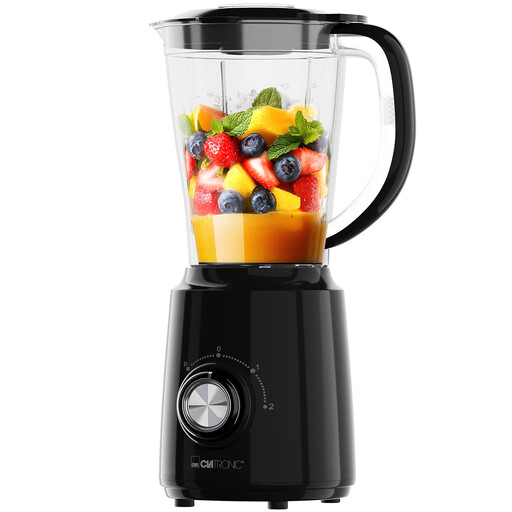
Why this product suits the profile: This jug blender combines a 1.5-litre container with three speed settings, a turbo or pulse function and an ice-crush function. It is suitable for smoothies, shakes, sauces and smaller family-sized portions.
The product specifications explicitly state the container size, BPA-free construction and removable stainless-steel blades. This makes key comparison data clear before purchase.
1.5-litre container, four stainless-steel blades, automatic safety shut-off and a filling opening in the lid.
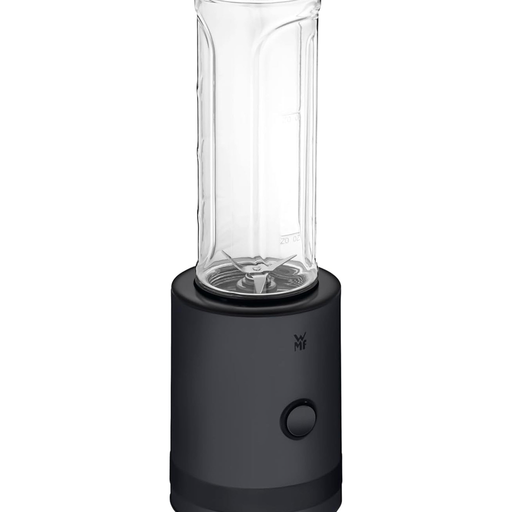
Why this product suits the profile: This compact smoothie blender operates at 300 watts and comes with two 0.6-litre drinking containers. It is suitable for individual portions and for users who want to take the containers with them.
The small capacity automatically limits the quantities you can prepare. The instructions also specify a maximum operating time of one minute and a temperature limit of 60 °C.
Two 0.6-litre Tritan containers with leak-proof lids, four stainless-steel blades and dishwasher-safe containers.
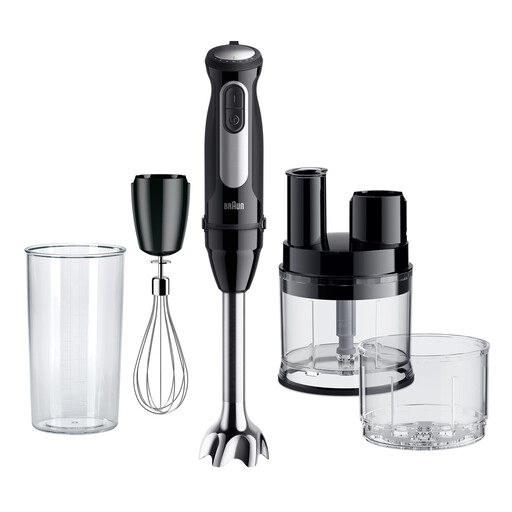
Why this product suits the profile: This 4-in-1 hand blender features a 1000-watt motor, 25 speed settings plus turbo, as well as attachments for blending, chopping, slicing, grating, whisking and ice crushing.
Variable control allows you to adapt the speed to soft and firmer ingredients. At the same time, each accessory should only be used as instructed and with the connection correctly locked into place.
BPA-free 600-millilitre measuring jug, EasyClick Plus system and dishwasher-safe removable parts, according to the product specifications.
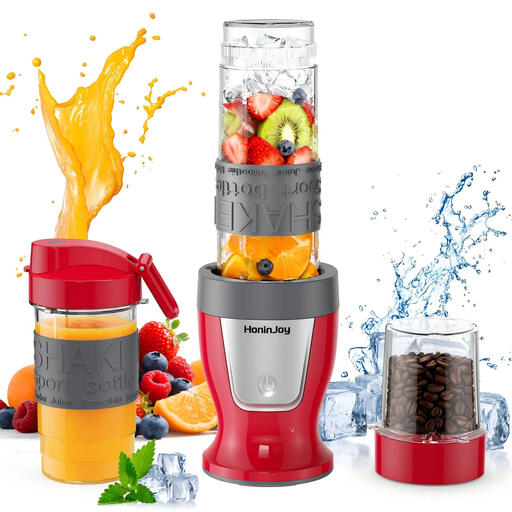
Why this product suits the profile: This personal blender comes with two portable BPA-free cups measuring 20 and 14 ounces, as well as a grinding cup. It is designed for small kitchens, the office, commuting or individual shakes.
The locking mechanism with several microswitches prevents operation if the cup and blade unit are not fitted correctly. Overheating protection is also specified.
650-watt peak motor, pulse function, two portable cups and dishwasher-safe accessories, according to the product description.
We have compiled a complete, regularly updated list of products that fully meet these strict selection criteria and the safety regulations applicable in the EU.
For individual smoothies, a personal blender with a drinking cup is practical. For several portions or larger quantities, a jug blender with a suitably sized container is recommended. When processing frozen fruit and ice, look for an explicitly stated ice-crush function and check the permitted fill level.
The service life depends on use, cleaning, workload and maintenance. Cut hard ingredients into suitably sized pieces, do not exceed the maximum fill level and follow the specified operating and cooling times. Unusual noises, excessive heating or damaged blades are all reasons to stop using the appliance.
The actual cost depends on the power rating and operating time. A 1000-watt blender running for five minutes theoretically uses around 0.083 kilowatt-hours. In practice, blending processes are usually much shorter. However, a lower wattage does not automatically mean lower consumption if the appliance needs to run for longer.