
Lieferung heute & morgen

Qualitätsgarantie

Willkommens-Angebote freischalten: KOSTENLOSE Lieferung | Bis zu 80 % RABATT | Kostenlose 30-Tage-JoyPlus-Testphase
App herunterladen
A blender should do more than simply purée fruit. Many households use a blender for smoothies, protein shakes, sauces, soups, baby food or frozen ingredients. At the same time, high wattages, unclear capacities and extensive accessories can make choosing the right model difficult.
As a Joybuy Product Recommendation Officer, I filter the relevant details using clear, verifiable criteria. It is not about making sweeping promises, but about answering one question: which blender suits the way you use it, your kitchen and the amount of cleaning you are prepared to do?
A high motor power rating can indicate that a blender has more capacity for demanding chopping tasks. However, it does not, on its own, tell you how smooth a smoothie will be. The blade design, jug geometry, speed, programmes and recommended operating time also affect the results.
A high-performance blender with 2,000 watts is designed for hard ingredients and larger quantities, but it will need more space and may be heavier. For individual smoothies, a compact smoothie maker with considerably less power is often sufficient.
The stated “2 litres” does not always mean that you can fill the blender with 2 litres while it is running. Hot or foamy ingredients may require a lower fill level. Always check the markings on the jug and the information in the instruction manual.
Families can benefit from a large jug. For professionals, students or smaller kitchens, however, a personal blender or a blender with on-the-go cups may be more practical.
Removable blades, dishwasher-safe parts and a filling opening can reduce the effort involved in everyday use. At the same time, extensive accessories mean more individual parts to store and clean.
Before buying, you should therefore check:
For soft fruit and liquids, a model in the 300 to 500-watt range is often sufficient. A model with 1,000 to 1,500 watts provides additional power for frozen fruit, nuts or thicker mixtures. High-performance blenders with 2,000 watts are more suitable for households that regularly process large quantities or hard ingredients.
Also look for different speed settings and a pulse function. Short pulses make chopping easier and can be useful for ice. However, the “Ice Crush” label should not tempt you to add hard ice blocks without any liquid. The manufacturer’s guidance on quantities and operating times is what matters.
Glass is less prone to retaining smells or becoming discoloured, but it can be heavier and may be damaged by sudden changes in temperature. Tritan and other plastics are lighter and often more resistant to breakage. If a jug is labelled BPA-free, this information should come directly from the product description or the manufacturer’s documentation.
Capacities of 1.5 to 2 litres are practical for several portions. For smaller servings, on-the-go cups prevent unnecessary decanting. Also check whether the drinking lid is leakproof and whether the cup and lid are dishwasher-safe.
Rubberised feet, a locking system and a securely closing lid are important features. Models with a safety cut-out, for example, will only start when the jug has been fitted correctly.
Extra care is needed when preparing soups and sauces. Many models cannot process boiling liquids. The product details available for several of the appliances listed here specify a maximum temperature of 60 °C. Allow hot ingredients to cool and always follow the relevant instruction manual. A blender for soups and sauces is not automatically approved for blending hot contents.
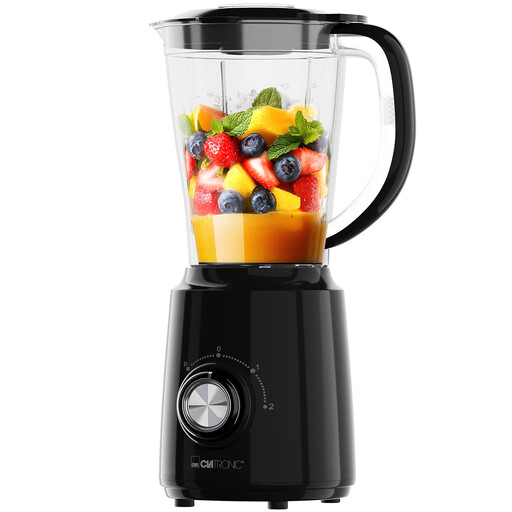
Why this product suits this profile: The 1.5-litre jug, three speed settings and pulse/turbo function cover typical household tasks without relying on an extensive range of specialist accessories.
The BPA-free jug specification, measurement scale and removable stainless-steel blade make it easier to monitor the quantity and clean the appliance.
500-watt motor, 1.5-litre jug, ice-crush function and safety lock.
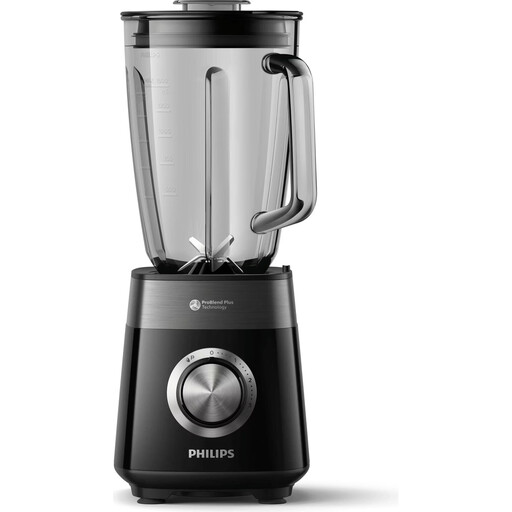
Why this product suits this profile: This blender combines 1,200 watts with a 2-litre glass jug, making it suitable for families and home cooks who regularly prepare larger quantities.
The practical jug capacity, glass construction and removable, dishwasher-safe parts make the technical specifications easy to verify in everyday use.
2-litre glass jug, 1,200 watts, pulse and ice-crush functions, plus a safety lock.
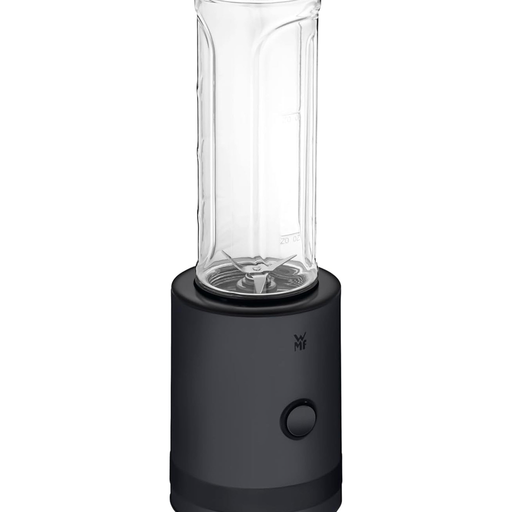
Why this product suits this profile: Two 0.6-litre containers with drinking lids are ideal for individual portions at the office, on campus or on the way to the gym.
The defined 600 ml fill line and the one-minute limit for continuous operation help to prevent overloading.
300 watts, 23,000 revolutions per minute, two Tritan containers and dishwasher-safe vessels.
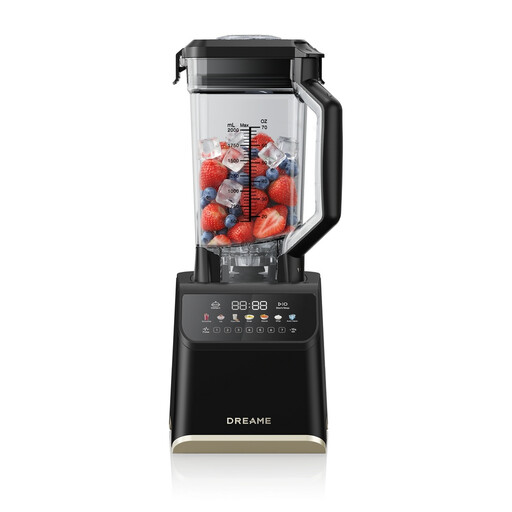
Why this product suits this profile: Nine programmes, seven speed settings and two containers make this a good choice for households that regularly prepare smoothies, ice, sauces and larger portions.
The combination of a 2.0-litre jug, 700 ml on-the-go cup and auto-clean programme clearly shows the different ways in which it can be used.
2,000 watts, 27,000 revolutions per minute, BPA-free Tritan containers and nine programmes.
We have put together a complete, regularly updated list of products that fully meet these strict selection criteria and the safety regulations applicable in the EU.
A traditional jug blender is suitable for larger quantities and repeatable results. A hand blender is more flexible for soups, sauces and small bowls. A hand mixer, on the other hand, is mainly designed for stirring, whisking and kneading, and cannot replace a blender with blades.
A compact smoothie blender is ideal for individual portions. If you want to purée vegetables, process nuts and prepare several portions, you should consider the jug capacity, blade design and motor power together.
For soft ingredients and simple drinks, 300 to 500 watts may be sufficient. For frozen fruit, ice or nuts, models from around 1,000 watts are often more suitable. However, wattage is only one selection criterion; operating time, blades and the manufacturer’s guidance remain important.
No. Check the instruction manual. Several appliances have temperature limits, such as 60 °C. Allow soup to cool before blending it, and open a container holding hot contents carefully, as steam and pressure can build up.
Its lifespan depends on how often it is used, the ingredients processed, cleaning and the correct fill level. Overloading, running the blender dry and operating it continuously for too long can put strain on the motor and blades. Regular cleaning, secure locking and following the manufacturer’s instructions all help ensure reliable operation.