
Lieferung heute & morgen

Qualitätsgarantie

Willkommens-Angebote freischalten: KOSTENLOSE Lieferung | Bis zu 80 % RABATT | Kostenlose 30-Tage-JoyPlus-Testphase
App herunterladen
A blender can prepare smoothies, sauces, dips, cocktails and puréed soups. However, not every appliance is right for every household. High wattages, extensive accessories or large containers can often lead to unsuitable purchases if the specifications do not match how you actually intend to use the blender.
Motor power in watts is a useful technical reference, but on its own it says little about the blending results. The blade design, container geometry, rotational speed, controls and permitted operating time also play a role. An appliance with 1,000 watts is not automatically better suited to every task than a compact blender with 500 or 600 watts.
It is also important to check whether the stated power refers to rated power or peak power. These figures cannot be compared directly.
A 1.5-litre container is practical for preparing several portions. However, with thick mixtures, you may not always be able to use the full volume. Many appliances have a separate marking showing the maximum liquid level.
For individual portions, large containers can take up more space than necessary. A personal blender or smoothie maker with a drinking cup is often more suitable in this case. Conversely, a small cup can mean additional blending cycles for a family or when preparing several portions.
Non-removable blade units, narrow container openings or numerous hard-to-reach accessories increase the cleaning effort. The claim ‘easy to clean’ should therefore be checked against specific features:
Moderate power is often sufficient for soft fruit, yoghurt or cooked vegetables. Frozen fruit, nuts and ice place greater demands on the blades, motor and controls. A pulse function enables short, controlled bursts and can be useful for coarse ingredients or ice.
More speed settings make it easier to adjust the consistency. A multifunction blender with a chopper, grinding cup or whisk can supplement several kitchen appliances. Before buying, however, check whether the accessories genuinely meet your needs.
Glass is temperature-resistant and generally absorbs fewer odours, but it can be heavier. Plastic containers are often lighter and practical for everyday use. With a BPA-free blender, the claim should apply to the specific components, such as the container, drinking cup or lid.
Hot liquids should only be processed if the manufacturer expressly permits this. Steam can create pressure in many appliances. For this reason, boiling liquids must not be placed in a blender that has not been approved for this use. Read the operating instructions and observe the maximum fill level and permitted operating time before first use.
A kitchen blender with a large container requires sufficient worktop space and clearance, particularly beneath wall cupboards. For small kitchens, student accommodation or the office, a smoothie maker or compact personal blender may be more suitable.
If you regularly prepare larger quantities, you should also consider container capacity, weight, non-slip feet and how easy the blades are to clean. A hand blender, on the other hand, takes up little space and can be used directly in a saucepan or suitable container. However, it cannot replace a countertop blender for every task, such as preparing larger quantities or crushing certain types of ice.
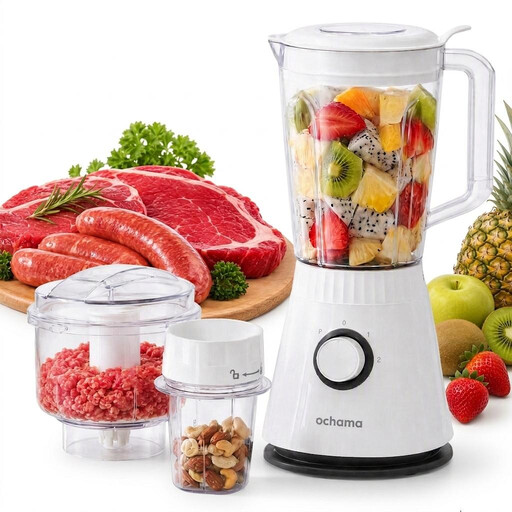
Why this product suits this profile: The 1.5-litre container, three speed settings and accessories for chopping or grinding cover a range of common kitchen tasks.
The intended uses and the 600-watt rating are described clearly. Before use, check the filling quantity, operating time and suitability for hard ingredients in the instructions.
1.5-litre container, three speed settings and attachments for chopping and grinding.
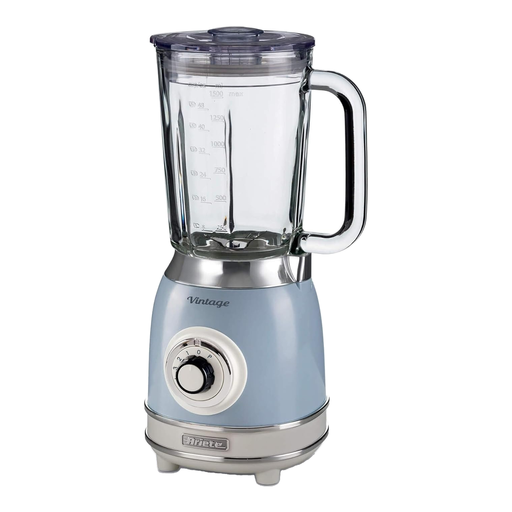
Why this product suits this profile: The glass container holds 1.5 litres. Four speed settings, a pulse function and a dedicated ice-crush function enable a variety of preparations.
The choice can be assessed based on the glass container, four stainless-steel blades, speed settings and dishwasher-safe components.
1,000 watts, 1.5-litre glass container, four speed settings and an ice-crush function.
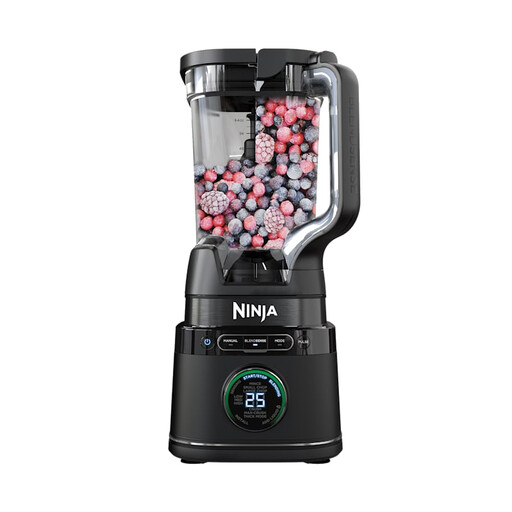
Why this product suits this profile: The large container is designed for family-sized portions, meal prep and drinks for several people. Three speed settings and pulse mode are available.
The maximum liquid capacity of 1.9 litres is stated explicitly. You should also observe the maximum operating time of 60 seconds and avoid using hot liquids.
2.1-litre container, 1,000 watts, six stainless-steel blades and dishwasher-safe removable parts.
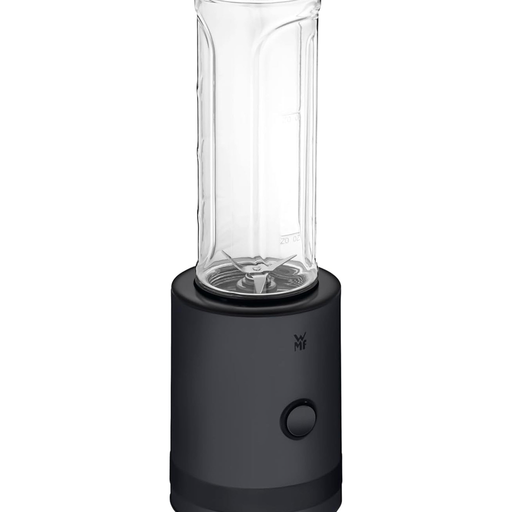
Why this product suits this profile: Two 0.6-litre containers with drinking lids are ideal for individual portions and taking your drink to work, university or on the go.
The compact design means a large container does not permanently take up valuable worktop space when making small portions. The 600-millilitre marking also clearly limits the filling quantity.
Two 0.6-litre Tritan containers, drinking lids, stainless-steel blades and dishwasher-safe containers.
We have put together a complete, regularly updated list of products that fully meet these strict selection criteria and the safety regulations applicable in the EU.
A countertop blender works with a fixed container and is often suitable for drinks, larger quantities, ice or frozen ingredients, provided the manufacturer has approved it for these uses. A hand blender is used directly in a saucepan or container and is practical for soups, sauces, purées and smaller portions. Models with a chopper and whisk extend the range of possible uses.
The service life depends on how often it is used, the ingredients, cleaning and adherence to the maximum operating time. Hard ingredients, overfilling and prolonged operation can put strain on the motor. To help your blender last longer, use short blending intervals, allow it to cool between uses, assemble it correctly and clean it after every use.
Electricity consumption depends on the motor power and the actual operating time. An appliance with a higher wattage uses more electrical power over the same period than a model with a lower wattage. As blending cycles are usually short, day-to-day consumption mainly depends on usage duration, frequency and the selected setting. Wattage alone is therefore not a reliable way to compare running costs.