
Lieferung heute & morgen

Qualitätsgarantie

Willkommens-Angebote freischalten: KOSTENLOSE Lieferung | Bis zu 80 % RABATT | Kostenlose 30-Tage-JoyPlus-Testphase
App herunterladen
A blender can prepare smoothies, soups, sauces, dips and baby food. The choice ranges from a compact smoothie maker to a versatile hand blender with a chopper attachment. This variety is exactly what makes comparing models difficult: a high wattage rating alone says little about ease of use, accessories or cleaning.
Poor purchases are often caused by three typical pitfalls:
A jug blender has a fixed motor unit and a blending jug. It is suitable for larger quantities, drinks and, depending on the manufacturer’s specifications, ice or frozen ingredients. A personal blender usually works directly with a smaller cup, which can then be used as a drinking vessel. This saves on washing up and storage space.
A hand blender, on the other hand, is used in a saucepan, measuring jug or bowl. It is practical for soups, sauces, purées and baby food. With a whisk or chopper attachment, it can take on additional tasks. This design is often appealing for smaller kitchens because the motor unit and accessories can be stored compactly.
A cordless blender or portable blender does not need to be connected to a socket while in use. Check the battery capacity, charging time, number of blending cycles and weight. A USB-C connection can make charging easier in everyday use, but it does not replace checking the actual operating time.
Wattage is a useful technical guide, but it is not the only indication of quality. A compact motor is often sufficient for soft fruit and liquids. Frozen fruit, nuts and ice place greater demands on the blades, torque and short pulse intervals.
Look out for:
A powerful blender is therefore not automatically suitable for every application. For example, hot liquids should only be processed if the operating instructions expressly allow this. Steam can create pressure inside closed cups.
For individual portions, around 500 to 700 millilitres is often sufficient. Families or users who want to prepare several portions will generally need a larger container. Always observe the MAX mark and leave enough room for the ingredients to move around during blending.
For drinking cups, it is important to look for clear information in the product specifications: leak-proof lids, a secure closure and materials such as Tritan or BPA-free plastic components can make everyday use easier. However, the term BPA-free blender refers to the specified food-contact components and should be checked against the specific product description.
A dishwasher-safe blender reduces the effort involved in cleaning. Often, only the cups, lids and removable blades can go in the dishwasher; the motor unit, cable and mains plug must not be submerged in water. Handle sharp blades carefully and rinse them immediately after use.
The following products have been categorised according to clear criteria such as design, power, accessories, capacity and portability.
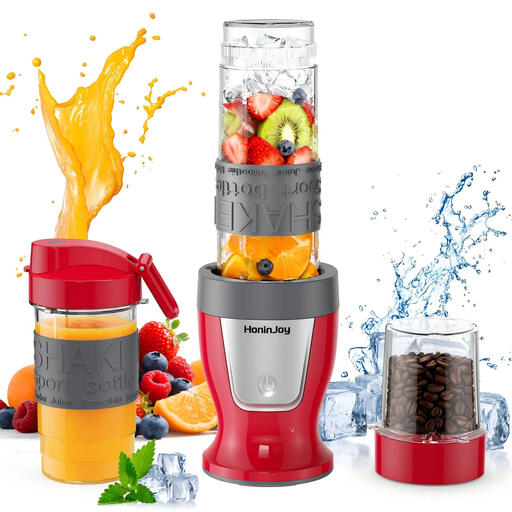
Why this product suits this user profile: This compact personal blender offers 650 watts, a pulse function, two portable BPA-free cups with capacities of 20 and 14 oz, plus a grinding cup for coffee or spices. This makes it suitable for individual portions and smaller kitchens.
The product specifications state specific cup sizes, a safety lock and overheating protection rather than making only general claims about power.
Two drinking cups, a grinding cup and removable dishwasher-safe components.
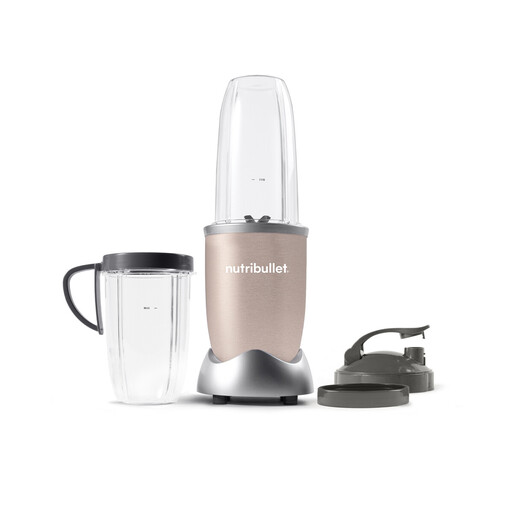
Why this product suits this user profile: According to the product specifications, this model has a 900-watt motor, a six-blade stainless steel assembly and 925- and 700-millilitre cups.
The two containers cover both individual portions and larger quantities. The stated limit for short blending cycles makes the expected usage clear.
925-ml cup, stainless steel blades and dishwasher-safe food-contact components.
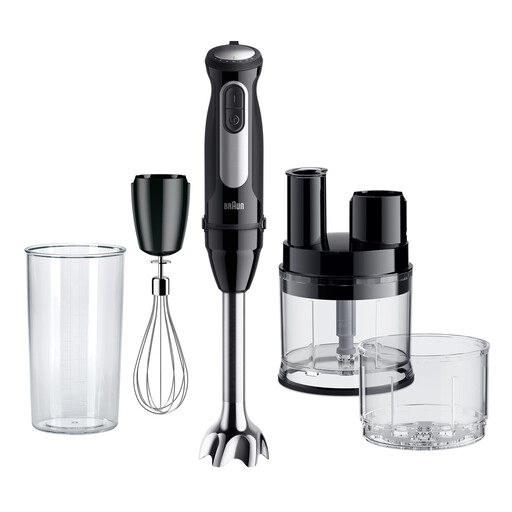
Why this product suits this user profile: This 1,000-watt hand blender offers 25 speed settings, a turbo mode and several attachments for blending, chopping, slicing, grating and whisking.
The variable speeds allow for gradual processing. The EasyClick Plus system is designed for frequent accessory changes.
25 speed settings plus turbo mode and a comprehensive range of accessories, including an ice crusher attachment.
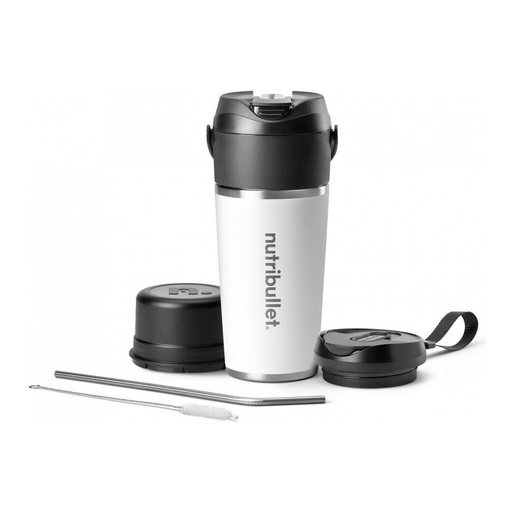
Why this product suits this user profile: This portable blender runs on a battery, charges via USB-C and comes with an insulated stainless steel cup with a capacity of 590 millilitres.
The product description states a battery life of more than 14 blending cycles and highlights the short operating intervals.
Cordless operation, USB-C connection and a drinking vessel with a carry handle.
We have put together a complete, regularly updated list of products that fully meet these strict selection criteria and the safety regulations applicable in the EU.
For individual portions, a smoothie maker, personal blender or blender with a drinking cup is practical. Look for sufficient capacity, a pulse function and information on processing frozen ingredients. For several people, a larger jug blender is the better choice.
The lifespan depends on how often it is used, the ingredients, cleaning and compliance with the operating limits. Overloading, running the blender continuously without a cooling break and incorrect cleaning can put strain on the motor and seals. Without a manufacturer’s guarantee and details of individual use, it is not possible to give a general operating lifespan.
Consumption depends on the power rating and operating time. A 1,000-watt appliance theoretically uses 0.167 kilowatt-hours when running for ten minutes; in practice, blending usually takes place in short intervals. Running time, your tariff and how often you use the appliance are therefore more important for ongoing costs than wattage alone.