
Lieferung heute & morgen

Qualitätsgarantie

Willkommens-Angebote freischalten: KOSTENLOSE Lieferung | Bis zu 80 % RABATT | Kostenlose 30-Tage-JoyPlus-Testphase
App herunterladen
A blender should make creamy smoothies, crush ice or chop ingredients for sauces and purées. In practice, however, poor buying decisions are often not down to a lack of motor power, but to an unsuitable design, components that are difficult to clean or unrealistic expectations of cordless models.
A high wattage rating describes the electrical power consumption, but on its own it says little about the results. Blade design, jug shape, speed, programme length and maximum capacity also make a difference. A 900-watt personal blender may be suitable for individual smoothies, while a full-size blender with a large jug is better suited to making several portions.
A cordless blender needs a motor, battery and charging electronics, and often comes with a sturdy stainless steel cup. As a result, it can weigh considerably more than a small corded mini blender. Before buying, check that the weight, cup size and charging time suit how you plan to carry it.
A blender with a built-in blade can be handy on the go, but it needs particularly careful cleaning. Models with a separate blade assembly are more flexible to handle, although taking them apart and reassembling them can be more time-consuming. Check which parts are dishwasher-safe and whether replacement seals, drinking lids or blades are available.
Look for rust-resistant stainless steel blades and a clearly marked maximum fill line. Frozen fruit and ice need enough liquid and short bursts of blending. An ice-crushing blender is not automatically suitable for hard objects, coffee beans or whole spices. Always follow the manufacturer’s instructions.
Take particular care with hot liquids. Steam can build up pressure inside sealed cups. According to their product information, many compact appliances are designed for cold or cooled ingredients only.
A USB-C blender is easy to recharge, but battery life depends on the battery, ingredients and cycle length. Claims such as “more than ten blending cycles” should always be considered alongside the stated duration of each cycle. For corded appliances, 220–240 volts, a suitable plug and a dry, stable surface are all important.
Continuous operation matters too: some models can only be used in short cycles and need time to cool down afterwards. If you prepare large quantities every day, a full-size or high-performance blender with a suitably sized jug may be a better choice.
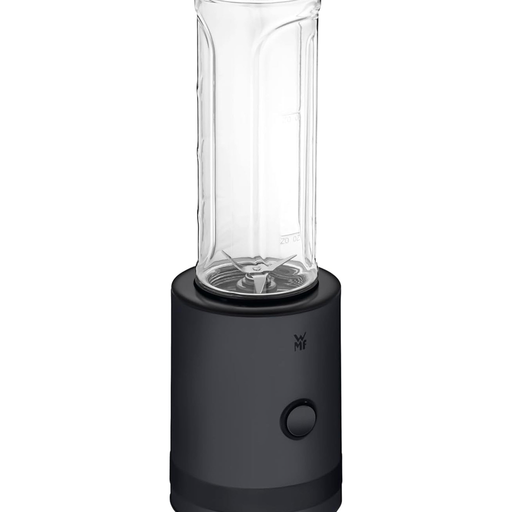
Why it suits this profile: Two 0.6-litre cups and a compact design make it a good fit for individual portions and kitchens where space is limited.
The cup capacity and maximum running time of one minute are clearly stated, helping you avoid overestimating what it can do with small portions.
300 watts, 23,000 rpm, stainless steel blades and dishwasher-safe cups with drinking lids.
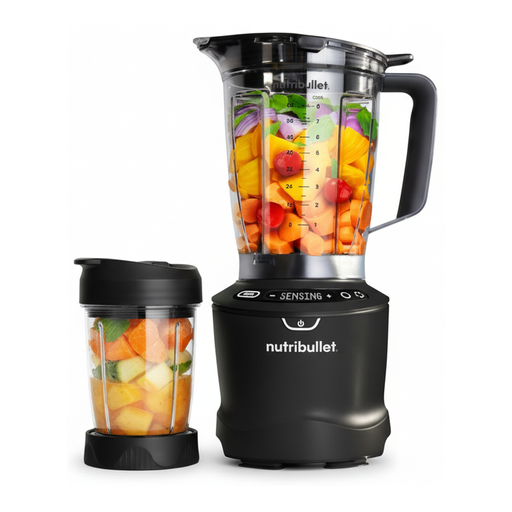
Why it suits this profile: This full-size blender combines a 1.8-litre jug with two smaller travel cups and five speed settings.
The digital display shows the programme and remaining running time, giving you more control than an appliance with just one automatic cycle.
1500 watts, five speeds, pulse function, 1.8-litre jug and two extra cups.
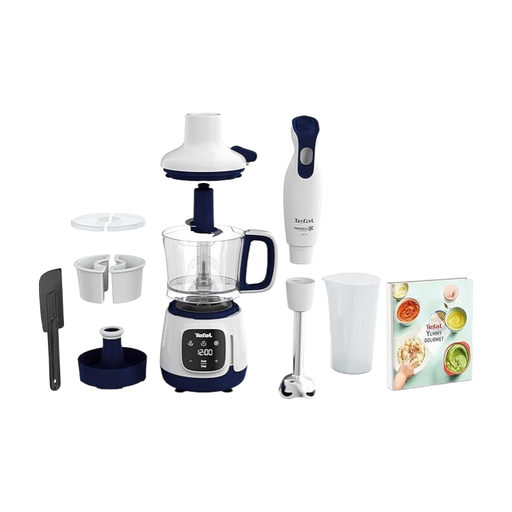
Why it suits this profile: Families can cook, blend, warm and defrost ingredients. The 1-litre jug is designed for baby food and small family portions.
This is more than just a smoothie maker: automatic programmes and an additional hand blender cover several stages of food preparation.
Four functions, digital display, two ceramic containers and dishwasher-safe accessories, according to the product description.
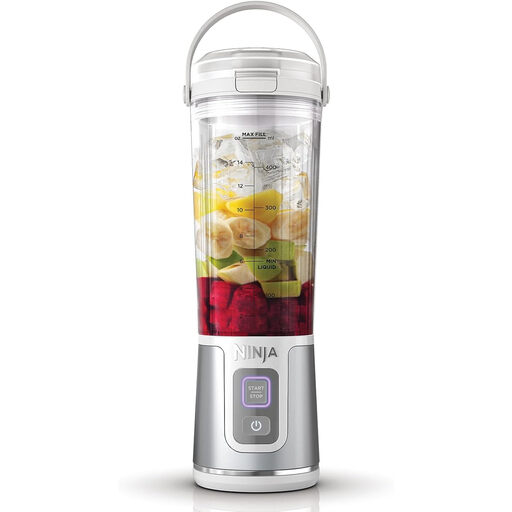
Why it suits this profile: This cordless blender has a carry handle, a USB-C charging port and a 530-millilitre cup for individual portions.
The product information states a maximum blending capacity of 470 millilitres and a charging time of around two hours, making it easier to plan ahead when you’re out and about.
USB-C rechargeable battery, separate drinking lid, carry handle, stainless steel blade and dishwasher-safe cup.
We’ve put together a complete, regularly updated list of products that meet these strict selection criteria and fully comply with the safety regulations applicable in the EU.
For coffee lovers, a bean-to-cup coffee machine complements a blender rather than replacing it. The Melitta Caffeo Solo E950 Slim uses coffee beans and features a 15-bar pump system, three aroma settings and a programmable water volume ranging from 30 to 220 millilitres. Its 20-centimetre width may be useful in smaller kitchens. If you only want to make smoothies, shakes or sauces, there’s no need for this additional type of appliance.
A personal blender or smoothie maker with a travel cup is often enough for one portion. For several people, soups or larger quantities, a full-size blender with a suitably sized jug is more practical. Capacity, blade material and approval for use with frozen ingredients are all important.
Actual usage time depends on the battery, charge level, ingredients and blending cycles. Follow the cycle duration given in the manual, don’t overfill the cup and store the appliance in a dry place. A damaged battery, unusual noises or any distortion are reasons to stop using the appliance.
For corded appliances, you can estimate electricity use with power in kilowatts × running time in hours × electricity price. Since a blending cycle usually lasts only a few seconds or minutes, electricity costs are often lower than the time and effort needed for cleaning and maintenance. With cordless models, you should also consider the charger, charging frequency and battery lifespan.