
Lieferung heute & morgen

Qualitätsgarantie

Willkommens-Angebote freischalten: KOSTENLOSE Lieferung | Bis zu 80 % RABATT | Kostenlose 30-Tage-JoyPlus-Testphase
App herunterladen
A blender can take on many tasks in the kitchen: smoothies, shakes, soups, sauces, baby food, crushed ice or chopping small ingredients. The choice ranges from a compact personal blender to a hand blender right up to a large countertop model. What really matters, however, isn't just a high wattage. The design, capacity, accessories and safety features determine whether the appliance actually fits your daily habits.
A high power rating initially only describes the motor power. It doesn't automatically tell you how evenly a blender works or how long it can be operated continuously. The blade shape, jug geometry and the recommended fill level also affect the result.
For frozen fruit or ice, a pulse or ice-crush function, suitable stainless steel blades and enough liquid are more important than a single wattage figure on the packaging.
With a jug of 1.5 or 2.1 litres, the maximum liquid mark must not be exceeded. Foam and expanding ingredients need extra space. So alongside the total size, also check the stated maximum fill capacity.
A large countertop blender is practical for family portions, but needs more worktop space. For a single serving, a personal blender with a drinking cup can be the more suitable solution.
Fixed blades or hard-to-reach areas can make daily cleaning take longer. Look for removable components, dishwasher-safe parts and clearly described care instructions. With a blender that includes a chopper or whisk, you should also know exactly which attachments are included in the box.
The models in this selection range, for example, between 500 and 1,300 watts. For soft fruit, a lower power is often sufficient. Hard, frozen or dry ingredients require suitable blades, short pulses and, if necessary, a pause between blending cycles.
Always follow the instruction manual. Some appliances may only be operated in short intervals. A high-powered blender isn't necessary for every kitchen if you mainly process soft ingredients and small portions.
Stainless steel blades are common in many kitchen blenders. The number of blades alone, however, is not a sufficient selection criterion. The construction, their position in the jug and their suitability for the intended ingredients are also important.
With a BPA-free blender, this feature should be explicitly stated in the product details for the jug or accessories. Also check:
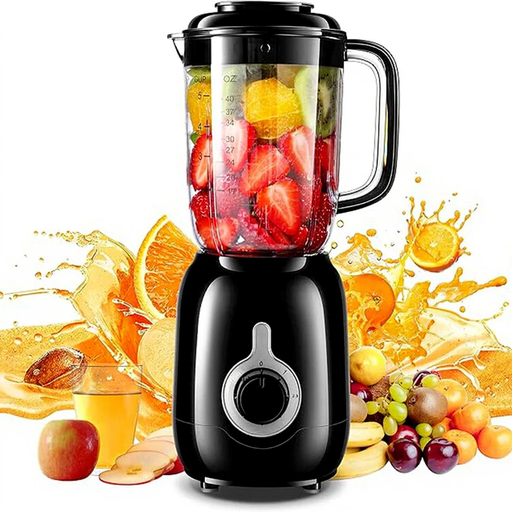
Why this product fits the profile: This countertop blender combines a 1.2-litre capacity with 500 watts, two speed settings and a pulse function. A grinding cup and a chopping cup, each with a 100-gram capacity, extend its use around the home.
The product details state both the jug size and the required minimum amount of 300 ml of liquid. This makes it easier to plan small and medium portions.
1.2-litre jug, stainless steel blades plus additional cups for grinding and chopping.
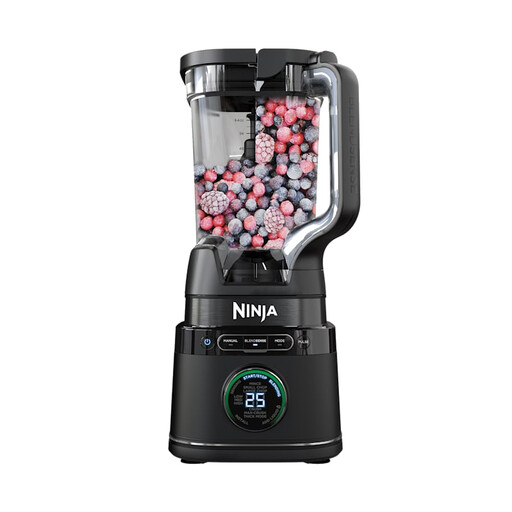
Why this product fits the profile: This model is designed for larger quantities and offers three speeds plus pulse. The jug holds 2.1 litres, with a maximum liquid capacity stated as 1.9 litres.
The manual states a maximum run time of 60 seconds, pauses between cycles and a specific liquid limit. These details help avoid overfilling and overheating.
1000-watt motor, six stainless steel blades, dishwasher-safe removable parts and BPA-free jug according to product details.
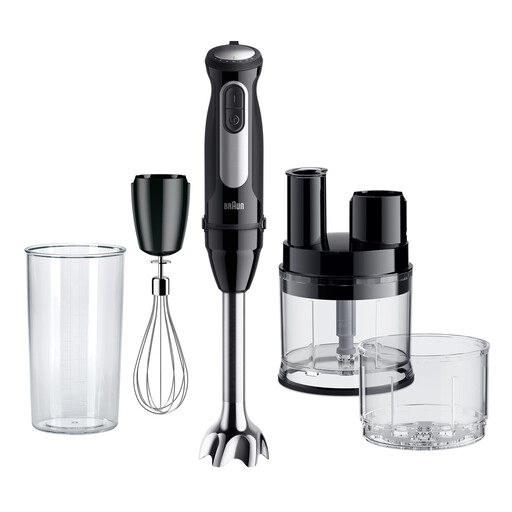
Why this product fits the profile: This hand blender features a 1000-watt motor, 25 speed settings plus turbo, and attachments for blending, chopping, slicing and whisking.
The accessories list is clearly stated. This lets you check before buying whether the whisk, chopper and ice-crush blade are actually included.
25 speed settings, turbo function, BPA-free 600 ml measuring beaker and dishwasher-safe accessories according to the details.
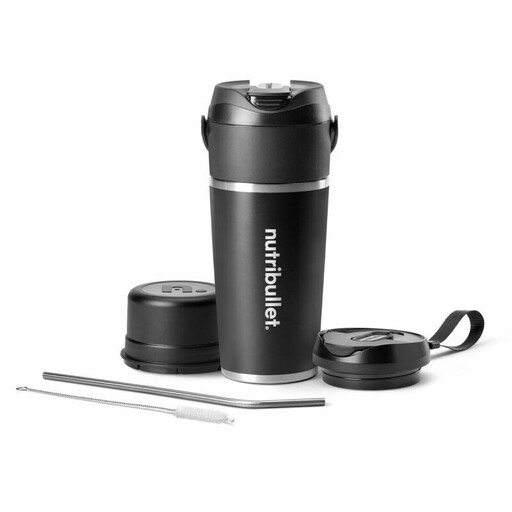
Why this product fits the profile: This portable blender runs on a USB-C rechargeable battery and uses an insulated stainless steel cup with a 590 ml capacity. This makes it ideal for single servings outside the traditional kitchen.
The battery usage and recommended short operating time are clearly described. This prevents the appliance from being mistaken for a permanently mains-powered countertop blender.
USB-C charging, 590 ml stainless steel cup, carry handle and, according to product details, more than 14 cycles per full charge.
We've put together a complete, regularly updated list of products that fully meet these strict selection criteria and the safety regulations in force in the EU.
For individual smoothies, a personal blender with a drinking cup is space-saving and practical. For several portions or frequently frozen ingredients, a countertop blender with a sufficiently large jug, pulse function and suitable stainless steel blades makes sense. Pay attention to the maximum fill level and the permitted operating time.
It's not possible to give a fixed lifespan across the board. It depends on frequency of use, ingredients, cleaning and adherence to the manufacturer's instructions. Overloading, running for too long and operating without enough liquid can strain the motor and blades. Regular cleaning and dry storage of the electrical base support proper use.
The electricity consumption depends on the motor power and the actual running time. A 500-watt appliance running for one minute theoretically uses less energy than a 1,000-watt model for the same operating time. In practice, blenders usually only run for short periods. For a more accurate estimate, you can compare the power in watts with the usage time; however, the figure on the rating plate does not replace a measurement of your individual consumption.