
Lieferung heute & morgen

Qualitätsgarantie

Willkommens-Angebote freischalten: KOSTENLOSE Lieferung | Bis zu 80 % RABATT | Kostenlose 30-Tage-JoyPlus-Testphase
App herunterladen
A blender should reliably chop ingredients, be easy to use and clean without too much effort. In practice, however, several common marketing claims can lead to disappointing purchases. A high wattage alone says little about the blade design, jug construction or the appliance’s actual suitability for ice and hard ingredients.
A large capacity is not always an advantage either: a 2-litre jug requires more storage space and is often impractical for a single portion. With a personal blender, on the other hand, the compact design can limit the maximum quantity of ingredients. That is why our selection considers the technical specifications in relation to different usage profiles.
Motor power is a useful indication, but it is not the only measure of quality. The design of the stainless-steel blades, the speed settings and the permitted operating time are also important. A blender with several speed settings makes it easier to adapt the blending process to soft fruit, nuts, frozen ingredients or sauces.
Important: according to the product information, some models may only run continuously for a short time. For example, the Ninja Professional Blender has a stated maximum continuous operating time of 60 seconds. When running several blending cycles, the appliance should be allowed to cool down between cycles.
The term blender with ice-crush function describes a specific feature, but it does not replace detailed information about operation. Depending on the model, ice may be processed using a pulse function or a dedicated setting. The quantity of ingredients, the size of the ice cubes and the addition of liquid all affect the result.
If you regularly want to prepare frozen fruit, ice cubes or thick smoothies, look for a clearly stated ice-crush function, a pulse setting and a stable base.
A BPA-free blender may have a jug and lid made from different materials. Tritan or BPA-free polycarbonate, for example, are specified for several products. A blender with a glass jug may be an alternative for shoppers who prefer glass; however, the jug is usually heavier and more susceptible to impact damage.
‘Dishwasher-safe’ does not automatically apply to the motor unit either. As a rule, only removable parts such as the jug, lid or blade attachment may be cleaned in this way. Wipe the motor unit with a damp cloth.
A large jug can be useful for families, meal prep or preparing several drinks in one go. The Ninja Professional Blender offers a 2.1-litre jug capacity, with the maximum liquid quantity stated as 1.9 litres. This difference shows why the MAX line is more important than the jug’s overall size alone.
For a single portion, 0.6 to 0.9 litres is often sufficient. A portable smoothie blender with a drinking bottle is particularly practical if you want to take your drink with you straight away.
A simple pulse function is suitable for short, controlled blending cycles. Several speed settings allow for more precise adjustment. Depending on the recipe, lower speeds can be used for softer ingredients, while higher settings are suitable for harder ingredients.
A blender with a grinder expands the range of possible uses, for example for spices or dry ingredients. However, the accessory should be explicitly intended for the particular model.
Look for:
Hot or boiling liquids are not suitable for every appliance. Several of the models mentioned here explicitly state that they should not be used to process hot liquids. Always check the safety instructions for the specific product before use.
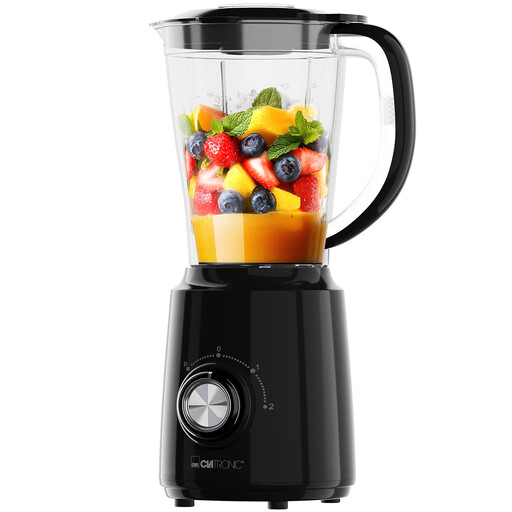
Why this product suits this profile: This kitchen blender offers a 1.5-litre capacity, four speed settings including pulse/turbo function and a clearly stated ice-crush function for everyday recipes.
The product specifications state more than just the motor power: they also include a fill scale, BPA-free jug, removable blades and a safety switch.
500-watt motor, 1.5-litre jug, four stainless-steel blades and a refill opening in the lid.
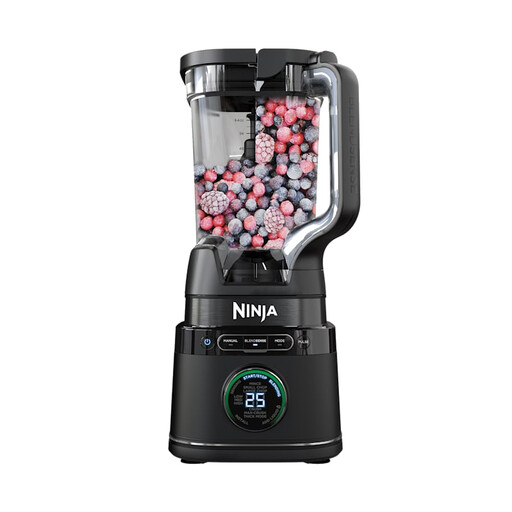
Why this product suits this profile: The large jug is designed for several portions. Total Crushing Technology, three speeds and Pulse add to the features for smoothies and frozen ingredients.
The maximum liquid quantity of 1.9 litres is clearly specified. The product also features BPA-free materials and removable dishwasher-safe parts.
1000 watts, 2.1-litre jug, six-piece stainless-steel blade assembly and three settings plus Pulse.
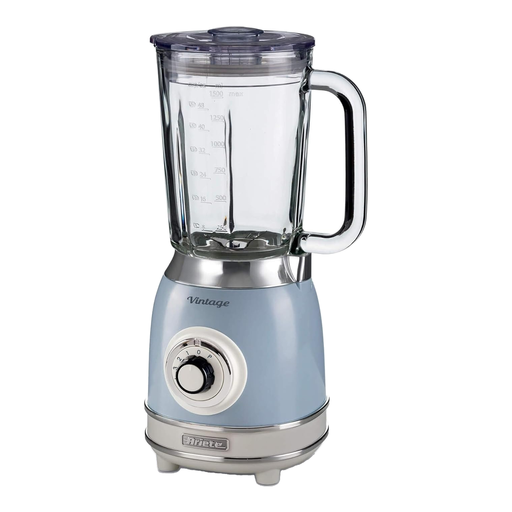
Why this product suits this profile: For households looking for a glass jug, ice-crush function and several speed settings, this model combines a 1.5-litre capacity with four speeds and Pulse.
Rather than relying solely on a design feature, the product clearly specifies the glass jug, four stainless-steel blades, four speeds and dishwasher-safe removable parts.
1000 watts, 1.5-litre glass jug, ice-crush function and measuring cap.
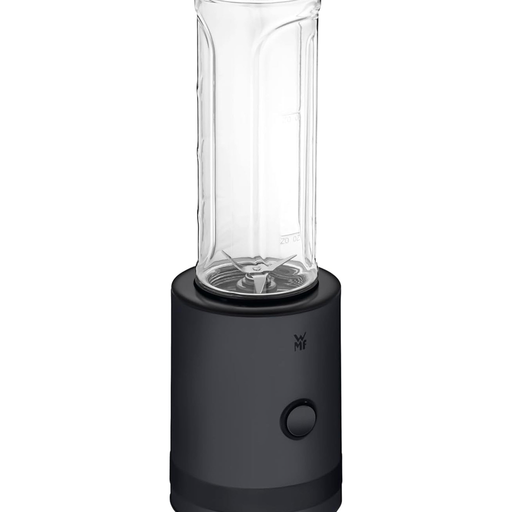
Why this product suits this profile: Two 0.6-litre Tritan bottles with drinking lids are designed for the office, gym or commuting.
The compact format is supported by specific bottle capacities, leak-proof screw lids and an automatic safety shut-off.
300 watts, 23,000 rpm according to the product information, four stainless-steel blades and dishwasher-safe bottles.
We have put together a complete, regularly updated list of products that fully meet these strict selection criteria and the safety regulations applicable in the EU.
For smoothies, a sufficiently large jug, stainless-steel blades, a pulse function and information about processing frozen ingredients are all important. Individuals may prefer a smoothie maker with a drinking bottle, while families are more likely to benefit from a model with a capacity of 1.5 litres or more.
Service life depends on how the appliance is used and cleaned, as well as whether the manufacturer’s instructions are followed. Overfilling, running the appliance dry and using blending cycles that are too long can put strain on the motor and blades. When running several cycles, follow the cooling breaks specified in the instructions.
With corded appliances, the main ongoing cost is electricity. This is influenced by the power rating and the actual operating time. As a blending cycle often lasts only a few seconds or minutes, the duration of use is usually more significant than the wattage printed on the appliance. With a portable smoothie blender, you also need to account for regularly recharging the battery.