
Lieferung heute & morgen

Qualitätsgarantie

Willkommens-Angebote freischalten: KOSTENLOSE Lieferung | Bis zu 80 % RABATT | Kostenlose 30-Tage-JoyPlus-Testphase
App herunterladen
A blender can quickly prepare smoothies, sauces, baby food and chopped ingredients. However, jug blenders, smoothie blenders and food choppers differ considerably in how they work, their capacity and the ingredients they can process. If you focus only on wattage or advertising claims, you can easily end up with a machine that does not suit the way you use it every day.
A high wattage rating initially describes the electrical power consumption, not automatically the blending result. Blade design, rotational speed, container geometry and the permitted operating time are also important. A powerful blender with 1,000 watts may be designed for ice and frozen ingredients, while a compact mini blender is primarily intended for smaller portions.
The stated container size is not always the maximum amount of liquid. The Ninja Professional Blender has a capacity of 2.1 litres, but the maximum liquid volume is 1.9 litres. This marking should not be exceeded, as overfilled containers can leak or place strain on the motor unit.
Not every kitchen blender is suitable for grinding dry ingredients, crushing ice cubes or processing meat. The Bear Food Chopper QSJ-D03W5, for example, has a maximum continuous operating time of 40 seconds, followed by a break of at least 2 minutes. The blades, lid and motor base also require different cleaning methods.
Pay attention to how motor power, blade design and controls work together. Two speed settings are often sufficient for a food chopper: a lower setting for soft ingredients and a higher setting for firmer foods. A jug blender with three settings plus a pulse function gives you greater control over consistency and portion sizes.
The blades on most of the devices featured are made from stainless steel. This makes processing easier, but it also means there is a risk of injury during cleaning. Removable blades can simplify maintenance, but they must be fitted securely and correctly.
A blender with a glass container is an interesting option for many shoppers because the container lets you see the blending process and is generally straightforward to clean. However, glass is heavier and can be damaged by sudden temperature changes. The glass containers and lids of the Bear QSJ-D03Q1 are not heat-resistant; they must not be placed in the microwave and should not be exposed to sudden temperature changes of more than 50 °C.
Useful features include:
Hot liquids may only be processed if the manufacturer expressly permits it. Several of the models mentioned here do not allow boiling or very hot liquids.

Why this product suits this profile: The 2-litre container and 300-watt motor are suitable for everyday portions of vegetables, fruit or meat.
The specifications state two speed settings and a clear operating limit of 40 seconds. According to the product description, it is not intended for dry ingredients, ice or bones.
Visible glass container, 304 stainless steel blades and two settings for soft and firmer ingredients.
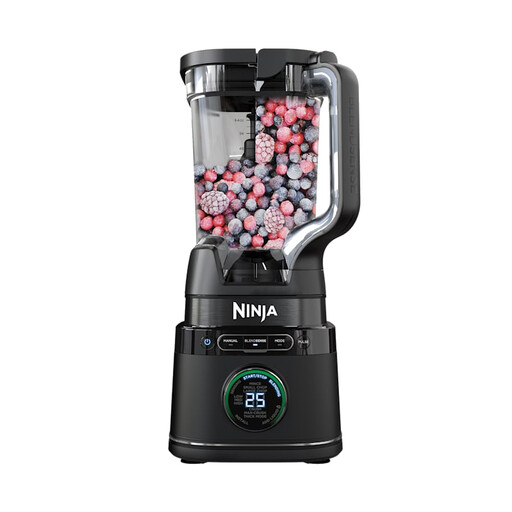
Why this product suits this profile: The 2.1-litre jug is designed for larger family portions and preparing several drinks.
The maximum liquid volume of 1.9 litres is stated separately. The operating time is limited to a maximum of 60 seconds at a time.
1,000 watts, three speed settings plus a pulse function, and a 6-blade stainless steel unit.
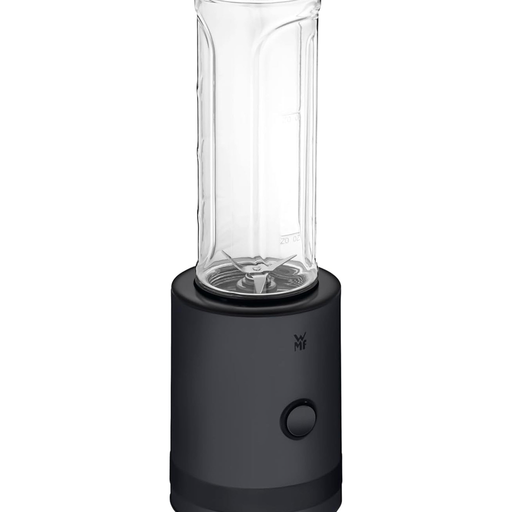
Why this product suits this profile: The two 0.6-litre containers double as blending and drinking vessels and take up very little space.
The capacity is clearly limited to individual portions. For use, pieces of around 2 cm and a maximum operating time of 1 minute are specified.
300 watts, 23,000 revolutions per minute according to the product information, stainless steel blades and dishwasher-safe containers.
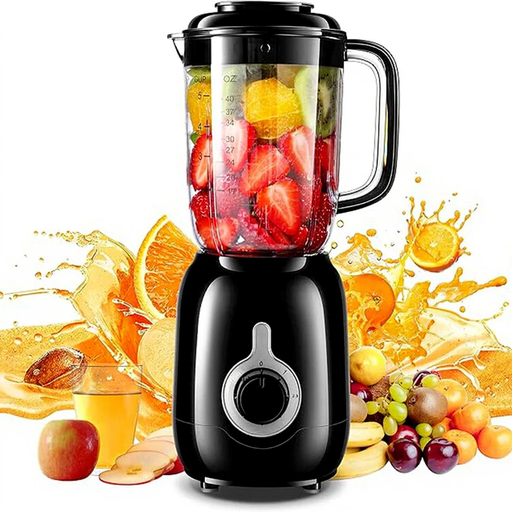
Why this product suits this profile: The 1.2-litre container is complemented by a grinding cup and a chopping cup.
The product information specifies a minimum of 300 ml of liquid and recommends avoiding overloading. The accessories should be used for their intended purposes.
500 watts, three speed settings and a pulse function; accessories for grinding and chopping are included.
We have put together a complete, regularly updated list of products that fully meet these strict selection criteria and the safety regulations applicable in the EU.
A smoothie blender with a drinking cup is practical for individual portions. For families or several portions, a jug blender with a larger container is recommended. For frozen ingredients or ice, the product should explicitly state that it has an ice-crushing blender function.
There is no single wattage that is required for every application. 300 watts may be sufficient for small smoothies. For larger quantities, firmer ingredients or regular ice processing, models with 500 to 1,000 watts may be suitable. The blades, rotational speed, operating time and filling quantity should always be considered together.
The lifespan depends on how the blender is used and cleaned, as well as whether its operating limits are observed. Overfilling, excessively long operating times, unsuitable ingredients and liquid entering the motor area can increase wear. Taking regular breaks and using the blender according to the instructions helps support trouble-free operation.