
Lieferung heute & morgen

Qualitätsgarantie

Willkommens-Angebote freischalten: KOSTENLOSE Lieferung | Bis zu 80 % RABATT | Kostenlose 30-Tage-JoyPlus-Testphase
App herunterladen
A blender should reliably handle smoothies, soups, sauces and ice in the home. In practice, however, certain common buying decisions can lead to disappointment. A machine may look powerful on paper, yet prove unsuitable for everyday use or awkward to clean.
As a Joybuy Product Recommendation Officer, I’ve therefore assessed the most important specifications according to their practical benefits. It’s not just about a high wattage rating. The motor, blades, jug, controls and safety features all need to work together.
Motor power is often promoted as the key specification. However, it doesn’t tell you on its own how well a kitchen blender will process ingredients. Blade design, torque, jug geometry and operating time also affect the results.
A 500-watt blender may be sufficient for soft fruit, vegetables and simple shakes. If you regularly process frozen ingredients or ice, you should also look for a clearly stated ice-crush function, a sturdy blade assembly and a pulse button. With high-performance models, 900 or 1,000 watts are certainly relevant specifications, but they don’t replace checking the instruction manual.
A jug with a capacity of 1.5 or 2.1 litres offers plenty of space, but it must not be filled to the brim. Hot liquids often come with additional restrictions. With cold mixtures, you should observe the maximum fill line so that the contents don’t reach the motor housing.
If you’re blending for several people, you’ll need a larger jug. For a single serving, however, compact drinking cups are often more practical and take up less space.
A removable blade assembly, dishwasher-safe parts and a wide jug opening make everyday use easier. With a glass jug blender, the container is resistant to odours and temperature changes, but it’s heavier and more susceptible to damage from knocks than plastic.
For plastic models, the material specification should be clear. If a jug is labelled BPA-free, this should be stated directly in the product information or manufacturer’s description. A general marketing claim without specific material details isn’t enough to base your choice on.
For simple smoothies, a machine with two to four speed settings is usually sufficient. A pulse function operates in short bursts and can be helpful for chunky ingredients or ice. It also gives you better control over the consistency.
A blender with a pulse function is therefore suitable for users who want to switch between creamy smoothies, chunky salsas and finely puréed sauces. A large number of settings isn’t essential if the key controls are easy to access.
Four stainless-steel blades are common in many household appliances. For ice and frozen fruit, the relevant function should be stated explicitly. This doesn’t mean that every quantity of ice can be processed continuously. Portion size and operating time should follow the manufacturer’s instructions.
For a blender for soups and sauces, it’s also important to check whether it can process only cooled ingredients or warm ones too. Many countertop blenders aren’t suitable for boiling liquids, as pressure can build up inside the sealed jug.
A traditional countertop blender processes ingredients directly in the jug. A hand blender, on the other hand, is more flexible for soups and sauces, but requires a suitable container. For this type of use, a smoothie blender with a drinking cup or a versatile hand-blender set may be the better solution.
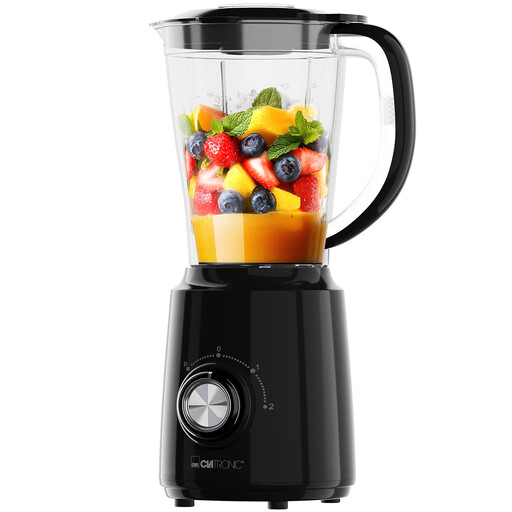
Why this product suits this profile: This blender is designed for typical household tasks such as smoothies, shakes, salsa and puréed soups, and offers a 1.5-litre container for several portions.
The product specifications state 500 watts, four stainless-steel blades, three speed settings plus a turbo or pulse function, and a clearly stated ice-crush function.
BPA-free container with measuring scale, a refill opening in the lid and removable stainless-steel blades.
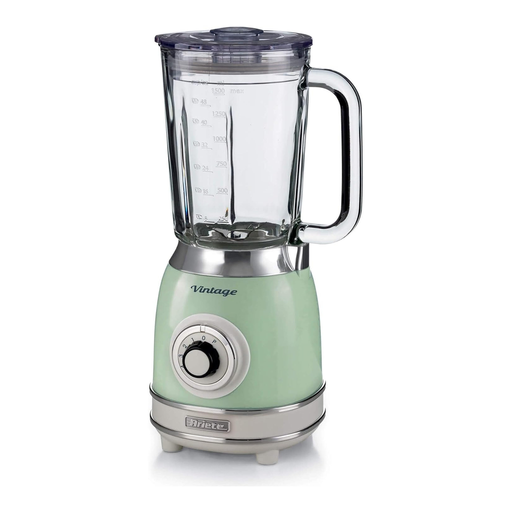
Why this product suits this profile: This model combines a 1.5-litre glass jug with four speeds and a pulse function. It’s an appealing choice for users who place greater importance on materials and control during operation.
The selection is based not only on the stated 1,000-watt motor power, but also on the glass jug, four-blade system and explicitly stated ice-crush function.
1.5-litre glass jug, four speeds plus pulse function and four stainless-steel blades.
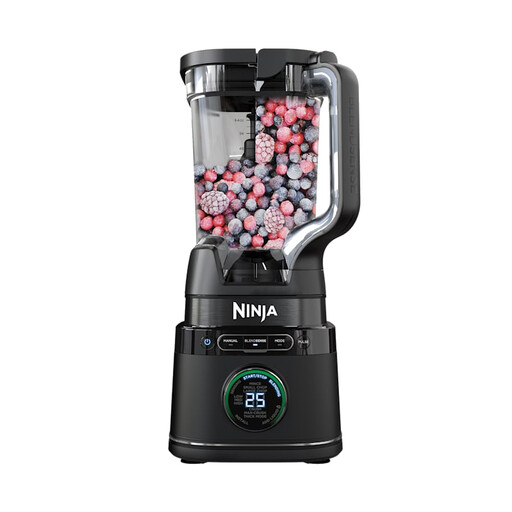
Why this product suits this profile: The large container is designed for family-sized portions and preparing several drinks or dishes. The stated maximum liquid capacity is 1.9 litres.
The product description states the maximum liquid fill line, an operating time of no more than 60 seconds per cycle, and specific guidance regarding ice and hot liquids.
2.1-litre container, 1,000-watt motor, six stainless-steel blades, three speeds and a pulse function.
We’ve put together a complete, regularly updated list of products that fully meet these strict selection criteria and the safety regulations applicable in the EU.
For soft ingredients and occasional smoothies, around 300 to 600 watts is often enough. If you regularly process ice, frozen fruit or hard ingredients, you should also check for a stated ice-crush function, suitable blades and the maximum operating time. Wattage alone doesn’t provide a complete comparison of performance.
That depends on the model. Many jugs aren’t approved for boiling liquids. Hot ingredients can create pressure, causing burns when the lid is opened or if it isn’t properly sealed. Before use, check the temperature limit and the manufacturer’s instructions.
Its lifespan depends on how often it is used, the ingredients, cleaning and correct filling. Overloading, running it dry, using oversized pieces of ice and operating it continuously for too long can put strain on the motor and blades. Observing the maximum fill level, taking breaks between cycles and cleaning the blender immediately will help ensure it is used as intended.