
Lieferung heute & morgen

Qualitätsgarantie

Willkommens-Angebote freischalten: KOSTENLOSE Lieferung | Bis zu 80 % RABATT | Kostenlose 30-Tage-JoyPlus-Testphase
App herunterladen
A blender should take care of as many kitchen jobs as possible: making smoothies and shakes, chopping frozen fruit, puréeing sauces and crushing ice. In practice, however, not every model suits every need. A high wattage alone tells you little about ease of use, jug design, blade layout or cleaning.
If you’re looking for a blender for everyday use, don’t focus solely on product photos and marketing claims. The technical specifications, safe handling and whether the appliance suits the quantity and type of ingredients you use are what really matter.
Motor power is often given plenty of prominence in product descriptions. A 1,300-watt blender may be designed for hard or frozen ingredients, while a compact personal blender with lower power is mainly intended for single portions. But wattage alone doesn’t determine the consistency of the results.
Also look at:
A 1.5-litre jug is suitable for several portions, but takes up more worktop space and is harder to store. For a single portion, a personal blender with a drinking cup may be more practical. It’s also worth noting that the usable filling capacity doesn’t always match the total volume. Don’t exceed markings such as ‘MAX’.
Not every blender jug and blade assembly is dishwasher-safe. If you use your blender frequently, hard-to-reach areas or fixed blades can make cleaning more difficult. A BPA-free blender is a popular feature in plastic-jug models, but you should still check the specific material details for the model you’re considering.
A moderately powerful appliance is often enough for simple smoothies made with soft fruit. For frozen fruit, ice or nuts, the blade layout, short pulse cycles and a suitable motor are all important. A blender with an ice-crush function should be specifically designed for this use.
More speed settings allow you to adjust the blender more precisely to the ingredients. For many households, two speeds plus a pulse function are enough. Some models have an automatic safety lock that prevents operation if the jug or lid isn’t fitted correctly.
A 1.5-litre blender is a good option for families, meal prep or making several drinks in a row. Glass is scratch-resistant and less likely to absorb odours, but it usually makes the appliance heavier. Plastic or Tritan jugs are lighter and easier to handle day to day. Check the following:
Only blend hot liquids if the instruction manual expressly says it’s safe to do so. Several of the models featured here come with warnings against using hot or boiling liquids.
A portable smoothie blender or a blender with drinking cups is handy for the office, gym and smaller kitchens. The blending cup often doubles as a drinking vessel. A traditional blender, on the other hand, offers greater capacity and is better suited to family portions, sauces or larger quantities.
So choose according to your everyday needs: a personal blender is ideal for single portions, while regular preparation for several people is better suited to a blender with a larger jug.
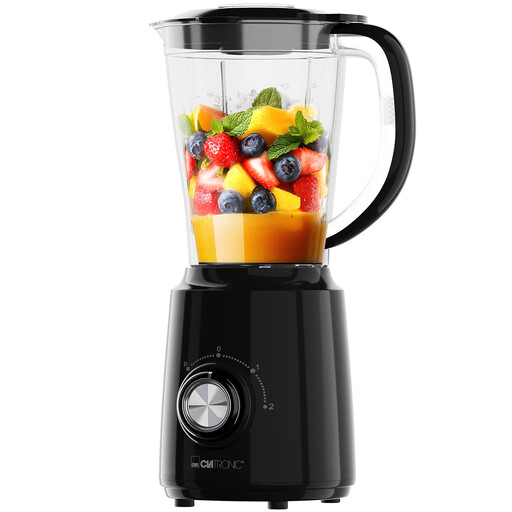
Why it suits this profile: This blender combines a 1.5-litre jug with three speed settings, a turbo function and ice crush for a range of kitchen tasks.
The product details clearly specify the jug size, four stainless steel blades, ice-crush function and safety cut-off.
500-watt motor, 1.5-litre BPA-free jug and removable blades.
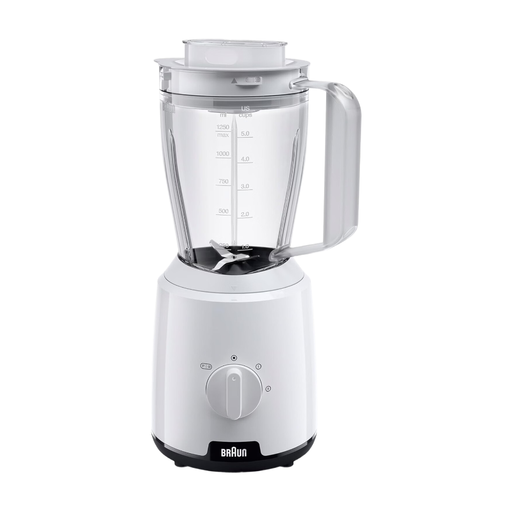
Why it suits this profile: This 1.5-litre blender has two speed settings, pulse and ice-crush functions, as well as a described safety system.
The instructions specify a maximum continuous run time of two minutes and describe the locking mechanism and overheating protection.
TriAction jug design and removable parts that are dishwasher-safe, according to the product description.
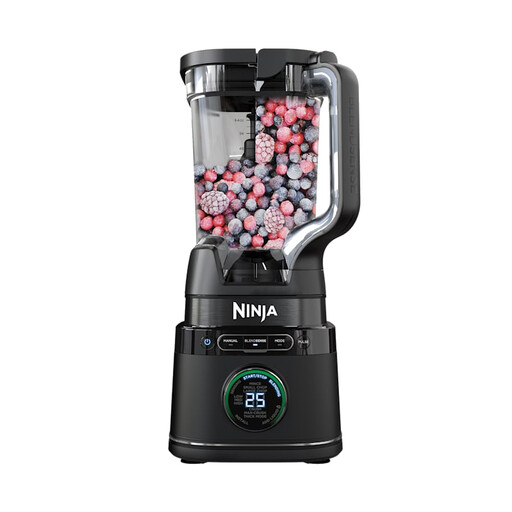
Why it suits this profile: The 2.1-litre jug, with a maximum liquid capacity of 1.9 litres, is designed for larger quantities and multiple portions.
The product details clearly distinguish between total capacity and the maximum amount of liquid, and specify a maximum run time of 60 seconds.
1000-watt motor, three speeds plus pulse, and six stainless steel blades.
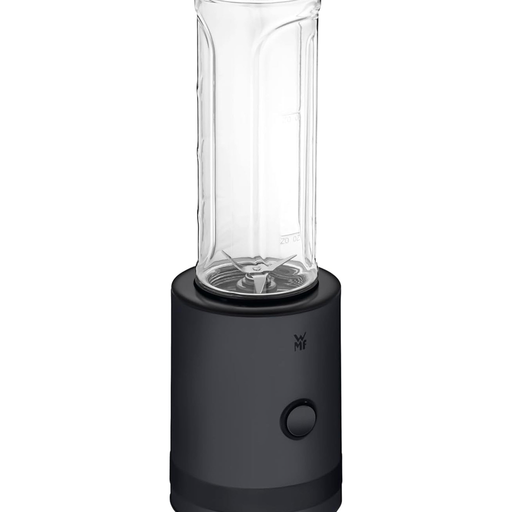
Why it suits this profile: Two 0.6-litre cups with drinking lids are ideal for single portions and taking smoothies with you.
Its compact design avoids unnecessary jug capacity. The product details also specify a safety cut-off and a maximum run time of one minute.
300 watts, 23,000 revolutions per minute according to the product description, and two dishwasher-safe cups.
We’ve put together a complete, regularly updated list of products that meet these strict selection criteria and fully comply with the safety regulations in force in the EU.
For soft ingredients and simple smoothies, a moderately powerful motor is often enough. If you regularly blend ice, frozen fruit or hard ingredients, a suitable blade layout, pulse function and short operating intervals are also important. So always consider wattage alongside the other technical specifications.
A blender’s lifespan depends on how often you use it, the ingredients you blend, how you clean it and whether you follow the run-time guidance. Overfilling, running it empty and using it for too long at a stretch can put strain on the motor and blades. Clean the removable parts straight after use and let the motor cool down between cycles.
The electricity costs depend on the blender’s power consumption and how long you use it for. Blenders usually run for just a few seconds or in short bursts, so the total running time is what matters most. For a realistic estimate, compare the motor’s power rating with the actual run time for each use.