
Lieferung heute & morgen

Qualitätsgarantie

Willkommens-Angebote freischalten: KOSTENLOSE Lieferung | Bis zu 80 % RABATT | Kostenlose 30-Tage-JoyPlus-Testphase
App herunterladen
A blender should reliably chop, purée or combine ingredients. In practice, though, a few common buying mistakes can lead to disappointment. A high wattage alone doesn’t guarantee a smooth result, a large jug won’t necessarily fit your available worktop space, and lots of accessories can make cleaning more difficult.
This buying guide explains which technical details really matter and which blender is right for different households. It covers jug blenders, hand blenders, smoothie blenders, personal blenders and models with a grinder.
Motor power is often given plenty of prominence in product descriptions. But it doesn’t, on its own, tell you how finely a blender will process ingredients. Blade design, speed, jug shape, capacity and recommended operating time all matter too. A 600–900 W personal blender is suitable for individual smoothies, while a large jug blender for family-sized portions has different requirements.
The stated jug size doesn’t always match the amount of liquid you can actually blend. The Ninja Professional Blender has a 2.1-litre jug, but according to the product details, its maximum liquid capacity is 1.9 litres. A blender with a 1.5-litre jug may be enough for several portions, but it takes up more space than a mini blender or smoothie maker.
Fixed blades, hard-to-reach seals or lots of separate parts can all make cleaning more time-consuming. Before you buy, check which components are dishwasher-safe. With models that have a grinder, also bear in mind that dry ingredients such as coffee or spices can leave lingering smells.
A compact personal blender is often all you need for soft fruit, milkshakes and liquid ingredients. For frozen fruit or crushing ice, look for a suitable blade assembly, enough motor power and a pulse function. Always follow the manufacturer’s guidance on maximum operating time. Several short blending intervals may be easier on the motor than running it continuously for a long time.
A high-performance blender isn’t essential for every kitchen. If you usually make small portions, a 300–650 W model can save space and energy. For hard or frozen ingredients, the specific product details matter more than a general comparison of wattage figures.
For plastic jugs, information such as BPA-free may be relevant. Check which specific components the claim applies to rather than assuming it covers every accessory. Glass jugs don’t affect the taste of ingredients and can withstand changes in temperature, but they may be heavier. Only blend hot liquids if the instruction manual expressly says it’s safe to do so.
On many models, a safety lock prevents the blender from operating unless the jug or blade attachment is fitted correctly. Non-slip feet help keep it steady. Never touch the blades by hand, even when the blender is switched off.
For everyday use, detachable attachments and dishwasher-safe parts are handy. With a hand blender, the blending foot should be easy to remove from the motor unit. Hand blenders are particularly useful for soups, sauces, baby food and smaller quantities, blended directly in a saucepan or measuring jug. For larger quantities and frozen ingredients, a jug blender is usually the more practical choice.
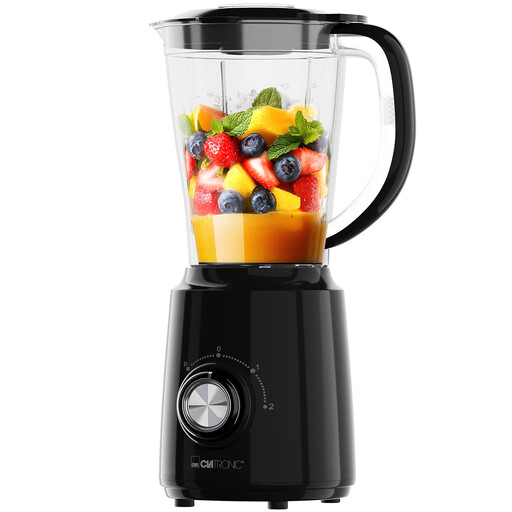
Why it suits this type of user: This kitchen blender has a 1.5-litre jug, three speed settings, plus Turbo and Ice Crush functions for everyday use.
The product details clearly state the jug size, four stainless steel blades and detachable components. This makes it easier to work out whether it will suit your needs before you buy.
1.5-litre BPA-free jug, four speed settings and a refill opening in the lid.
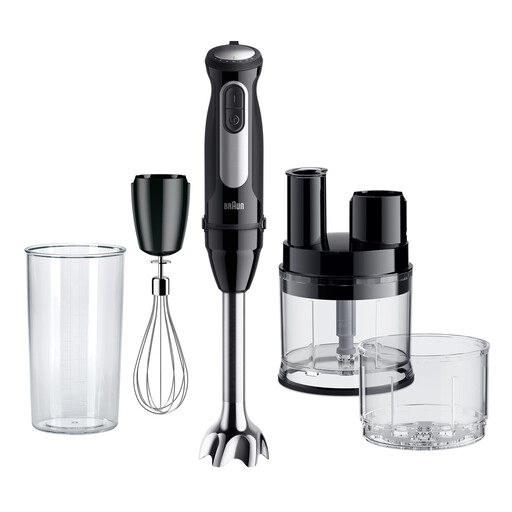
Why it suits this type of user: This hand blender combines a 1000 W motor with 25 speed settings, a Turbo function and several attachments for different kitchen tasks.
The variable speed settings mean you don’t have to focus on wattage alone. The included accessories are clearly listed: a whisk, chopper and ice-crushing blade.
25 settings plus Turbo, an EasyClick Plus system and a BPA-free 600-millilitre measuring beaker, according to the product description.
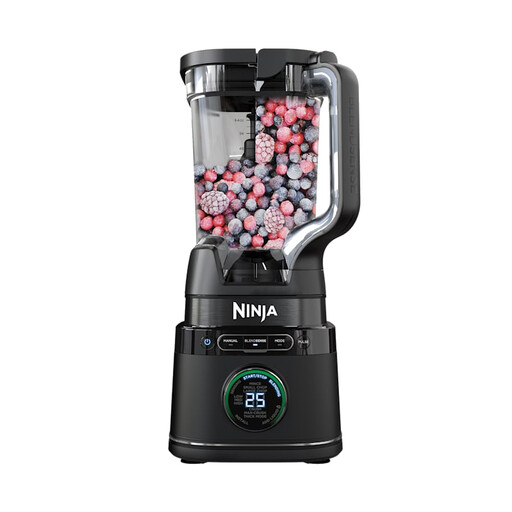
Why it suits this type of user: This jug blender is designed for larger quantities, frozen fruit, shakes and ice. According to the product details, the jug can hold up to 1.9 litres of liquid.
The maximum liquid capacity and maximum operating time of 60 seconds are clearly stated. This makes it easier to plan family-sized portions and helps prevent overfilling.
1000 W motor, six stainless steel blades, three speeds plus Pulse, and dishwasher-safe detachable parts.
We’ve put together a complete, regularly updated list of products that meet these strict selection criteria and fully comply with the safety regulations in force in the EU.
For single portions, a personal blender or smoothie maker with a travel cup is handy. For several people, choose a jug blender with a capacity of around 1.2 to 2.1 litres. If you’re blending frozen ingredients, make sure the model is specifically suitable for ice or frozen food.
A blender’s lifespan depends on how often and how heavily you use it, how you clean it and whether you follow the instruction manual. Overfilling, running it dry for too long or exceeding the recommended operating time can put a strain on the motor. Let the blender cool down after several short blending cycles.
Running costs depend on the blender’s power and how long you use it. As blenders usually run for just a few seconds or minutes at a time, the energy used per session is limited. When choosing a blender, capacity, ease of cleaning and how you plan to use it are often more important than small differences in motor power.