
Lieferung heute & morgen

Qualitätsgarantie

Willkommens-Angebote freischalten: KOSTENLOSE Lieferung | Bis zu 80 % RABATT | Kostenlose 30-Tage-JoyPlus-Testphase
App herunterladen
The search for the right multi-function blender can quickly become overwhelming. The market is flooded with appliances that promise it all: from creamy smoothies and nutrient-rich juices to warm baby food. But not every model lives up to its advertising. Often, exaggerated performance claims and impractical designs lead to a costly mistake that gathers more dust than it blends food.
Before you make a decision, it's important to understand the most common pitfalls that lead to kitchen frustration:
To find the right appliance for your needs, you should focus on a few crucial technical parameters. These will help you separate the wheat from the chaff and choose a model that reliably serves its purpose.
The required power depends directly on your primary use case.
A common misconception surrounds the difference between blending and juicing.
Look for materials that are food-grade and durable.
Instead of presenting an overwhelming list, we have selected a few models tailored to specific user profiles.
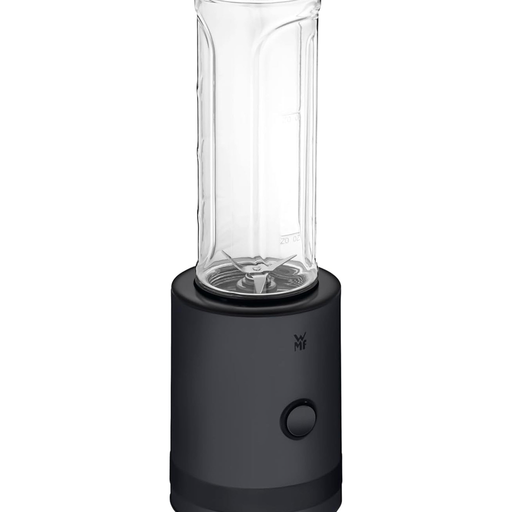
Why it's a great fit: Perfect for professionals and commuters. The blending jar doubles as a drinking bottle. Its compact design and simple operation let you make a fresh smoothie in minutes, ready to take to the office or the gym.
This appliance isn't an over-engineered jack-of-all-trades; it's a specialist. It focuses on one task—making smoothies—and does it efficiently. Cleaning is straightforward thanks to the dishwasher-safe containers.
Includes two 0.6-litre, BPA-free Tritan travel bottles with leak-proof screw-on lids, offering flexible use for one or two people.
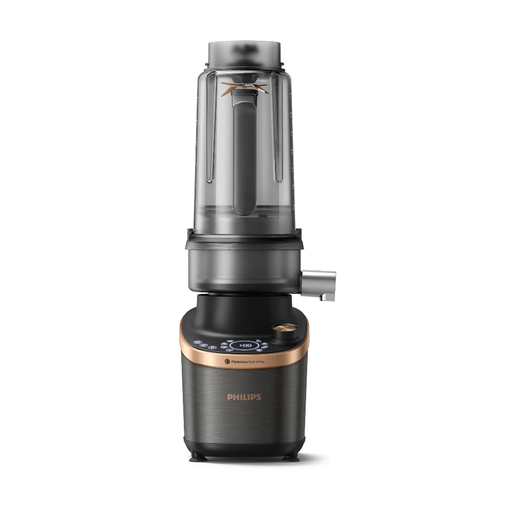
Why it's a great fit: A solution for families who want to prepare both creamy smoothies and fresh juices. The powerful 1500-watt motor and innovative design allow you to switch between blending and juicing in a single appliance.
Instead of being a mediocre compromise, this appliance combines two high-quality functions through a clever technical solution (Flip&Juice technology). It's a targeted 2-in-1 approach, not an overloaded jack-of-all-trades.
The ProBlend Ultra technology ensures exceptionally smooth blending results. The integrated juicing module allows for the preparation of clear or fibre-rich juices, depending on your preference. The 2-litre jar is perfectly sized for family portions.
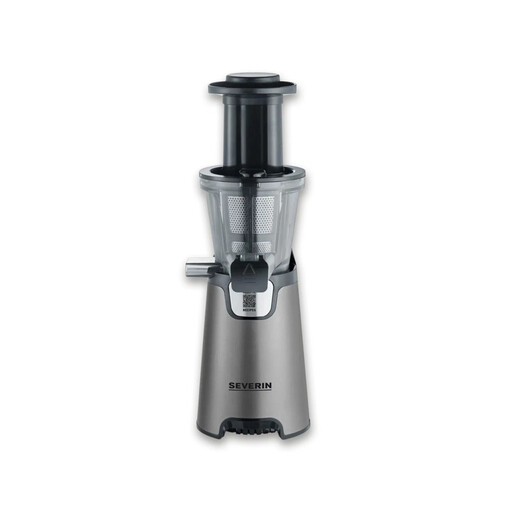
Why it's a great fit: Perfect for the health-conscious who prioritise the preservation of vitamins and enzymes. As a cold press juicer, it gently extracts juice and is also versatile enough to make sorbets, ice cream, or jams.
This appliance is a specialised slow juicer and doesn't try to be a high-speed blender. It uses a specific technology for a clear goal: nutrient-preserving juicing. The Easy-Clean concept simplifies cleanup.
The slow-rotating auger ensures a high juice yield with minimal heat generation. The included attachment for frozen fruit expands its functionality to making sorbets.
We've compiled a complete, up-to-date list of products that fully meet these strict selection criteria and safety standards.
1. How many watts does a good multi-function blender really need? Wattage alone isn't the full story. For most everyday tasks like smoothies or shakes, 300-650 watts is sufficient, provided the blades are well-designed. For processing very tough ingredients like nuts or fibrous vegetables, a model with over 1000 watts offers more power reserves. More important than pure wattage is the overall system of motor, RPM, and blade design.
2. What is the difference between a slow juicer and a regular blender? A regular blender (centrifugal blender) pulverises all ingredients at high speed into a smoothie, which retains all the dietary fibre. A slow juicer, in contrast, slowly and gently presses the juice from the ingredients, separating the liquid from the solid pulp. This process generates less heat and oxidation, which many users value for preserving nutrients.
3. What's the most effective way to clean my blender? The quickest method is to clean it immediately. Rinse the jar and blades with warm water right after use. For stubborn residue, fill the jar halfway with warm water, add a drop of washing-up liquid, and run the blender on its highest setting for a few seconds. Then rinse. Always check the user manual to see which parts are dishwasher-safe.