
Lieferung heute & morgen

Qualitätsgarantie

Willkommens-Angebote freischalten: KOSTENLOSE Lieferung | Bis zu 80 % RABATT | Kostenlose 30-Tage-JoyPlus-Testphase
App herunterladen
A blender should reliably chop ingredients, mix drinks evenly and be easy to clean. However, requirements vary considerably from one household to another: families often need a larger capacity, professionals appreciate a blender with a to-go cup, while keen home cooks tend to value variable speeds and useful accessories.
If you only look at wattage or product images, you may overlook important details. Three common buying misconceptions occur particularly often:
A jug blender is suitable for larger quantities and frequent preparation. With a high-performance blender, motor power, rotational speed, blade design and the permitted operating time are also relevant. These appliances are suitable for smoothies, frozen fruit, sauces and specific programmes for soups or plant-based milk, for example.
A hand blender is used directly in a saucepan, measuring jug or bowl. It takes up less space and is practical for smaller portions, soups and sauces. Accessories such as a whisk and chopper expand its range of uses. Pay attention to the maximum operating time: the ROUNY model, for example, is specified for a maximum of one minute of use, followed by a one-minute break.
For individual portions, a smoothie blender or mini blender can be a sensible choice. A container that can be fitted with a drinking lid after blending reduces the need to transfer the contents. Nevertheless, check the maximum filling quantity and whether the containers are dishwasher-safe.
The power rating in watts describes the electric motor, but it does not automatically indicate the blending results. When choosing a model, you should also consider the rotational speed, blade shape and controls. Several speed settings make it easier to switch between short pulses and longer blending times.
According to the product information, the Dreame BlendLogic High-Performance Blender has a 2,000 W motor, a speed of up to 27,000 revolutions per minute and eight stainless-steel blades in a three-layer 3D design. The appliance offers seven speed settings, as well as programmes for smoothies, ice, plant-based milk, soups and sauces. This information is helpful for assessing a model, but it does not replace checking whether it suits your own intended use.
With a hand blender, the blending foot should be made from a material suitable for contact with food. According to the manufacturer’s information, the ROUNY hand blender uses a stainless-steel blending foot and stainless-steel blade. The set also includes a 700-ml beaker, a 500-ml chopper and a whisk.
A BPA-free blender may be a relevant material specification if you prefer plastic containers. BPA-free refers to the material property, not the quality of the appliance as a whole. You should also consider capacity, resistance to breakage, the lid seal and temperature limits.
A 2.0-litre container may be suitable for families or several portions. Individual portions are easier to measure out in a 600- to 700-ml cup. According to the product description, the Dreame BlendLogic Blender comes with a 2.0-litre container and a 700-ml BPA-free Tritan to-go cup. The product information provided states that both containers and their lids are dishwasher-safe.
The instructions in the relevant operating manual apply when handling hot liquids. The Dreame Blender and WMF Smoothie-to-Go Blender are both specified for a maximum liquid temperature of 60 °C. An appliance should never be used with boiling liquids unless this is expressly permitted.
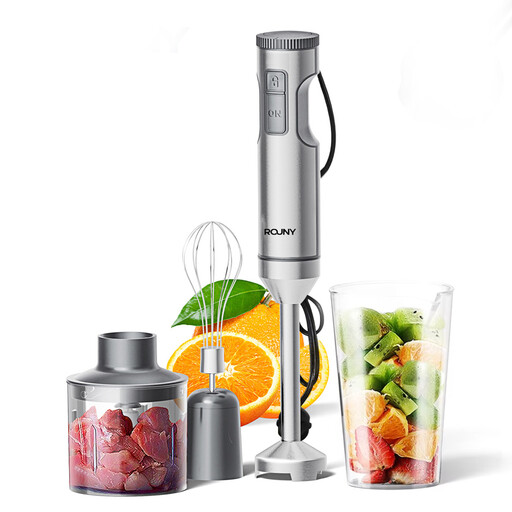
Why this product suits this profile: The hand blender takes up very little space and covers several everyday kitchen tasks with its blending foot, beaker, chopper and whisk.
The specified maximum operating time of one minute, followed by a break, makes the operating limit clear. The accessories and speed control make it easier to adapt the appliance to different ingredients.
Maximum 1,200 W, 15,000 U/min, continuously variable speed, plus a 700-ml beaker and 500-ml chopper.
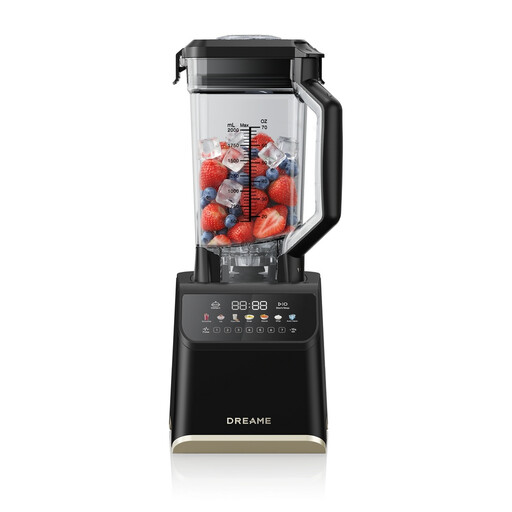
Why this product suits this profile: The combination of a large container, separate to-go cup, programmes and manual controls is designed for households with a variety of preparation needs.
The nine programmes, seven speed settings and automatic cleaning function are clearly specified. According to the product information, the BPA-free Tritan container is dishwasher-safe.
2,000 W, 27,000 U/min, 2.0-l container, 700-ml to-go cup and One-Touch Auto-Clean function.
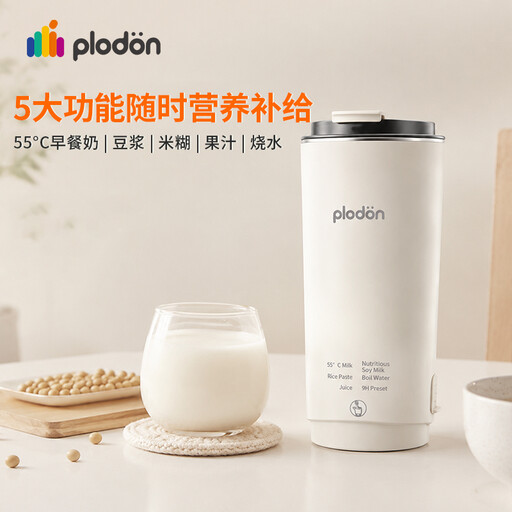
Why this product suits this profile: The compact soy milk maker is designed for individual drinks and mobile use in the office, at home or while travelling.
The 300-ml capacity is clearly limited to individual portions. The instructions also specify a break of at least 30 minutes between two cycles.
Five functions, 300 W heating power, 75 W blending power, 9-hour preset and automatic cleaning.
We have compiled a complete, regularly updated list of products that fully meet these strict selection criteria and the safety regulations applicable in the EU.
The ongoing costs of a blender mainly depend on its power, how long it is used and your electricity tariff. This simple calculation provides a useful guide:
Power in kW × operating time in hours × electricity price per kWh = electricity costs.
A 1,000 W appliance running for ten minutes theoretically uses around 0.167 kWh. The actual cost depends on your individual tariff. Short programmes and appropriately sized portions help avoid unnecessary running time.
Clean the container and blades as soon as possible after use. A blender with a self-cleaning function can make the process easier, but it does not replace manually removing stuck-on residue. Never immerse the motor housing in water. Blades should only be cleaned when the appliance is unplugged and with appropriate care.
A jug blender, high-performance blender or smoothie blender with a suitably sized container is suitable for smoothies. When blending frozen fruit and ice, check the manufacturer’s information on programmes, blades and permitted operating time. A mini blender with a to-go cup is particularly suitable for individual portions.
That depends on the model. Some programmes are designed for soups, but temperature limits and lid instructions must still be followed. According to the product information, the Dreame and WMF models have a maximum specified temperature of 60 °C. Do not boil the liquid directly in the container and always check the operating manual.
There is no reliable one-size-fits-all answer. A blender’s lifespan is influenced by how frequently it is used, the ingredients, cleaning, operating times and compliance with the manufacturer’s instructions. Overloading, operating the appliance for too long and improper cleaning can increase wear. It is therefore worth checking information on spare parts, warranty conditions and the permitted operating time for the specific appliance.