
Lieferung heute & morgen

Qualitätsgarantie

Willkommens-Angebote freischalten: KOSTENLOSE Lieferung | Bis zu 80 % RABATT | Kostenlose 30-Tage-JoyPlus-Testphase
App herunterladen
A blender should do more than just chop fruit in the home. Depending on the model, you can make smoothies, protein shakes, soups, sauces, cocktails, baby food or crushed ice. But impressive wattage figures and long lists of programmes don’t automatically help you choose the right one.
A motor rated at 2,000 watts sounds impressive at first. But blade design, jug shape, speed settings, available programmes and the permitted running time all affect how the blender performs in practice. A compact smoothie maker with 300 watts may be enough for soft fruit, while frozen fruit or ice may call for a different design.
The stated capacity isn’t always the amount you can fill the jug with while it’s running. For example, a 1.9-litre jug may have an effective volume of 1.0 litres. The markings on the jug and the instructions in the manual are therefore more important than the maximum capacity alone.
If a blender’s blades are difficult to reach, you may find yourself using it less often. Check whether the jug, lid and blades can be removed, and whether they’re dishwasher-safe. A blender with a self-cleaning function can reduce the cleaning involved, but you’ll still need to rinse the seals and remove any residue.
A compact smoothie blender is often enough for simple milkshakes and soft fruit. For frozen ingredients, nuts or regular ice crushing, look for a durable motor and stainless steel blades. A blender with an ice-crush function usually works in short pulses. This helps protect the motor and gives you better control over the consistency.
Also check the maximum running time stated by the manufacturer. A high-performance blender isn’t necessarily designed for continuous use. You may need to let it cool between batches.
A capacity of 600 to 900 millilitres is often enough for a single-person household. Families may prefer a jug of around 1.5 litres or more. A blender with a to-go cup can be handy if you want to take your drink with you straight after making it.
For plastic jugs, material details such as BPA-free are worth checking. BPA-free jugs don’t contain bisphenol A, but that doesn’t tell you anything about their durability or suitability for hot liquids. Always check the temperature limit for the model. Many blenders aren’t suitable for hot or boiling liquids, as pressure can build up inside the jug.
Several speed settings let you tailor the blending more closely to your ingredients. Automatic programmes can make a blender easier to use, but they don’t replace clear guidance on capacity and running time. Useful features include:
A hand blender is suitable for blending soups directly in the pan and takes up less worktop space. However, it doesn’t guide ingredients in the same way as a traditional jug blender. A personal blender, on the other hand, is designed for single portions. A cocktail machine that uses capsules is not a versatile kitchen blender. If you’re considering one, also check the voltage, capsule compatibility and running costs.
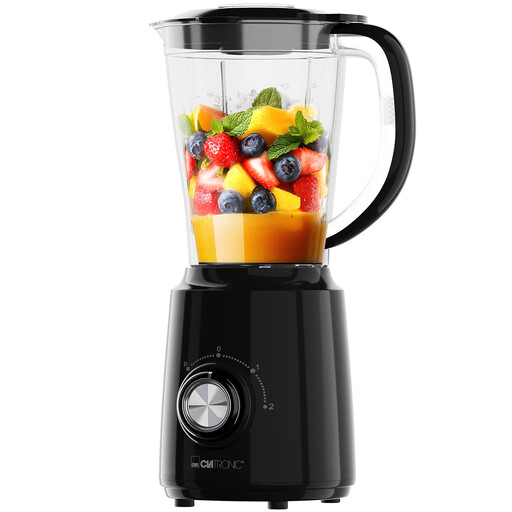
Why this product suits this profile: This blender has a 1.5-litre jug, three speed settings plus a turbo or pulse function, and is suitable for smoothies, sauces, soups and protein shakes.
The specifications clearly state the motor power, capacity, blades and operating modes. The jug is listed as BPA-free, and the blades are removable.
1.5-litre jug, ice-crush function and safety interlock.
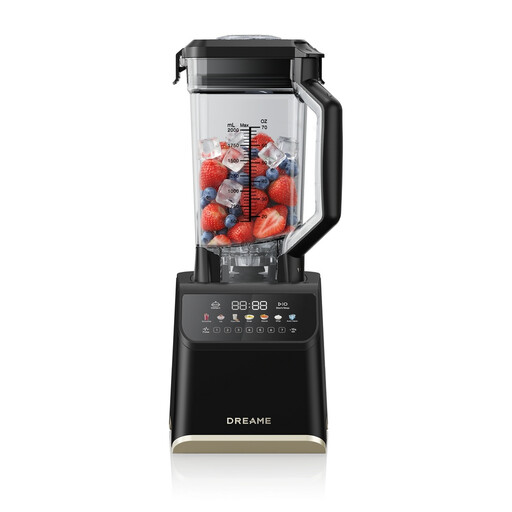
Why this product suits this profile: This model is designed for larger quantities and a range of recipes. It comes with a 2.0-litre jug, a 700 ml to-go cup, seven speed settings and nine programmes.
Alongside the motor power, the specifications cover jug sizes, programmes, temperature guidance and automatic cleaning.
2,000 watts, seven speeds, BPA-free Tritan jugs and an auto-clean programme.
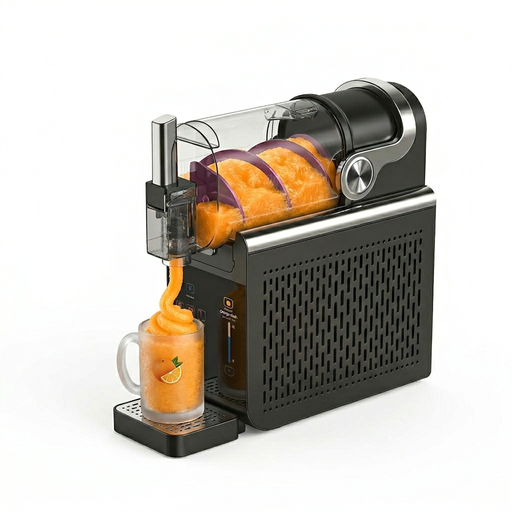
Why this product suits this profile: This slushie maker is designed for households that want to make frozen drinks, frappés and slushies. According to the product description, it works without adding ice separately and dispenses drinks continuously.
Its purpose is clearly limited to frozen drinks. If you mainly want to blend soups or sauces, choose a traditional jug blender instead.
Stainless steel shaft, dual gearing, cooling coil and one-touch operation, according to the product description.
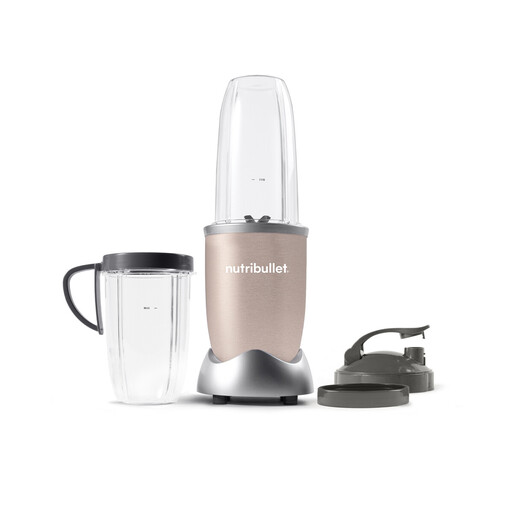
Why this product suits this profile: Two BPA-free drinking cups, with capacities of 925 and 700 millilitres, are ideal for single portions. Its compact design suits smaller kitchens and life on the go.
The cup capacities and recommended running time of under 60 seconds are clearly stated, making it easier to judge whether it suits your needs.
900-watt motor, six stainless steel blades, and dishwasher-safe cups and blades.
We’ve put together a complete, regularly updated list of products that meet these strict selection criteria and fully comply with the safety regulations in force in the EU.
Its lifespan depends on how often you use it, the ingredients you blend, the running time and how well you look after it. Hard ingredients, ice and overfilling put more strain on the motor and blades. Rinse the jug and blades soon after use, and stick to the recommended running time.
For soft fruit and shakes, 300 to 500 watts may be enough. If you regularly blend frozen fruit, nuts or ice, also check the blades, pulse function, speed settings and the manufacturer’s guidance on use. Wattage alone isn’t a reliable measure of quality.
Electricity costs depend on the blender’s power and how long it runs. A 500-watt appliance running for ten minutes uses around 0.083 kilowatt-hours. Automatic programmes or short pulses can limit the running time. You may also need to factor in the cost of capsules for a cocktail machine, or replacement parts such as seals and blades.