
Lieferung heute & morgen

Qualitätsgarantie

Willkommens-Angebote freischalten: KOSTENLOSE Lieferung | Bis zu 80 % RABATT | Kostenlose 30-Tage-JoyPlus-Testphase
App herunterladen
A blender should do more than just purée soft fruit. Depending on your household, you might use it for smoothies, protein shakes, soups, sauces, frozen ingredients or ice cubes. Blenders also vary considerably in motor power, jug capacity, controls and ease of cleaning.
However, a high wattage alone is no reliable indication that a blender will suit your needs. A large capacity can also be impractical if the jug is difficult to clean or unsuitable for small portions. The following points will help you look beyond the marketing claims and choose a smoothie blender that suits the way you plan to use it.
A 1000-watt blender may be a good choice for large quantities, hard ingredients and frozen food. But motor power alone doesn’t tell you how well ingredients will be blended. Blade design, jug shape, available speed settings and the maximum recommended running time all matter too.
For soft fruit and simple shakes, a compact smoothie maker with less power may be enough. If you regularly blend ice, nuts or frozen fruit, also look for a specific pulse or ice-crushing function.
The stated jug capacity doesn’t always match the maximum recommended amount of liquid. For example, a 2.1-litre jug may have a lower maximum liquid capacity. Always pay attention to the ‘MAX’ marking on the jug.
Blenders with a capacity of around 1.5 to 2 litres are practical for families and meal prep. For a single serving, personal blenders or blenders with drinking cups usually take up less space and are easier to use every day.
Blades that are difficult to remove, lots of separate parts and components that aren’t dishwasher-safe all add to the cleaning workload. Look for removable blades or parts specifically listed as dishwasher-safe.
A secure jug lid, non-slip feet and overheating protection are also important. Never touch the blades while the blender is running or with your fingers. Only put hot liquids in the blender if the instruction manual expressly says it’s safe to do so.
When choosing a blender, consider how the motor and controls work together:
A blender with a grinder is designed for dry ingredients such as spices or coffee beans, provided a suitable grinding cup is included. A standard blending jug won’t automatically do the same job.
For a BPA-free blender, check that the claim applies to the specific jug, lid or drinking cups. Plastic is lightweight and practical for everyday use, while glass can be more scratch-resistant and heat-resistant, but is heavier.
Look for a clearly marked scale, a secure lid lock and a filling opening if you want to add ingredients while blending. For portable cups, tight-fitting drinking lids are especially important.
Before buying, check the space available on your worktop and the blender’s height beneath your wall cupboards. A compact blender is a better fit for small kitchens, student accommodation or campervans. Larger jugs, on the other hand, are useful for family portions and preparing several drinks at once.
Weight is another consideration: a heavy glass jug stays stable, but is less convenient to move around. For daily single servings, cups that can be used as drinking vessels are often more practical.
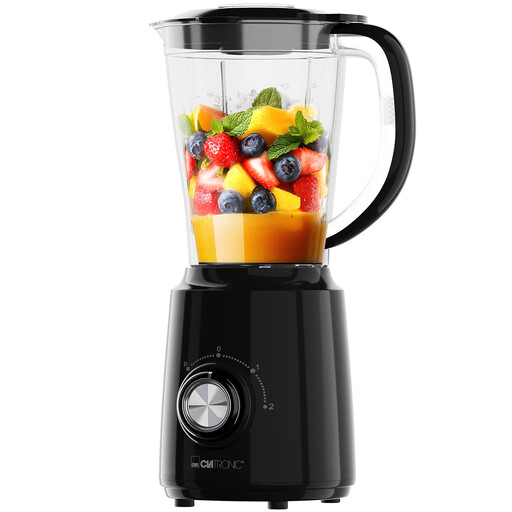
Why this product suits this profile: This kitchen blender has a 1.5-litre jug, several speed settings and an ice-crushing function for everyday household tasks.
Rather than relying on high wattage alone, the specifications state that it has 500 watts, a 1.5-litre jug, four stainless steel blades and a pulse/turbo function.
BPA-free jug, removable blades, filling opening and rubberised feet, according to the product description.
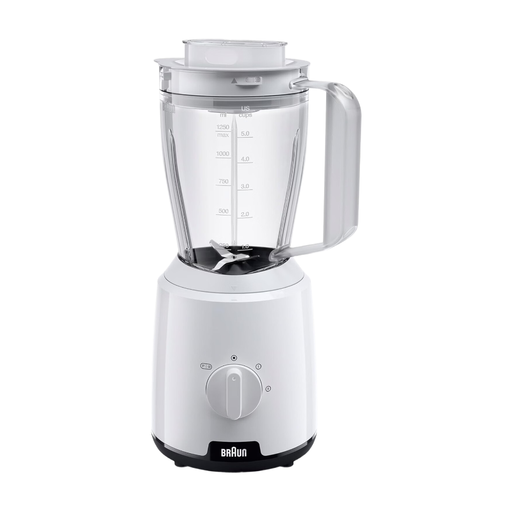
Why this product suits this profile: This 1.5-litre blender combines two speed settings, a pulse function and an ice-crushing setting with a range of safety features.
The product specifications state a maximum continuous running time of two minutes, as well as a jug lock and overheating protection.
A 600-watt motor, TriAction jug design and removable, dishwasher-safe components, according to the manufacturer.
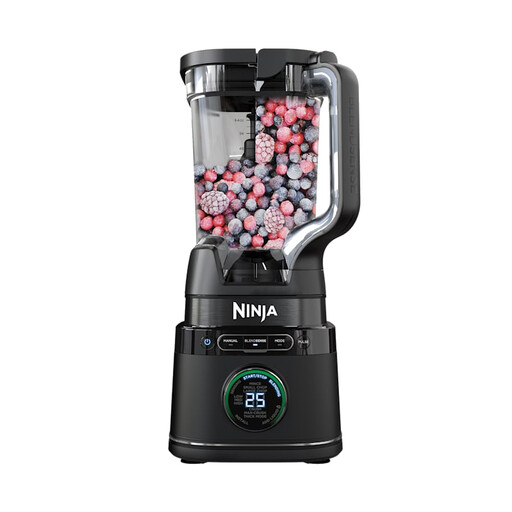
Why this product suits this profile: The large jug is designed for families, larger batches of smoothies and meal prep.
The product description distinguishes between the 2.1-litre jug capacity and a maximum liquid capacity of 1.9 litres.
A 1000-watt motor, three speed settings plus pulse, and six stainless steel blades, according to the product details.
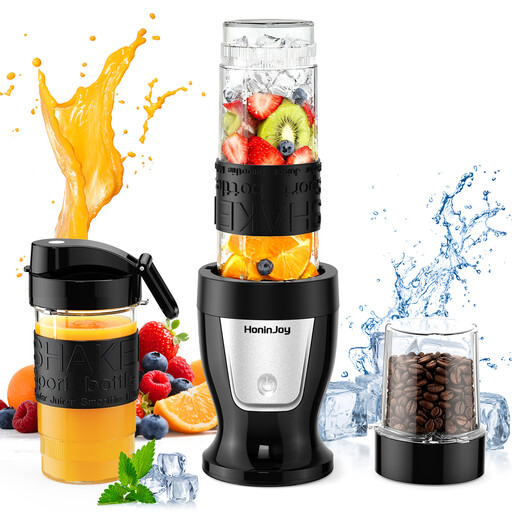
Why this product suits this profile: Two portable cups and a grinding cup make it suitable for single servings, the office, the gym and small kitchens or campervans.
The specifications include the exact cup sizes, a grinding cup, overheating protection and a locking mechanism with microswitches.
A 650-watt motor, two cups listed as BPA-free and dishwasher-safe accessories, according to the product description.
We’ve put together a complete, regularly updated list of products that meet these strict selection criteria and the applicable EU safety regulations.
For simple smoothies and sauces, 500 to 650 watts may be enough. If you often blend ice, frozen fruit or hard ingredients, also look for an ice-crushing or pulse function and a suitable blade arrangement. Wattage is just one factor to compare.
Its lifespan depends on how often you use it, how you clean it, how much you put in the jug and how long you leave it between blending sessions. Follow the maximum running time in the manual, don’t exceed the ‘MAX’ marking and let the motor cool down between multiple batches. This helps prevent common causes of overloading.
Energy use depends on the motor’s power and how long the blender runs. A higher-wattage model uses more energy than a lower-powered one when both run for the same amount of time. Smoothies usually only need short blending intervals, so running time is just as important as rated power when it comes to energy consumption.