Choose your blender based on how much soup you want to make at a time. A jug blender is well suited to larger batches, a hand blender to smaller quantities in a suitable container, and a compact personal blender to individual portions. For particularly smooth gazpacho, the actual blending results and, if necessary, straining matter more than a high wattage rating alone. Clean your utensils thoroughly and keep the finished soup chilled.
Which blender suits you?
Making several portions at once
If you want to turn some of your market haul into chilled soup in one go, compare the quantity in your recipe with the blender jug’s stated usable capacity. Tefal gives the InfinyMix BL91HD a usable capacity of 1.75 l. (Tefal Germany)
A smooth soup texture
If you want to blend raw tomatoes and other vegetables until as creamy as possible, look for results for the specific model. The Federal Centre for Nutrition recommends blending gazpacho again if needed, or straining it through a sieve.
Less effort per portion
If you usually make small quantities, weigh up transferring the mixture, ease of use, cleaning and storage space. According to SWR, you can use a hand blender directly in a suitable container for small quantities; personal blenders, by contrast, come with their own blending cup.
What to look for when buying
Jug blender
A good fit if: You want to blend several portions in one go and the usable capacity suits your recipe.
Things to consider: The appliance and jug need worktop or storage space; the wattage rating alone doesn’t predict the results.
Hand blender
A good fit if: You want to blend smaller quantities in a suitable container and avoid transferring them to a separate jug.
Things to consider: You guide the blender yourself; handling and cleaning vary by model.
Compact personal blender
A good fit if: You mainly make individual portions and a small blending cup suits your routine.
Things to consider: Making several portions may mean refilling the cup and blending in multiple batches.
The key factors are batch size, the texture you want, cleaning and the space you have available.
| What matters to you |
What to check when buying |
Who should pay particular attention |
| Quantity per blending cycle |
Compare your recipe quantity with the stated usable capacity, not just the overall capacity. |
If I want to make several portions at once, the batch needs to fit in the jug. Around 33% of consumers put quantity first. |
| Texture you want |
Check test results for blending performance; allow for blending again or straining if needed. |
If a particularly smooth soup matters to me, I also want to know whether an extra step might be needed. Around 25% of consumers prioritise texture. |
| Cleaning after use |
Check the cleaning instructions for all parts that come into contact with food, as well as test reviews for the specific model. |
If I regularly use the blender with raw ingredients, I want to be able to clean all the parts thoroughly. Around 25% of consumers pay particular attention to cleaning. |
| Small portions and limited space |
Check the dimensions, cup size and actual contents of the specific model. |
If I usually make a small portion and have limited space, I want to avoid an unnecessarily large appliance. Around 17% of consumers prioritise space and smaller quantities. |
Common buying misconceptions
-
A high wattage doesn’t guarantee creamy tomato soup
In CHIP’s hands-on test of jug blenders, results varied despite high power ratings. For smoother gazpacho, the Federal Centre for Nutrition recommends blending it again or straining it if needed.
Check the blending results for the specific model. If you want a particularly smooth texture, consider whether you might need a sieve.
Blending again or straining can mean an extra step.
-
Overall jug capacity and usable capacity aren’t the same
Tefal gives the InfinyMix BL91HD a usable jug capacity of 1.75 l. So a different overall capacity figure won’t necessarily tell you how much you can blend in one go.
Compare your recipe quantity with the stated usable capacity of the exact model.
A usable capacity that’s too small may mean blending in extra batches.
-
A blending cup doesn’t replace cleaning or chilled storage
When making soup with raw ingredients, clean all the parts that come into contact with food thoroughly and keep the finished soup properly chilled. A drinking or blending cup on its own doesn’t address either of these things.
Plan for cleaning and storage whatever type of blender you choose.
You’ll need clean utensils and enough room to store the soup in the fridge.
A guide to suitable brands
Tefal
The InfinyMix BL91HD is a jug blender for larger batches. Tefal gives it a usable capacity of 1.75 l and includes an additional 600-ml cup.
- Tefal specifies a removable blade unit and says that certain jug parts without blades are dishwasher-safe.
- These details don’t prove a particular result with gazpacho or that you need both containers. A jug blender also needs worktop or storage space.
Braun
The MultiQuick 5 Vario MQ 5235 BK is a hand blender with variable speeds, as specified by Braun for this model.
- CHIP gave the blending results of the tested MultiQuick MQ 5235 a positive review.
- CHIP described cleaning as awkward. The test result can’t automatically be applied to the BK version or other accessories.
Philips
The Blend & Go HR2670/00 is a personal blender with blending and drinking cups; the HR2522/00 hand blender is described as coming with a 500-ml cup.
- Philips specifies dishwasher-safe parts for the HR2670/00.
- This manufacturer’s claim applies to the model named and doesn’t confirm the texture of raw tomato soup or a feature shared by all Philips blenders.
Joybuy products for chilled soup
The Joybuy blenders featured here range from jug blenders and compact personal blenders to hand blenders. For smaller cup models, check that the capacity and intended use suit your recipe.
 No image available
3-in-1 jug blender, 800 W, 1,500-ml blending jug
The separate blending jug is a good choice if you want to make chilled soup in the jug.
The title lists a 1,500-ml blending jug, a 600-ml drinking bottle and a 300-ml chopper.
The description specifies two speeds and a pulse function.
View at Joybuy
 No image available
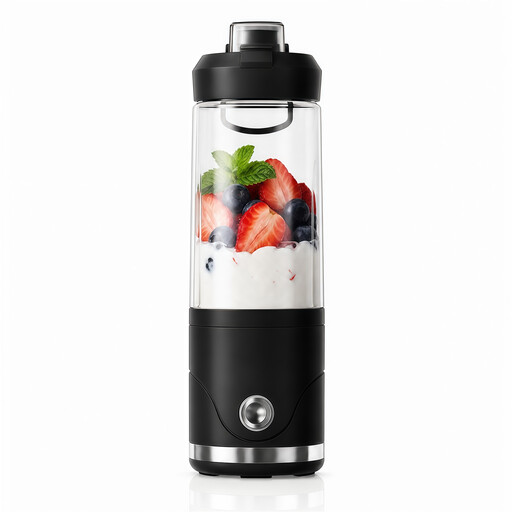
Portable blender, 400 ml, 6 blades
The compact cup design could suit an individual portion; check that the cup is large enough for your recipe.
The product title lists a 400-ml cup and six blades.
The description lists fruit, soft ingredients and liquids as possible ingredients.
View at Joybuy
 No image available
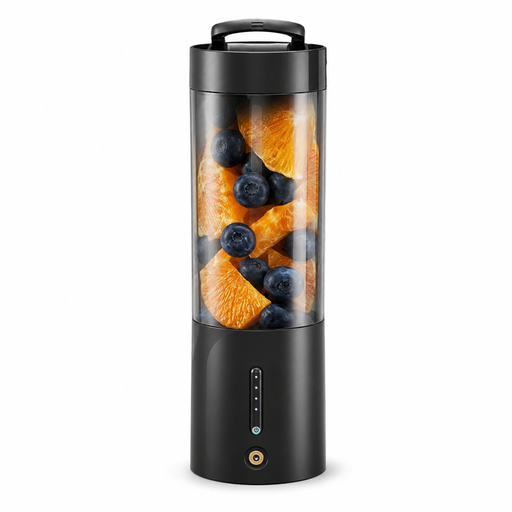
Portable USB-C blender, 650 ml, 6 blades
The compact design is intended for smaller batches; check the stated capacity against your recipe.
The description lists a 650-ml capacity and six stainless steel blades.
The description states that the appliance isn’t designed for hot liquids.
View at Joybuy
 No image available
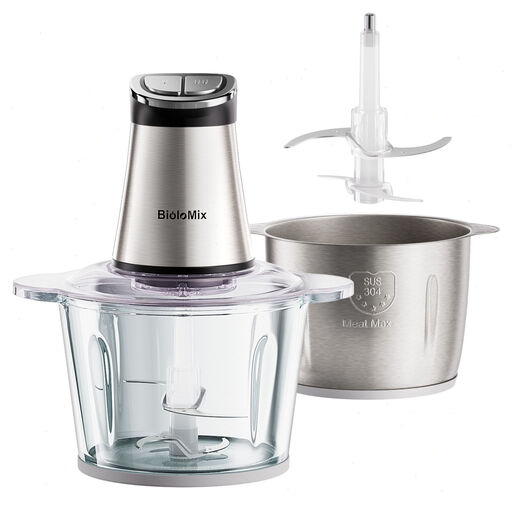
BioloMix AMJ501
The description lists a hand blender for use with a cup or another suitable container.
It specifies two speeds, an 800-ml cup and a 500-ml chopper.
The description also says the set includes a whisk and a chopper.
View at Joybuy
 No image available
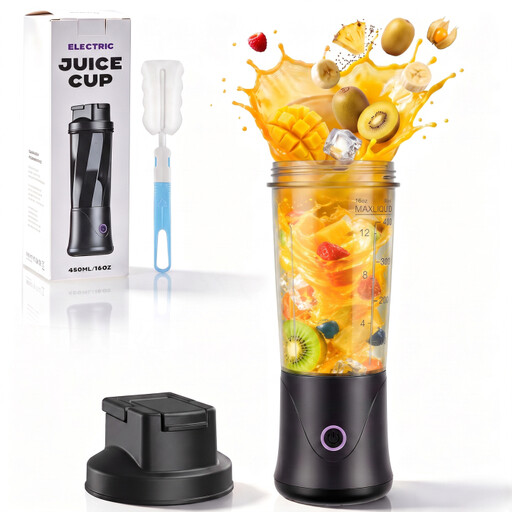
Portable blender, 450 ml, 6 stainless steel blades
The small container could work for an individual portion; check its capacity against your recipe.
The title lists a 450-ml container and six stainless steel blades.
The description lists vegetables and liquids as ingredients.
View at Joybuy
Frequently asked questions
Do I need a blender with a heating function to make chilled tomato soup?
No. Gazpacho made with raw vegetables doesn’t need a heating function: the Federal Centre for Nutrition describes chopping and blending the ingredients without cooking them. A heating function could be another feature to consider for other dishes you plan to make.
How should I store the soup after blending?
Wash your hands and kitchen utensils when handling raw ingredients, and keep the finished soup chilled. The Federal Centre for Nutrition says its gazpacho keeps for one to two days; this isn’t a general guarantee for every recipe. The German Federal Institute for Risk Assessment stresses that keeping food sufficiently chilled is important for limiting the risks posed by harmful germs.
What does the CE marking tell me about a blender?
Your Europe explains that CE marking is only required for products covered by harmonised EU rules that explicitly require it. It isn’t an endorsement of a particular blending result, and doesn’t tell you whether a model will give you the soup texture you want.
What should I do with an old blender?
Don’t put an old blender in your household rubbish. The consumer advice centre describes local collection points and take-back obligations for certain retailers; the right return option depends on factors including the retailer and the size of the appliance.


