Which type of blender suits you

A single portion in a small space

You mainly want to make a banana smoothie during the renovation, and you have limited worktop space. That makes the size and shape of the blending and drinking cup important. WMF lists a 0.6-litre container for the Kult X Mix & Go. The consumer advice centre recommends factoring in your future appliance and socket requirements when planning.

Flexible blending without a large jug

You want to put the appliance away after blending and can use a suitable container you already have. In that case, compare hand blenders with compact cup blenders, checking which container and attachments come with the specific version you’re considering. Braun lists certain MultiQuick 3 versions specifically as smoothie models.

Several portions

You want to make several smoothies in one go and have space and a suitable power socket for a jug blender. Krups lists a 2-litre glass jug for the Perfectmix+ KB403D; the instructions specify lower filling limits for some preparations.

What to consider when buying

Compact blender with a drinking cup

A good fit if: you usually blend one portion and want to drink from the cup too.

The trade-off: A drinking cup saves you having to transfer your smoothie, but limits how much you can make in one go. WMF lists a 0.6-litre capacity for the Kult X Mix & Go.

Hand blender

A good fit if: you want to blend soft ingredients in a suitable container and put the appliance away afterwards.

The trade-off: You guide the blending foot yourself, so you’ll need to allow for splashes and cleaning the container. Smoothie attachments and their compatibility depend on the model.

Jug blender

A good fit if: you want to make several portions or other blends regularly, and have a suitable spot for the appliance and a power socket.

The trade-off: The jug takes up space and needs cleaning. Krups lists a 2-litre capacity for the KB403D; a CHIP hands-on test describes differences between jug blenders when handling challenging ingredients and cleaning.

What to consider What to check before buying Who it matters most to
Worktop space and power socket Check that the appliance, cup and cable will fit where you plan to use it, and make sure there’s a suitable power socket nearby. The consumer advice centre recommends considering appliance and socket requirements when planning electrical work. If I have very little free space during the renovation, I want to be able to fit the appliance and plug it in where I plan to use it. Around 27% of consumers put worktop space and a power socket first.
A single portion without transferring Check the cup size, whether a drinking lid is included and the maximum fill level for the specific version. If I’m making just one banana smoothie, I want to blend it in the cup and drink from it too. Around 27% of consumers prioritise making a single portion without transferring it.
Cleaning Check which parts can be removed and are dishwasher-safe for the exact model. Unplug the appliance before cleaning. If I want to keep cleaning to a minimum during the renovation, I look for easy-to-reach parts and clear care instructions. Around 20% of consumers put ease of cleaning first.
Several portions Distinguish between the stated capacity and the permitted fill level: Krups lists a 2-litre capacity for the KB403D; the instructions specify a maximum of 1.5 litres for thick mixtures and 1.25 litres for liquid mixtures. If several people want smoothies, I want to know the usable capacity per blend before planning portions. Around 13% of consumers prioritise making several portions at once.
Frozen or firm ingredients Check the instructions for the exact model version to see whether the ingredients you want to use are approved. Wattage alone doesn’t prove that a blender will produce a particular result. If I want to use frozen or firmer ingredients as well as banana, I need explicit confirmation that they’re suitable for this specific appliance. Around 13% of consumers put these additional ingredients first.

Common buying mistakes

  • Assuming a high wattage guarantees a great smoothie

    Wattage alone doesn’t tell you how well an appliance handles different ingredients or how much effort it takes to clean. The CHIP hands-on test describes differences between jug blenders in blending tasks and cleaning.

    Start by choosing based on portion size, ingredients and ease of use. Use test results only for the models that were actually tested.

  • Assuming similarly named WMF appliances are the same model

    The WMF Kult X Mix & Go is a mini blender with a drinking cup; the WMF KULT X hand blender is a different type of appliance. Similar product-line names don’t mean that two products are identical.

    Before buying, compare the full model name, appliance type and what’s included.

Brands to consider

WMF

The Kult X Mix & Go is an option for making individual smoothies in a blending and drinking cup.

  • WMF lists a 0.6-litre container, a drinking lid and a safety cut-off if the container isn’t fitted correctly for this model.
  • The container capacity may be a limitation if you’re making several portions. The manufacturer’s specifications don’t prove that it produces a particular blending consistency in an independent test.

Bosch

The German VitaPower range distinguishes between compact Series 2 mini blenders and larger jug blenders in other series.

  • Bosch lists different container sizes and features across its series.
  • Cleaning programmes or ice functions available on larger series can’t automatically be attributed to a compact individual model. Performance figures are manufacturer specifications, not independent test results.

Braun

The MultiQuick 3 range includes hand blender versions, some of which are specifically described as smoothie models.

  • A blending foot is a possible alternative to having a separate jug blender.
  • Braun describes additional smoothie attachments. Check whether one is included and compatible with the specific version you’re considering. Claims about puréeing quality come from the manufacturer.

Philips

The Daily Collection HR2602/00 is a mini jug blender for smoothies and other small blending tasks.

  • Philips lists a 350 W motor for this version.
  • Philips promotes its ability to process hard ingredients. Claims about speed and smoothness are manufacturer specifications, not the result of a comparative hands-on test.

Krups

The Perfectmix+ KB403D is a jug blender for shoppers considering larger quantities as well as individual portions.

  • Krups lists a 2-litre glass jug and provides details of suitable replacement parts.
  • Manufacturer comparisons of blending speed haven’t been independently verified. A jug blender takes up more space than an appliance with a drinking cup.

Joybuy products

This selection is mainly for smoothies made in a blending and drinking cup. If you’re considering a model with extra containers, check that you have enough room for them in your temporary kitchen.

Ninja BlendBoss Portable Blender, Cyberspace

Ninja BlendBoss Portable Blender, Cyberspace

The travel cup is designed for blending and taking a single smoothie portion with you.

The product details list a 710 ml travel cup, three pre-set automatic modes and removable, dishwasher-safe parts. Ice and frozen fruit are listed as suitable ingredients.

View at Joybuy

3-in-1 multifunction blender, 800 W

3-in-1 multifunction blender, 800 W

The travel cup is designed for a single portion, while the additional jug gives you another container option.

The product details list a 600 ml travel cup, a 1,500 ml blending jug and a 300 ml chopping cup. They also specify 24,000 rpm, six stainless steel blades, two speeds and a pulse function.

View at Joybuy
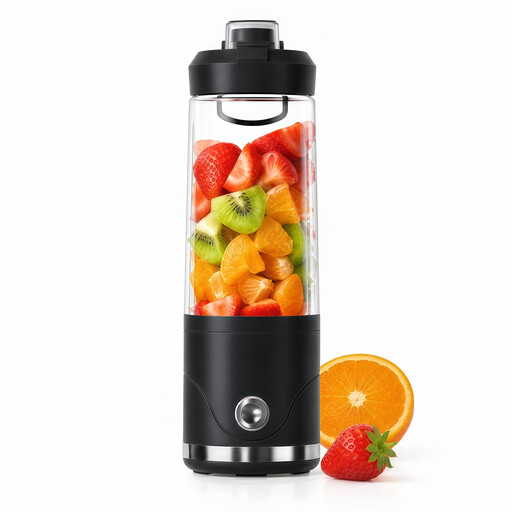
Mini smoothie maker, 650 ml, green/black Black

Mini smoothie maker, 650 ml, Green/black Black

The cup is designed for preparing a single smoothie portion to take with you.

The product description lists a 650 ml cup, a leakproof screw-top lid, battery operation and USB-C charging.

View at Joybuy
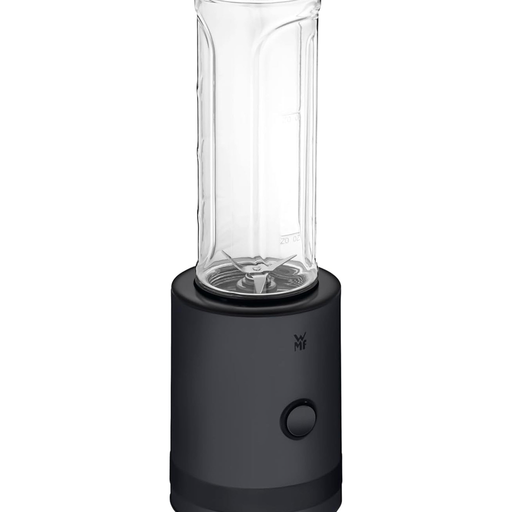
WMF Küchenminis Smoothie-to-Go mini blender, 0.6 l, two containers

WMF Küchenminis Smoothie-to-Go Mini Blender, 0.6 l, two containers

Two blending and drinking containers let you prepare individual portions directly in the cup you’ll drink from.

The product details list two 0.6-litre containers, leakproof screw-top lids and 300 W. The maximum fill level is listed as 600 ml per blending container.

View at Joybuy
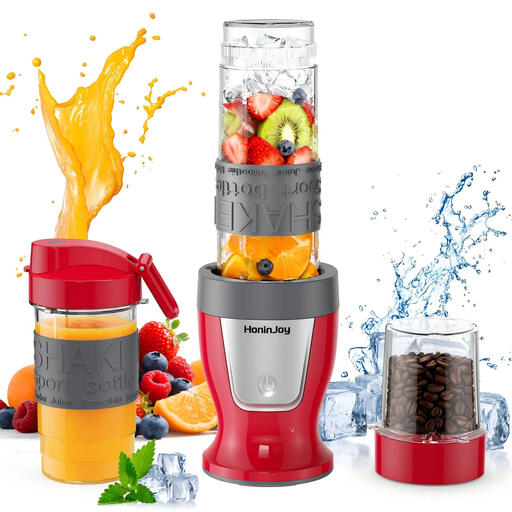
HoninJoy smoothie blender, 650 W, two portable cups

HoninJoy Smoothie Blender, 650 W, two portable cups

The two portable cups are designed for individual smoothies to take with you; banana is listed as a suitable soft fruit.

The product details list a grinding cup, two BPA-free cups with capacities of 20 oz and 14 oz, and a pulse function. The cups and lids are described as dishwasher-safe.

View at Joybuy

Frequently asked questions

Is a mini blender suitable for banana with milk or a plant-based drink?

A compact smoothie blender can be a good option for a single portion made mainly with soft ingredients. Check the cup size and instructions for the specific version. Wattage alone doesn’t tell you what consistency to expect.

What should I bear in mind when using a blender during a kitchen renovation?

Make sure you have a suitable, accessible power socket, and keep the appliance and plug away from spills. Unplug it before cleaning. If it’s damaged or smells unusual, stop using it. This advice doesn’t replace checking that a particular temporary setup is suitable.

Are the container and blades dishwasher-safe?

That depends on the model and the individual part. Check the instructions for the cup, lid and blade unit separately, and only clean the appliance after unplugging it.

Who should I contact if a product is faulty in Germany?

For a fault with a product, the seller is generally responsible for your statutory rights under the legal guarantee; this is separate from any voluntary manufacturer’s warranty. The consumer advice centre gives the general guarantee period as two years. For sales contracts from 31 July 2026, it describes a one-off 12-month extension to the guarantee period if you choose a repair.

Does a blender in Germany need a CE or GS mark?

New electrical appliances covered by low-voltage rules must meet the applicable conformity requirements, including CE marking. The Federal Institute for Occupational Safety and Health gives the relevant ranges as 50 to 1,000 V AC or 75 to 1,500 V DC. The GS mark is a voluntary safety certification mark, not proof of blending performance. The specific legal classification depends on the appliance and can’t be applied universally to every rechargeable blender.