Considerate blenders
You want to make a single serving during working hours without unnecessarily disturbing others. Comparable noise figures and a suitable place to blend matter more to you than high wattage.


For a single serving made with pitted apricots, a compact blender with a sealable blending and drinking cup is a good place to start. If there’s no suitable socket nearby, a rechargeable blender may be an option. The key factors are whether you’re allowed to use it at work, how much you need to make, how easy it is to clean and how noisy it is. Wattage or a product name alone can’t prove that a blender is quiet.
You want to make a single serving during working hours without unnecessarily disturbing others. Comparable noise figures and a suitable place to blend matter more to you than high wattage.
You share a worktop and sink, and want to clean and put away the cup and blades easily after blending.
You need a single serving but don’t have a permanent spot with access to a socket. So you compare portable appliances by cup capacity and charging requirements.
First, check whether and where you’re allowed to use a blender at work. Then compare noise, serving size, cleaning and power options to suit your routine.
| What matters | What to check before buying | Who will find this particularly important? |
|---|---|---|
| Noise and consideration for others | Only compare figures that use the same measurement and test conditions. Also check where and when you’re allowed to blend. | If I blend during working hours, I want to disturb others as little as possible and need a suitable place to do it. Around 28% of consumers prioritise noise. |
| Cleaning and shared hygiene | Check which parts can be removed and are dishwasher-safe for the specific model. | If you share a worktop and sink, you’ll want to clean the cup and blades easily after each serving. Around 22% of consumers put easy cleaning first. |
| Serving size and space | Compare the amount you plan to make with the cup capacity and fill markings. Also measure the space needed for the fully assembled appliance. | If I’m making just one drink, the cup and appliance need to suit the serving size and the space available. Around 22% of consumers prioritise single servings and counter space. |
| Blending without a permanent socket | Check the cup size, charging port and manufacturer’s guidance on the number of blends per charge. | Without access to a permanent socket, I need an appliance that can make a small serving without being plugged in. Around 17% of consumers prioritise this portability. |
| Suitable ingredients | Read the instructions for the specific model variant, especially if you want to use frozen fruit. | If I want to blend frozen fruit as well as fresh apricots, I look for explicit manufacturer guidance that it’s suitable. Around 11% of consumers prioritise suitability for frozen fruit. |
The German Social Accident Insurance (DGUV) points out that even privately owned electrical appliances permitted at work must be included in the inspections for which the employer is responsible. So check that your workplace has approved the appliance and confirmed where it can be used, rather than assuming that a nearby socket means you have permission.
An IMTEST comparison of larger blenders found differences in noise levels, but the results can’t simply be applied to untested mini blenders. A single sound power figure also isn’t automatically comparable with a noise level measured in the workplace.
Only compare figures that use the same measurement and test conditions. Also check with your employer where and when you can blend.
The cup, blade unit and motor base may all have different cleaning instructions. For example, WMF states that the KÜCHENminis Mix on the go is not dishwasher-safe.
Check the care instructions for every part of the specific model variant.
The German Federal Institute for Risk Assessment warns against bitter apricot kernels, which can release hydrocyanic acid.
Remove the stone before blending and use only the flesh.
WMF offers different options for single servings with the Kult X Mix & Go and KÜCHENminis Mix on the go: a 0.6-l blending cup and a 300 ml rechargeable appliance, according to the manufacturer.
Bosch describes the VitaPower Serie 2 MMB2111S as a mains-powered mini blender with a 0.6-l to-go cup. The manufacturer also lists frozen fruit as a suitable use.
The Portable NBP003B is described by the manufacturer as a USB-C rechargeable blender with a 475 ml cup for individual drinks.
Philips describes the Daily Collection HR2600/80 as a mini blender for smoothies and other cold preparations.
The PowerBlend 9 JB9040 is a larger blender option, not a model specifically designed for making single servings in the office.
This selection includes blenders with personal cups for individual smoothies, including portable and USB-C rechargeable models.
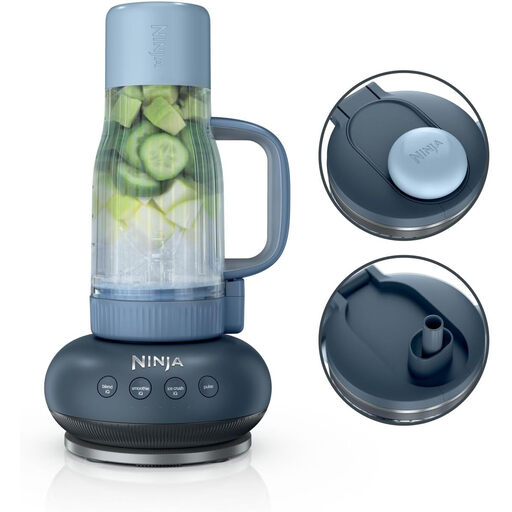 No image available
The blending and travel cup is designed for a smoothie you can take with you without transferring it to another container.
710 ml cup with a leakproof lid; the product description says it’s suitable for fresh and frozen fruit. Removable parts are listed as dishwasher-safe.
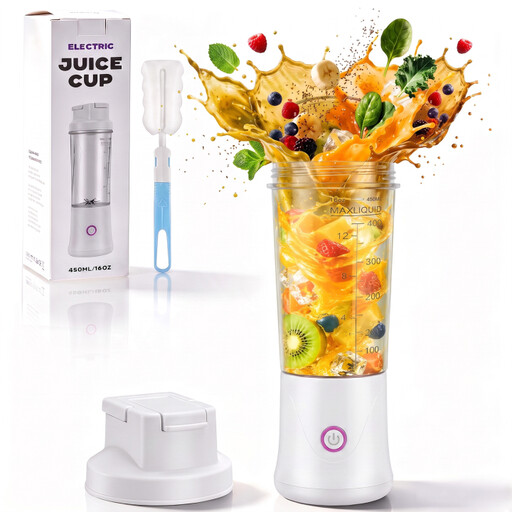 No image available
The cup is designed for individual smoothie servings, whether you’re out and about or at the office.
652 ml Tritan cup with six blades; the product description states that the removable parts are dishwasher-safe.
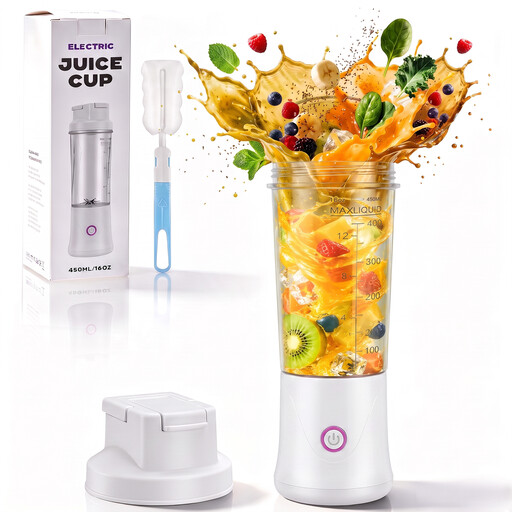 No image available
The description says you can blend individual servings in the personal cup and drink straight from it.
Described as a portable blender for smoothies and fruit drinks; cup capacity isn’t listed.
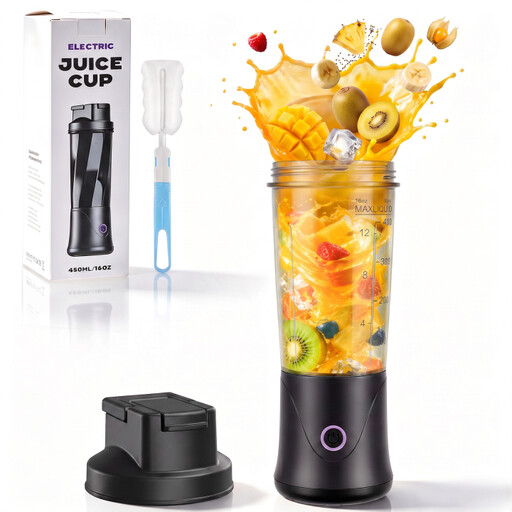 No image available
The product description mentions individual drinks and a blending cup you can pour from.
Described as a portable blender for smoothies and fruit drinks; cup capacity and cleaning instructions aren’t listed.
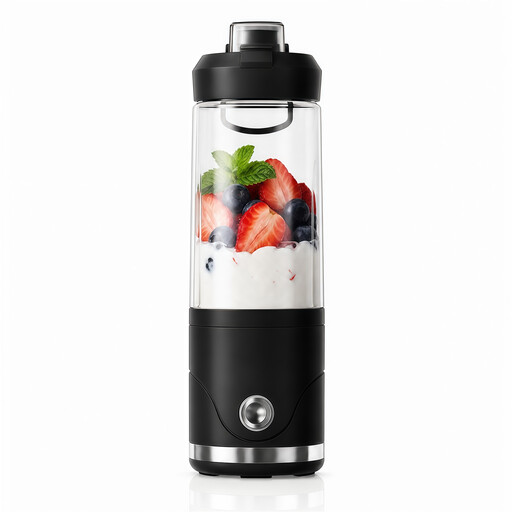 No image available
This rechargeable blender is an option if you want to make a serving without plugging it into the mains.
650 ml cup, six blades and USB-C charging; the product description states that it can make up to 25 blends per charge. A drinking lid is also included.
No. The presence of a socket doesn’t mean you’re allowed to use it. Check that your workplace has approved the appliance and confirmed where it can be used. The German Social Accident Insurance (DGUV) points out that privately owned electrical appliances permitted at work must be included in the inspections for which the employer is responsible.
Use fresh fruit with no signs of spoilage, wash it and remove the stone before blending. The German Federal Institute for Risk Assessment warns in particular against bitter apricot kernels, which can release toxic hydrocyanic acid.
After use, clean the parts according to the manufacturer’s instructions and check whether the specific model is dishwasher-safe. If you’re storing ingredients or the finished drink, handle them hygienically and keep them properly chilled. You can’t infer a general shelf life for homemade apricot smoothies from this guidance.
If the product is faulty, statutory rights against the seller are separate from any voluntary guarantee. Under § 439 BGB, the usual remedies include repair or replacement; the relevant legal conditions and details apply.