If you want to make several spinach smoothies at once after your weekly shop, first check the usable jug capacity and how the blender handles fibrous ingredients. For a single serving, a compact blending cup may be more convenient. With either type, how easily you can clean the food-contact parts and whether the blender suits your ingredients matter more than wattage alone.
Which blender suits you?
Blenders for multiple servings
If you want to make several spinach smoothies together after a trip to the market, compare the usable jug capacity with the quantity you plan to make. Bosch Hausgeräte Deutschland lists a usable capacity of 2.0 l for the VitaBoost MMBH6P6BDE; the F.A.Z. Kaufkompass features a Bosch VitaBoost, but without the full model number.
Single-serve blenders
If you usually blend just one glass and want to take it with you, a blending cup with a drinking lid can be handy. WMF lists a 0.6-l container for the Kult X Mix & Go, which also serves as a drinking bottle.
Everyday blenders
If you regularly blend leafy greens, check how the container and blade area can be cleaned after use. Tefal describes the PerfectMix+ BL871D as having removable blades; Bosch lists a cleaning programme for the VitaBoost MMBH6P6BDE, but does not say that the blades can be removed.
What to look for when buying
First decide whether you’ll usually make one serving or several glasses. Then compare claims about texture with fibrous ingredients and check which parts can be cleaned according to the instructions.
| Buying priority |
What to look for |
Especially important if… |
| Texture with leafy greens |
Tests using comparable fibrous ingredients and the exact model; wattage alone doesn’t prove how well a blender performs. |
If I blend spinach with other fibrous ingredients, I want a better idea of the consistency. Around 36% of consumers focus primarily on texture when blending leafy greens. |
| Quantity per batch |
Compare the usable capacity, fill markings and instructions for the specific model with the quantity your recipe requires. |
If I’m planning several glasses after the weekly shop, the amount I can actually blend is key. Around 29% of consumers prioritise making several servings. |
| Cleaning |
Check separately whether the blades, container and lid are removable and dishwasher-safe according to the instructions. |
If I use my blender regularly, I want to be able to reach the food-contact parts easily after blending. Around 21% of consumers prioritise ease of cleaning. |
| Single servings and worktop space |
Compare the cup size, drinking lid and dimensions with your serving needs and available space. |
If I usually make just one glass, I don’t necessarily need a large jug. Around 14% of consumers focus mainly on single servings and space requirements. |
Common misconceptions when buying a blender
-
Assuming the jug’s stated capacity is the amount you can blend
The jug’s overall capacity and usable capacity may differ. Bosch lists a 2.5-l jug and a 2.0-l usable capacity for the VitaBoost; Tefal’s figures for the BL871D’s usable capacity conflict.
Check your recipe quantity against the fill markings and the instructions for the specific version.
A smaller container or an overestimated filling capacity may mean you need to blend in additional batches.
-
Assuming wattage means a smooth spinach texture
The power rating doesn’t tell you how finely a particular model will blend spinach or other fibrous ingredients.
If consistency matters to you, look for tests using comparable ingredients and check the exact model name.
-
Assuming a cleaning programme means the blades are removable
A programme doesn’t tell you whether the blades can actually be removed. Bosch states that the blades cannot be removed from the VitaBoost MMBH6P6BDE.
Check the instructions for the specific model to find out how to clean each food-contact part.
If the blades or container aren’t as accessible as you expect, you may need to do more cleaning by hand.
Brands to consider
Bosch
The VitaBoost MMBH6P6BDE is a jug blender with features that may be useful when planning multiple servings.
- Bosch Hausgeräte Deutschland lists a usable capacity of 2.0 l and a tamper.
- According to the product details, the blades cannot be removed, so a cleaning programme doesn’t mean that all the parts are detachable.
WMF
The Kult X Mix & Go is a compact option for single servings that you want to take with you in the blending cup.
- WMF lists a 0.6-l container with a drinking lid.
- You may need to blend in several batches to make multiple servings. The container size doesn’t guarantee a particular level of smoothness in spinach smoothies.
Tefal
The PerfectMix+ BL871D is a jug blender for shoppers who want to consider removable blades and a glass jug when choosing how easy a blender is to clean.
- Tefal lists removable blades, a cleaning programme and a dishwasher-safe glass jug.
- The product details give two figures for usable capacity: 1.5 l and 1.75 l. Check the fill markings and instructions for the specific version to make sure it suits your recipe quantity.
Philips
Philips describes the 5000 Series HR2767/00 as a compact alternative for smoothies and occasional recipes with frozen ingredients.
- Philips lists 1,000 W for this model, along with removable, dishwasher-safe parts.
- Claims about a smooth texture come from the manufacturer and aren’t an independent test of spinach smoothies.
Joybuy products for spinach smoothies
The Joybuy models featured here include portable blenders for single servings and jug blenders with containers of up to 1.5 l.
 No image available
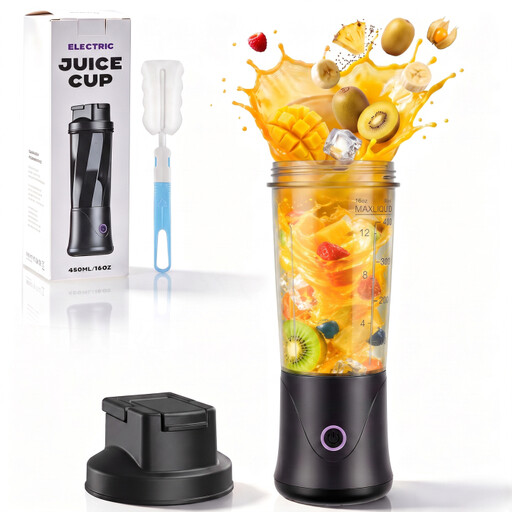
Portable blender, 400 ml, 6 blades
For a single serving if you’re looking for a portable blender rather than a large jug.
The blending cup holds 400 ml. The description recommends using smaller pieces of ingredients and enough liquid; the removable parts can be cleaned separately.
View at Joybuy
 No image available
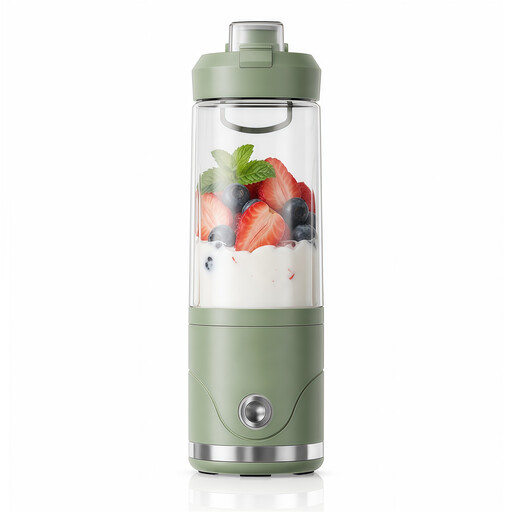
Portable USB-C blender, 650 ml, 6 blades
A good fit for individual smoothies if you’re looking for a portable blender with USB-C charging.
The container holds 650 ml and is described as suitable for single servings. Other listed features include a built-in battery and a self-cleaning mode.
View at Joybuy
 No image available
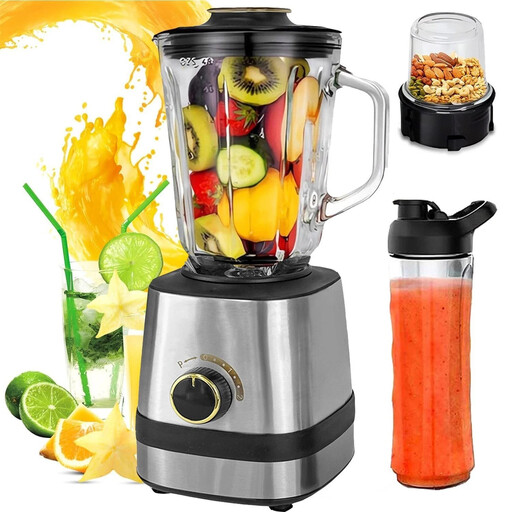
3-in-1 blender, 800 W, 1.5-l container and 600-ml bottle
The jug and separate bottle give you two container options for smoothies.
The container holds 1.5 l; the bottle holds 600 ml. This model has six stainless steel blades, two speeds and a pulse function. According to the description, the removable parts, excluding the motor unit, are dishwasher-safe.
View at Joybuy
 No image available
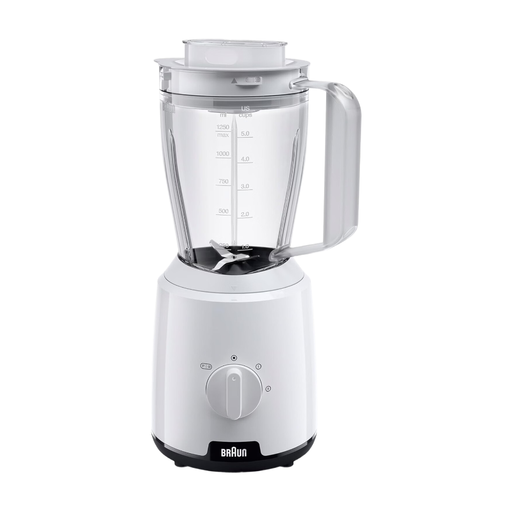
Braun PowerBlend 1 JB1000WH, 1.5-l blending jug
A jug blender for smoothies if you want to factor removable parts into your cleaning routine.
The blending jug holds 1.5 l; listed features include 600 W, two speeds and a pulse function. The container, lid and blades are described as removable and dishwasher-safe. According to the description, the appliance should run for no more than two minutes at a time and be allowed to cool between cycles.
View at Joybuy
 No image available
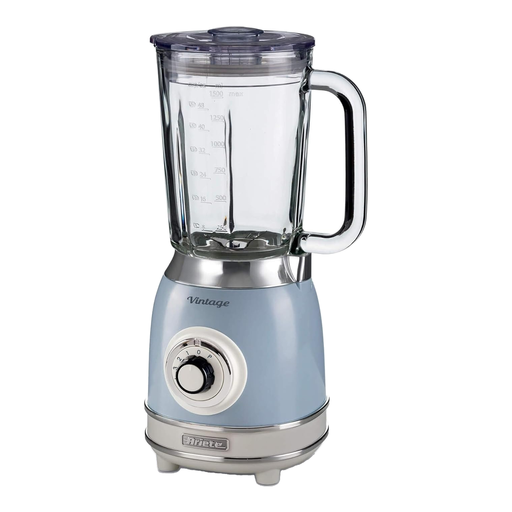
Ariete Vintage 583, 1.5-l glass container
For jug-made smoothies if a glass container and several speed settings are among your selection criteria.
The glass container holds 1.5 l. Listed features include four blades, four speeds, a pulse function and an ice-crushing function; the glass container and blades are described as dishwasher-safe.
View at Joybuy
Frequently asked questions
Can I blend unwashed spinach from the market?
No. The German Federal Institute for Risk Assessment recommends washing vegetables and salad thoroughly before making a smoothie and using only fresh ingredients with no signs of spoilage. Washing reduces potential contamination, but it doesn’t remove pathogens completely.
Should I avoid spinach in smoothies because of nitrates?
No. The German Federal Institute for Risk Assessment does not recommend limiting your vegetable intake. It recommends eating a varied selection of vegetables. Spinach can contain nitrate, which may turn into nitrite if stored in unfavourable conditions; a blender won’t remove this storage-related risk.
Are all parts of a blender with a cleaning programme dishwasher-safe?
No. A cleaning programme doesn’t mean that all parts are dishwasher-safe or removable. Bosch states that the blades cannot be removed from the VitaBoost MMBH6P6BDE; Tefal describes the BL871D as having removable blades and a dishwasher-safe glass jug. Always refer to the instructions for the exact model.
Which EU requirements are relevant to blenders and blending containers?
The relevant requirements of the EU Low Voltage Directive apply to mains-powered blenders with a rated voltage of 50 to 1,000 V AC; this condition does not automatically apply to battery-powered blenders. The applicable EU rules on food-contact materials also apply to parts that come into contact with food. The European Commission and Your Europe explain that CE marking is a manufacturer’s declaration, not a certificate issued by a central EU testing body.


