
Lieferung heute & morgen

Qualitätsgarantie

Willkommens-Angebote freischalten: KOSTENLOSE Lieferung | Bis zu 80 % RABATT | Kostenlose 30-Tage-JoyPlus-Testphase
App herunterladen
Whether you are making smoothies, soup, baby food, salsa or minced meat, blenders and choppers can take care of many kitchen tasks. However, appliances differ considerably in motor power, container size, blade design and permitted operating time. If you focus solely on wattage or pictures of the accessories, you can quickly end up buying an appliance that is unsuitable for your daily needs.
This buying guide explains which specifications really matter and which common marketing traps you should avoid.
Motor power is often prominently advertised. A 500-watt blender may be sufficient for fruit, vegetables and liquids, while harder ingredients or larger quantities require more power and suitable blade geometry. Wattage also does not automatically indicate processing speed or how evenly the ingredients will be blended.
You should therefore also check:
Depending on the model, a universal blender may blend, purée or crush ice. An electric chopper, on the other hand, is generally designed for smaller quantities, vegetables, herbs, meat or nuts. Accessories such as grinding cups, additional blades or a meat-mincer attachment are not automatically included.
You should therefore check the exact configuration before buying. The Bear QSJ-D03W5, for example, specifically states that this version includes a blade set and a blending cup. Product images from other listings may show different equipment.
A container with a capacity of 2.1 litres provides room for family-sized portions. However, the stated maximum liquid capacity of the Ninja Professional Blender is 1.9 litres. This difference is important for safe use. Liquids should never be filled above the marked fill line.
The working capacity also matters with smaller appliances: a mini chopper with a 0.5-litre bowl is suitable for onions, herbs or small portions, but not for preparing a meal for several people.
For smoothies and liquid mixtures, 500 to 600 watts is a practical range for many household applications. If you regularly chop frozen ingredients, ice or larger quantities, an appliance with 1,000 watts or more may be the better choice. The manufacturer’s information on intended use remains decisive.
Pay attention to the required breaks. According to the product information, the Bear QSJ-D03W5 may run for a maximum of 40 seconds at a time, followed by a break of at least two minutes. The Ninja model has a stated maximum continuous operating time of 60 seconds. These specifications protect the motor from overheating and should not be ignored.
Stainless-steel blades are common in everyday kitchen appliances and can be designed to resist rust when properly maintained. The Clatronic UM 3845 features a removable 4-blade stainless-steel assembly. The Bear QSJ-D03W5 uses 304 stainless-steel blades with a multi-layer design.
The following features are also important:
A BPA-free blender may be appealing to consumers who want to avoid food coming into contact with materials containing BPA. The removable 1.5-litre blending container of the Clatronic UM 3845 is stated to be BPA-free. Nevertheless, always check which components the material specification applies to.
A small container is often sufficient for individuals or smaller kitchen tasks. Families and people who prepare meals in advance are more likely to benefit from a capacity of 1.5 to 2 litres. An ice-crush function, pulse setting or several speed settings can extend the range of uses, but they do not replace checking which ingredients are permitted.
A countertop blender is typically designed for liquids, purées and smoothies. A food chopper works with short pulses and is more suitable for chopping onions, vegetables, herbs or meat. A vegetable slicer, on the other hand, produces slices or grated ingredients and should not be confused with a blender.
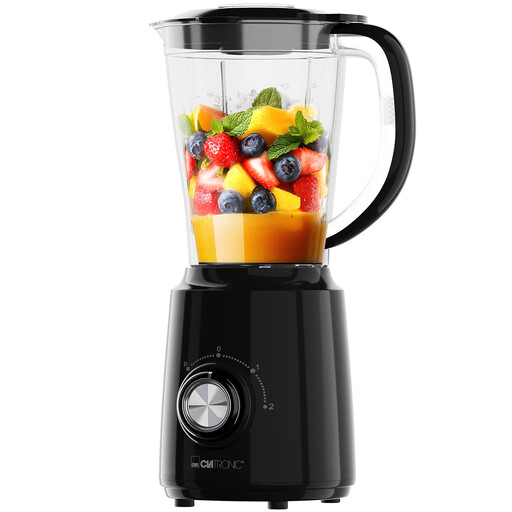
Why this product suits this profile: This universal blender covers everyday tasks such as smoothies, shakes, soups, sauces and purées, and offers three speed settings plus a turbo or pulse function.
The product specifications clearly state the container capacity, materials, blade design and safety cut-off. This makes it easier to compare the equipment with your own requirements before buying.
500-watt motor, 1.5-litre BPA-free container, removable 4-blade stainless-steel assembly and stated ice-crush function.
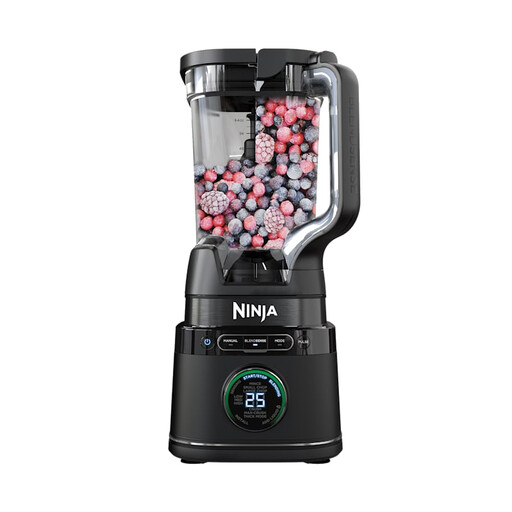
Why this product suits this profile: The combination of 1,000 watts, a 2.1-litre container and six stainless-steel blades is designed for larger portions and frozen ingredients. The maximum liquid capacity is 1.9 litres.
The product description specifies the maximum liquid capacity and the maximum operating time of 60 seconds. It also warns against hot liquids, overfilling and running the appliance empty.
BPA-free container, three speed settings plus Pulse, removable dishwasher-safe parts and information about ice-crush processing.

Why this product suits this profile: Two bowls with capacities of 0.6 and 2 litres allow you to prepare both small and larger quantities. Two blade sets support the separate processing of different ingredients.
The specifications state both bowl sizes, the number of blade sets and the safety lock. The bowls and lids are not heat-resistant or suitable for use in a microwave.
300 watts, two speed settings, glass containers, two sizes and removable bowls that are stated to be dishwasher-safe.
We have put together a complete, regularly updated list of products that fully meet these strict selection criteria and the safety regulations applicable in the EU.
Removable blades, containers and lids make everyday cleaning easier. When handling sharp stainless-steel blades, do not touch the cutting edges directly. The motor unit should only be cleaned with a damp cloth and must not be submerged in water.
For electricity costs, actual operating time is just as important as wattage. An appliance rated at 500 watts that runs for a few minutes each week will typically have a different impact on your electricity bill from a more powerful model used continuously every day. Compare your usage profile with the specified break requirements and operating times.
A meat mincer is designed for minced meat and specific attachments, while a food chopper chops or processes ingredients into smaller pieces. A vegetable slicer is more suitable for slices and grated ingredients. One appliance may cover several tasks, but it cannot replace every specialist function with the same level of performance.
A countertop blender generally uses a tall container and is designed for liquids, smoothies and purées, and for crushing ice depending on the model. A chopper processes smaller quantities in short pulses and is often suitable for onions, herbs, vegetables, meat or nuts. The manufacturer’s information about permitted ingredients is decisive.
There is no reliable one-size-fits-all estimate of an appliance’s lifespan. It depends on how often it is used, the ingredients processed, cleaning and compliance with the required breaks. Overloading, hard unsuitable ingredients and exceeding the maximum operating time can put additional strain on the motor and blades.
Wash all removable parts that come into contact with food according to the instructions. Place the appliance on a dry, stable surface, fit the container and lid correctly, and check the safety lock. Do not exceed either the maximum filling capacity or the permitted operating time. When processing hot liquids, it is particularly important to follow the relevant instruction manual.