Fans of fruit-based frozen treats made with frozen fruit
If you want to blend frozen fruit straight from the freezer, check that the specific appliance and attachments are approved for hard ingredients.


For small quantities of soft, fresh fruit, a slim smoothie maker or a hand blender with a suitable container could be a good choice. Decide based on worktop space, portion size and how easy it is to clean. If you regularly want to chop frozen fruit or ice cubes, check that the specific model and attachments are approved for this use, rather than relying on the wattage alone. Manufacturer information and the F.A.Z. Kaufkompass test show that appliances differ, but there is no one blender that suits every fruit-based frozen treat.
If you want to blend frozen fruit straight from the freezer, check that the specific appliance and attachments are approved for hard ingredients.
For small quantities, it’s not just the space taken up by the base that matters, but also the room needed for cups, lids and attachments.
If you mainly purée soft fruit, easy cleaning after each batch and a blending arm or cup that’s easy to put away may be important.
First, consider whether you want to blend fresh fruit or ingredients that are already frozen. Then compare the appliance’s format, container size and how much effort it takes to clean.
| Key consideration | What to look for | Who it matters most to |
|---|---|---|
| Frozen fruit and hard ingredients | Check the instructions separately for approval to blend frozen fruit and ice cubes, and confirm which blade and accessories are actually included. | If I want to use frozen fruit regularly, I need to know whether this specific model and its attachment are approved for it. Around 36% of consumers prioritise blending frozen ingredients. |
| Worktop space and storage | Compare the footprint and height of the appliance when ready to use, and allow space for cups and attachments when they’re removed. | In a small kitchen, I want to be able to store the base and accessories without them taking up worktop space all the time. Around 29% of consumers focus mainly on the appliance’s footprint and how easy it is to store. |
| Cleaning after blending | Check the instructions to see exactly which parts are dishwasher-safe and how to clean the blade assembly. | After making a batch of fruit-based frozen treats, I want to avoid having to clean lots of parts thoroughly. Around 21% of consumers put ease of cleaning first. |
| Portion size and transferring the mixture | Compare the stated container capacity with the quantity you plan to make; the container’s capacity is not necessarily the same as its maximum usable fill level. | If I’m filling several ice-lolly moulds, I want to make roughly the right amount and avoid unnecessary transferring. Around 14% of consumers prioritise the amount blended in each batch. |
A high wattage doesn’t tell you whether a particular attachment is designed for ice cubes or frozen fruit. Braun, for example, distinguishes between its 350 ml chopper, which isn’t suitable for ice cubes, and a 1.25 l chopper with a special ice-crushing blade.
Check which ingredients are approved, as well as the blade and what’s included with the exact model, instead of judging suitability by wattage.
Compact blenders may come with several cups or attachments, which also need space. Measure the available worktop area and allow room to store parts separately.
Compare the appliance fully assembled and account for cups, lids and accessories when planning where to store it.
A test assesses appliances for the tasks included in that test. The ingredients, quantity and texture you want for your fruit-based frozen treat may be different.
Use test results to narrow down your options, then check the instructions for the exact model and ingredients you plan to use.
The German Federal Institute for Risk Assessment warns of the possible presence of noroviruses and recommends heating frozen berries evenly and thoroughly before eating them. Blending them and freezing them afterwards does not replace this heat treatment.
Follow the German Federal Institute for Risk Assessment’s advice when making recipes with frozen berries, and plan to heat them before blending and freezing.
The range includes compact smoothie makers for smaller quantities.
A hand blender is an alternative if you’re looking for an appliance that doesn’t need a permanent spot on the worktop.
Personal blenders with blending cups may be an option for single portions.
The BlendBoss is a compact blender with programmes for different ingredients.
This selection includes compact smoothie makers, personal blenders and hand blenders for smaller quantities of fruit. If you want to blend frozen ingredients, check that the specific model and accessories are approved for this use.
 No image available
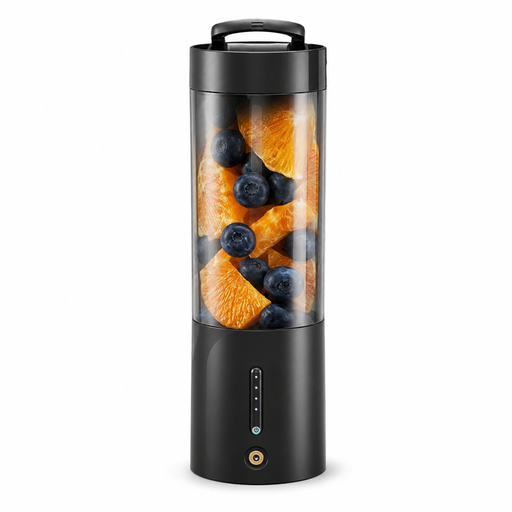
The portable design and 450 ml container may suit small portions of fruit.
The product title lists a PCTG container, six stainless steel blades, 20,000 rpm and magnetic charging. For hard ingredients, the product description recommends cutting them into small pieces and adding liquid.
 No image available
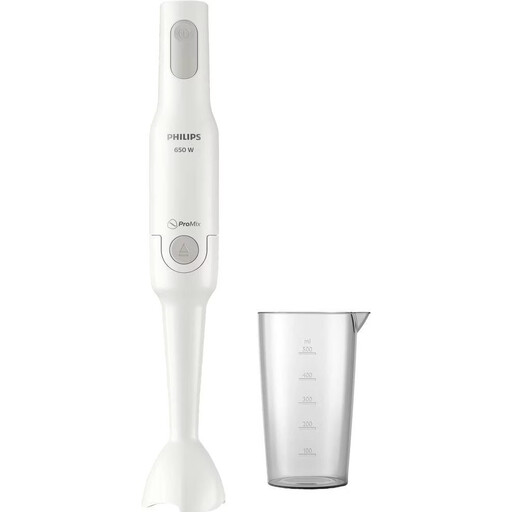
This hand blender may suit you if you want to purée fruit in a separate container.
The product name lists ProMix Technology, 650 W and a blending beaker.
 No image available
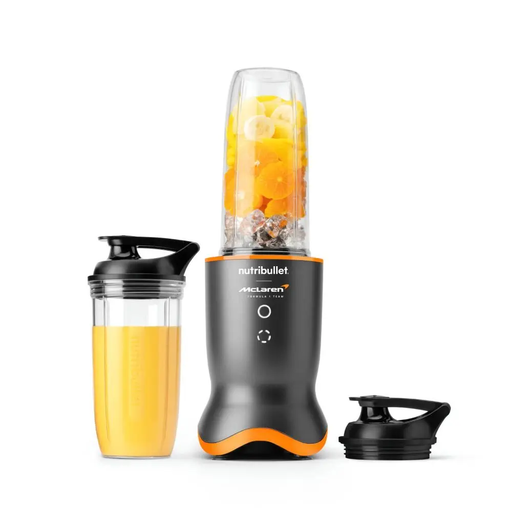
A personal blender may be a good option for individual portions of fruit.
If you want to blend frozen ingredients, check the instructions for this specific version and the accessories supplied with it.
 No image available
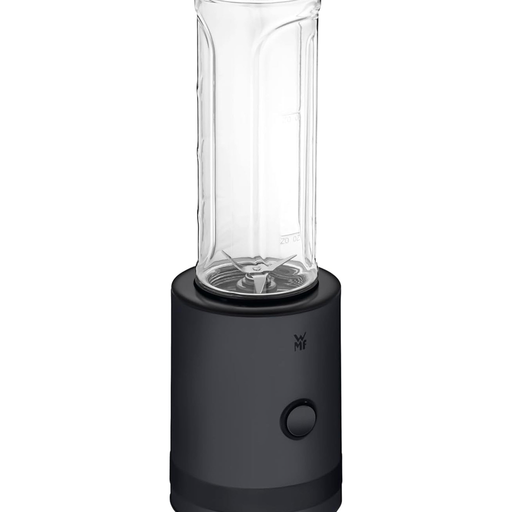
The compact design and two containers may suit small batches of fruit.
The product name lists a capacity of 0.6 l, two blending and drinking containers, and 300 W. WMF lists an ice-crush function for this model; check the instructions before using it with other hard ingredients.
 No image available
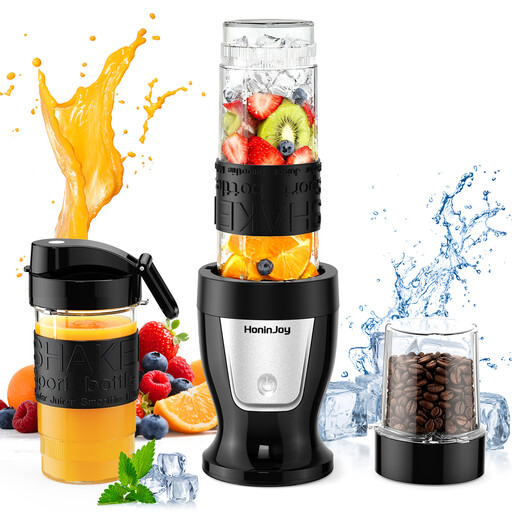
The compact personal blender format may suit smaller quantities of fruit in a small kitchen.
The product name lists 650 W, a grinding cup and two portable cups with capacities of 20oz and 14oz. If you want to blend frozen ingredients, check that the specific version is approved for this use.
No, not if you’re puréeing fresh fruit into a liquid mixture and then freezing it in moulds. If you want to blend ingredients that are already frozen or ice cubes, check that the specific model and attachment are approved for this use. Braun, for example, distinguishes between its 350 ml chopper, which isn’t suitable for this task, and a 1.25 l chopper with a special ice-crushing blade.
Follow the instructions for the specific model. Nutribullet recommends using water and soap to clean the Pro 900 blade; Braun refers users to the instruction manual for details of which parts of the MQ 50051 M are dishwasher-safe.
The German Federal Institute for Risk Assessment recommends heating frozen berries evenly and thoroughly before eating them, as they may pose a risk of noroviruses, among other things. Blending them and freezing them afterwards does not replace this heat treatment.
For ordinary claims relating to defects under German sales law, the limitation period is generally two years from delivery under § 438 BGB; special cases are set out in the legislation. Any additional manufacturer’s warranty advertised is separate from this.
According to Germany’s Federal Ministry for the Environment, obsolete electrical appliances must be handed over to an authorised collection point, such as a local authority recycling centre or a retailer responsible for collecting them. They must not go in your regular household rubbish.