
Lieferung heute & morgen

Qualitätsgarantie

Willkommens-Angebote freischalten: KOSTENLOSE Lieferung | Bis zu 80 % RABATT | Kostenlose 30-Tage-JoyPlus-Testphase
App herunterladen
A blender and chopper can prepare smoothies, soups, sauces, baby food, nuts and vegetables. However, the appliances differ considerably in terms of design, capacity, accessories and cleaning requirements. A high wattage rating alone therefore says little about whether a model is right for your household.
An electric chopper with a high power rating is not automatically suitable for every task. Other decisive factors include blade design, container size, operating time and the permitted quantity of ingredients. A compact mini chopper can be ideal for onions and herbs, while a countertop blender is more practical for larger quantities of liquids.
The stated container capacity does not always correspond to the maximum usable volume. Many appliances require ingredients to be filled below the marked line. A 0.6-litre smoothie maker is suitable for a single serving, but not for preparing drinks for a larger family. If you regularly prepare several portions, choose a kitchen blender or food processor with an appropriate usable capacity.
Blades, lids, seals and attachments can determine how much cleaning is required. A dishwasher-safe blender is convenient, although dishwasher suitability usually applies only to removable parts and not to the motor housing. When buying a blender with a chopper attachment, you should also check whether a whisk, measuring cup or additional grinding containers are actually included.
The wattage rating describes electrical power consumption, not automatically the result achieved with every ingredient. For choosing the right appliance, speed settings, the pulse button and pause instructions in the manual are equally important. Hard ingredients such as nuts or frozen foods should only be processed if the manufacturer explicitly permits this use.
Also pay attention to the maximum operating time. The WMF Küchenminis Smoothie-to-Go, for example, specifies a maximum continuous operating time of one minute. According to the product information, hot liquids must not be added; a maximum temperature of 60 °C applies.
Pay attention to:
The Bear Table Blender LLJ-B12K1, for example, is specified with a 1.2-litre capacity, four stainless-steel blades, a pulse function and a safety lock. The user information also states a minimum liquid quantity of 300 ml and advises against overfilling. Such specific requirements are more relevant to a purchasing decision than general marketing language.
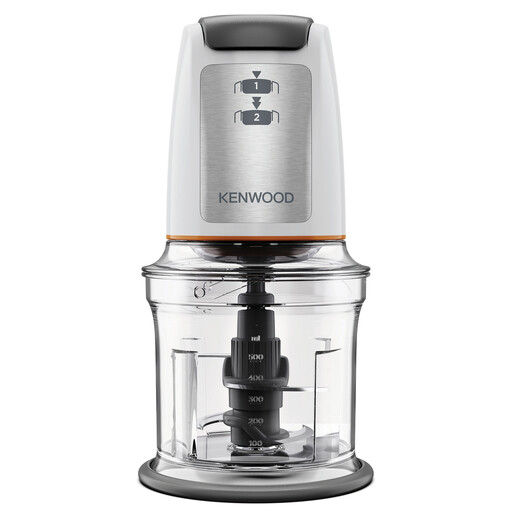
Why this profile fits: This electric mini chopper is designed for households that primarily prepare smaller quantities and need to conserve counter space.
The clearly stated 0.5-litre working capacity helps prevent the appliance from being mistaken for a family-sized solution.
500 watts, two speed settings and a compact 0.5-litre bowl.
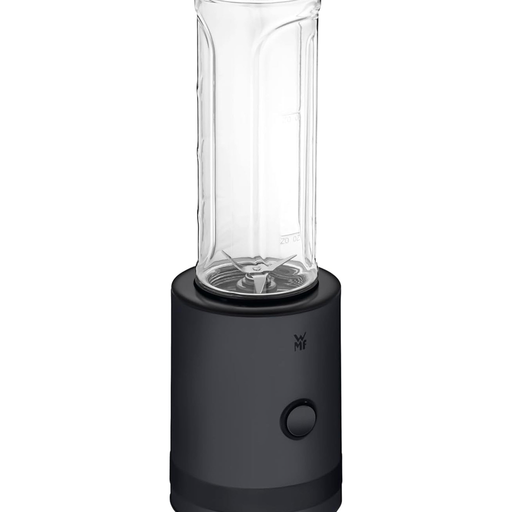
Why this profile fits: Ideal for people who blend single servings and want to take their drink with them afterwards.
The 0.6-litre containers make portion sizes transparent, while the manual specifies a maximum-fill marking and short pulse cycles.
300 watts, two To-Go containers with screw-top lids, and dishwasher-safe bottles and lids.
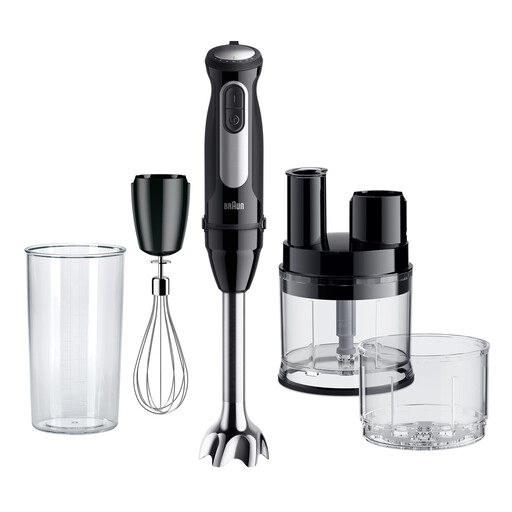
Why this profile fits: This set is designed for users who want to purée, chop, whisk and also slice or grate.
The 25 speed settings plus Turbo, along with the individual attachments, are clearly specified and make it easier to verify the functions.
1000 watts, stainless-steel blending shaft, whisk, chopper, measuring cup and ice-crusher blade.
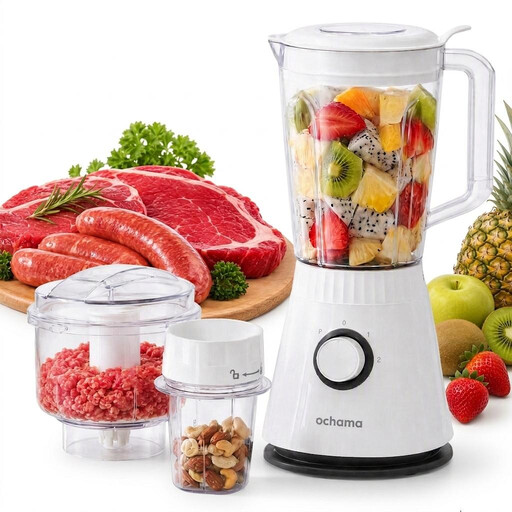
Why this profile fits: The larger container is well suited to households that prepare drinks, purées or ingredients in quantities beyond a single serving.
The 1.5-litre capacity is explicitly stated; users should nevertheless follow the instructions on fill levels, the lid and cleaning intervals.
600 watts, three speed settings, plus specifications for ice crushing, meat, spices and baby food.
Before buying, check which parts are removable and dishwasher-safe. The motor housing of a hand blender should always be cleaned with a damp cloth only. Do not touch the blades until the appliance has been unplugged.
The following applies to all blenders and choppers:
We have put together a current selection of appliances that can be compared by function, capacity, accessories and cleaning requirements.
A hand blender can purée food directly in a suitable container and can usually be stored compactly after use. The right temperature, small portions and the instructions provided by the manufacturer are important. The label “suitable for baby food” does not replace safe food preparation or age- and nutrition-related recommendations.
A smoothie maker with To-Go cups is convenient for single servings and transporting drinks. A countertop blender with a larger container is better suited to families or multiple portions. The key factors are the maximum fill level, suitability for frozen ingredients and how easy the blades are to clean.
There is no reliable way to state a universal service life. It depends on frequency of use, ingredients, overloading, cleaning and adherence to the specified operating times. Observing maximum quantities, processing hard foods only as intended and keeping the motor housing dry will help reduce typical everyday strain.