
Lieferung heute & morgen

Qualitätsgarantie

Willkommens-Angebote freischalten: KOSTENLOSE Lieferung | Bis zu 80 % RABATT | Kostenlose 30-Tage-JoyPlus-Testphase
App herunterladen
A blonde hair colour can be applied at home quite easily, provided the shade, your base hair and the product type are all a good match. Many purchases go wrong, however, not because of the colour itself, but because of unrealistic expectations: a permanent hair colour usually won’t lighten previously dyed hair as much as you’d like, a blonde tint often only covers grey hair to a limited extent, and an anti-yellow shampoo won’t automatically change your base colour.
Names like “Ice Blonde”, “Silver Blonde” or “Cool Ash Blonde” describe the desired shade, but they don’t necessarily guarantee that result on every starting base. Natural blonde hair, dark blonde hair, brown hair and already-bleached hair all react differently. Existing red, gold or yellow pigments also influence the outcome.
That’s why it’s worth checking the colour depth number. The number 6 usually stands for dark blonde, 7 for medium blonde and 8 for lighter blonde shades. Additional digits indicate undertones, although the exact meaning can vary from brand to brand.
An ammonia-free hair colour may contain another alkaline substance, such as ethanolamine. According to the manufacturer, Garnier Olia uses an oil-based, ammonia-free formula. However, ethanolamine is listed in the ingredients. So it’s not just a single marketing claim that matters, but the full ingredients list and the instructions for use.
Even an ammonia-free bleach can contain hydrogen peroxide or persulphates. These substances can irritate the scalp and trigger allergic reactions. Before every application, you must carry out the required allergy test, often 48 hours before colouring.
A purple conditioner, an anti-yellow shampoo or a glossing product deposits pigments onto the hair’s surface or refreshes the tone. They do not replace bleach or a permanent hair colour. On very porous, bleached hair, a heavily pigmented product can also look uneven or temporarily leave a violet or bluish sheen.
Before buying, assess your current hair colour in daylight:
A permanent blonde hair colour changes your hair colour long-term, while a blonde tint lasts for several washes, depending on the product. If you want to cover grey hair, make sure to check the stated grey coverage. According to the manufacturer, products like Garnier Nutrisse 8N, Garnier Olia 110 and Bioclin Bio-Colorist 6 promise up to or 100 per cent coverage of grey or white hair. The actual result depends on your hair texture, the proportion of grey and how evenly you apply it.
Purple pigments are often used to visually neutralise yellow undertones. Blue pigments can be used for orange-golden shades. An anti-yellow shampoo is therefore mainly of interest for light blonde, bleached, grey or platinum blonde hair. Start with a short processing time and adjust it according to the product instructions.
For dry lengths, a conditioner with nourishing ingredients like glycerin, panthenol, oils or cationic conditioning agents can improve manageability. This is a cosmetic care property, not a medical or therapeutic effect.
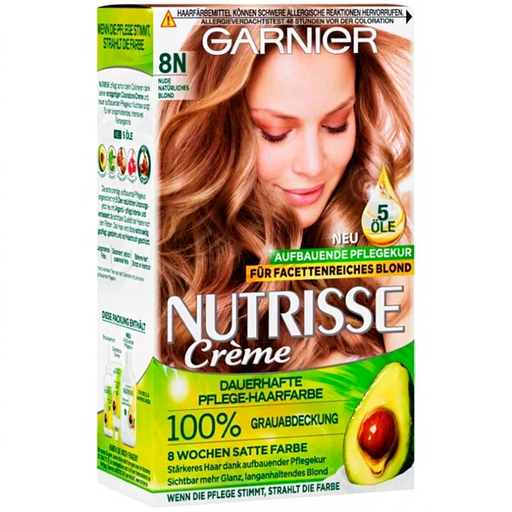
Why this product suits the profile: The creamy, non-drip application is ideal for anyone looking for a natural blonde shade with a long-lasting colour result. According to the manufacturer, this shade is suitable for all hair types and is said to provide full grey coverage.
The colour depth 8N and the description of the undertones make selection clearer than a purely fanciful name. An allergy test is still required before use.
Permanent colour, stated grey coverage according to the manufacturer, and an included care treatment with several oils.
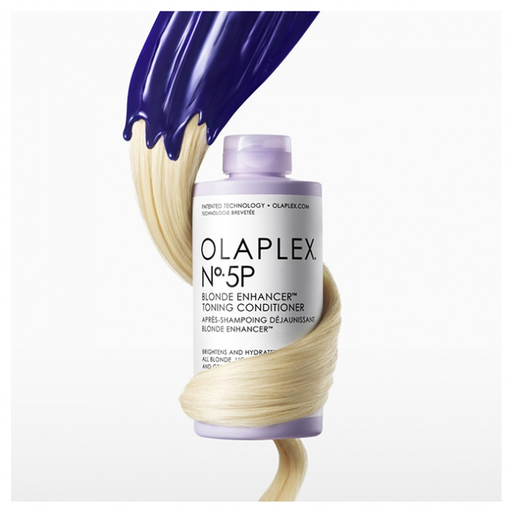
Why this product suits the profile: This purple conditioner is designed for bleached, blonde and grey hair. It’s ideal for users who want to refresh their colour while also benefiting from detangling and conditioning care.
It is categorised as a care and toning product, not a bleach. This means expectations about lightening and longevity are clearly limited.
250 ml content, violet pigments and, according to the product description, a vegan, sulphate-, paraben- and phthalate-free formula.
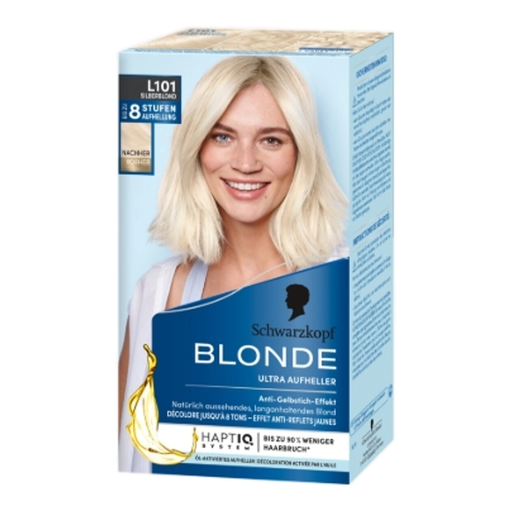
Why this product suits the profile: This bleach is aimed at those who want a significant lightening effect and are happy to follow detailed instructions for home use.
The lightening power is clearly stated as up to eight levels. Nevertheless, bleach is not a risk-free alternative to a tint; the processing time must not be exceeded.
Lightening by up to eight levels according to the manufacturer, plus an included platinum hair mask and anti-yellow components.
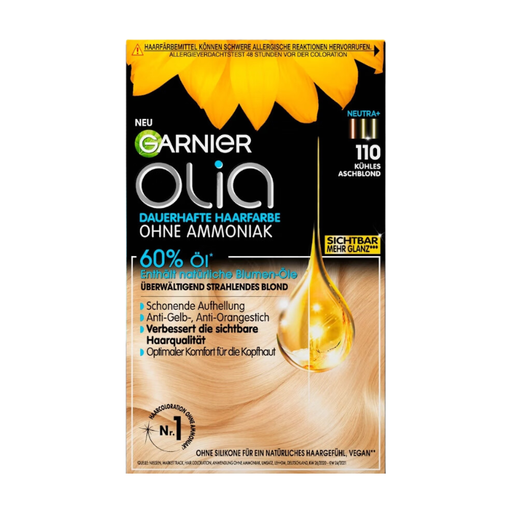
Why this product suits the profile: Suitable for anyone looking for a permanent ash blonde hair colour with a cool tone and stated grey coverage.
The shade is clearly named as 110 Cool Ash Blonde. The “ammonia-free” claim is not equated with being completely non-irritating; the pack warnings remain essential.
Oil-based formula according to the manufacturer, permanent colour and stated coverage of up to 100 per cent white hair.
We’ve put together a full, regularly updated list of products that fully meet these strict selection criteria and the safety regulations in force in the EU.
Before colouring, your hair should be dry and free of heavy styling residue, unless the instructions say otherwise. Useful steps include:
For grey coverage, permanent colours with explicitly stated coverage are more suitable than pure tints. According to the manufacturer, products like Garnier Ultra Crème 8N, Garnier Olia and various products from Bioclin or Syoss offer up to 100 per cent coverage. With a high proportion of grey, it’s especially important to distribute the colour evenly between roots and lengths.
The longevity depends on the product. A glossing can remain visible for up to six washes according to the manufacturer, while a permanent hair colour stays in the hair much longer and is mainly touched up at the roots. Shampoo, water temperature, hair porosity and frequent washing all affect how quickly it fades.
An anti-yellow shampoo, a purple conditioner or a glossing with violet pigments can visually neutralise warm, yellow undertones. These products do not lighten the hair. For orange tones, a blue-pigmented product may be more suitable. Start with a short processing time to avoid over-pigmentation.