
Lieferung heute & morgen

Qualitätsgarantie

Willkommens-Angebote freischalten: KOSTENLOSE Lieferung | Bis zu 80 % RABATT | Kostenlose 30-Tage-JoyPlus-Testphase
App herunterladen
If you are looking for a blood glucose meter for regular self-testing at home, you should consider more than just the device price. Ongoing costs for test strips, how the lancets are handled, data storage and accessory compatibility are also important. An inexpensive blood glucose meter set can prove impractical if test strips are difficult to reorder or can only be used with a specific model.
This buying guide explains which details are genuinely relevant and which typical marketing claims buyers should examine critically.
A blood glucose meter is often just the starting point. With regular use, you will mainly need test strips and lancets. Before buying, check:
For the yuwell Model 660, the supplier expressly states that only test strips for the same model can be used. Different models or brands are not interchangeable.
A blood glucose meter without coding removes one potential input step: after inserting the test strip, you do not need to enter a batch code manually. This can make the device easier to use, but it does not replace correct preparation.
Clean hands, correctly stored test strips, a sufficient blood sample and precise use in accordance with the instructions remain important. Even a meter that switches on automatically should be used only after familiarising yourself with the instructions.
A blood glucose meter with memory can store readings along with the date and time. This can make it easier to keep track of results if you test regularly. It is also important to check whether the device supports average readings or markers for measurements taken before or after meals.
Storage does not replace medical advice. Unusual or contradictory readings should not be interpreted independently. If you are unsure, contact your healthcare practice.
Look for a simple sequence: insert the test strip, apply the blood sample and read the result. The required blood volume is given in microlitres. A lower required blood volume may make the process more comfortable for some users, but it is only relevant when combined with correct blood collection.
The Sinocare Safe AQ Smart Diabetes Testing Kit is described as requiring a blood volume of 0,6 µl and having a stated testing time of 5 seconds. These details come from the product description and should not be equated with an individual medical assessment.
A blood glucose meter with test strips should clearly indicate which strips are compatible. Also check whether the set includes a lancing device and suitable lancets. According to the product details, the yuwell 660 version comes with 50 test strips, 50 lancets, a lancing device, two AAA batteries, a carry case and an instruction manual.
Lancets and test strips are intended for personal use and should not be shared with other people. Used lancets should be placed in a suitable, puncture-resistant container. Follow your local disposal guidance.
The following functions are useful for keeping a daily record:
Anyone looking for a blood glucose meter for people with diabetes should match these functions to their own testing schedule. A simpler model may be sufficient for occasional checks, while a larger memory can be useful if you take several readings a day.
Manufacturers may provide information about testing methods, electrodes, interfering factors or haematocrit ranges. Such details should be verifiable directly in the instructions and conformity documents. Look for the required marking for medical devices and safety information in English.
The ISO 15197 standard describes requirements for blood glucose monitoring systems intended for self-testing. However, specific compliance should always be checked against the manufacturer’s documentation. General advertising claims about accuracy are not a substitute for these documents.
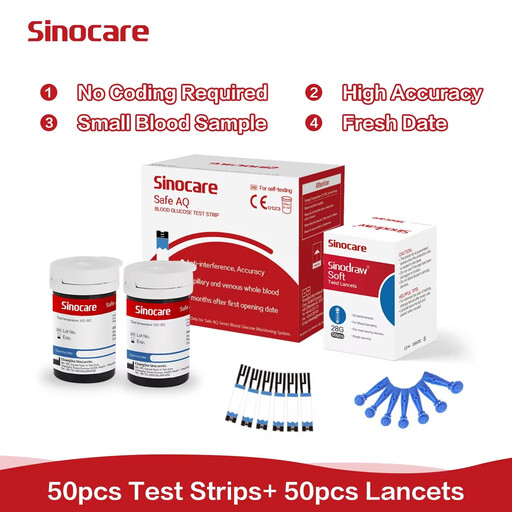
Why this product suits this profile: The set includes 50 test strips and 50 lancets. Automatic activation after inserting the test strip can make it easier to get started with self-testing.
The quantity of consumables is clearly stated. It also specifies that the test strips should be used within six months of opening.
Stated testing time of 5 seconds, required blood volume of 0,6 µl and no manual coding according to the product description.
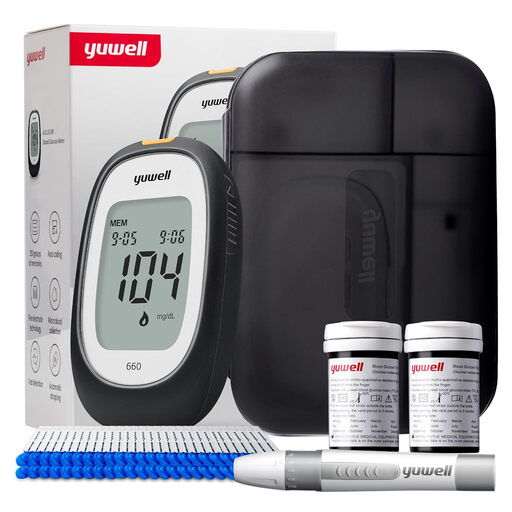
Why this product suits this profile: The stated memory capacity of up to 500 readings, along with averages over several periods, supports structured record-keeping.
The product description expressly states that the test strips have limited compatibility. This makes it easier to plan for the need for suitable accessories later on.
Automatic activation, test strip batch recognition and storage of the date and time according to the manufacturer’s information.
Why this product suits this profile: The adjustable lancing device with five intensity levels and the carry case are useful for people who test regularly or while out and about.
The adjustable lancing device allows you to tailor it to your personal needs. At the same time, you should choose the appropriate setting carefully, following the instructions.
Up to 500 stored readings, periods ranging from 7 to 90 days and before-/after-meal modes according to the product description.
We have compiled a complete, regularly updated list of products that fully meet these strict selection criteria and the safety regulations applicable in the EU.
Before testing, wash your hands with warm water and dry them thoroughly. Food residue or moisture can affect the process. Use a new test strip and check its expiry date. Apply the blood sample to the designated area according to the instructions.
Store test strips in a dry, clean place at the specified temperature. Protect the blood glucose meter itself from moisture, significant temperature fluctuations and direct sunlight. Check the battery level regularly and read the instructions on performance checks.
This depends on your individual treatment plan and the recommendations of your healthcare practice. Some people test at specific times of day, while others test before or after meals. Do not determine how often to test solely on the basis of general online advice.
The expiry date is normally printed on the packaging. An additional time limit may apply after opening. According to the product description, the Sinocare Safe AQ Smart Diabetes Testing Kit should be used within six months of opening. The information provided by the relevant manufacturer always takes precedence.
In addition to the purchase price, the main costs are for test strips and lancets. Compare the cost per reading and check whether replacements can only be ordered for a specific model. A set containing more test strips can make it easier to get started, but this alone says nothing about long-term costs.