
Lieferung heute & morgen

Qualitätsgarantie

Willkommens-Angebote freischalten: KOSTENLOSE Lieferung | Bis zu 80 % RABATT | Kostenlose 30-Tage-JoyPlus-Testphase
App herunterladen
A blood glucose meter for home use should be suitable for regular use, easy to understand and operate, and compatible with consumables that remain readily available. However, focusing only on a short testing time or large memory capacity often means overlooking important ongoing costs and compatibility issues.
Three common purchasing misconceptions frequently lead to unnecessary expenses:
If you want to measure your blood glucose regularly, you should therefore consider not just the meter itself, but the complete blood glucose meter kit.
The most important rule is this: test strips compatible with a glucose meter must be explicitly approved for the relevant model. Test strips from one brand will not automatically fit a device from another manufacturer. Even within the same brand, model numbers can be decisive.
Examples from the product selection:
Before placing your order, check the model name on your existing device. If you are buying a new blood glucose testing meter for diabetics, check whether test strips and lancets are included and which refill packs are available.
Testing time is usually stated in seconds. The selection includes systems with a stated reading time of around 5 or 10 seconds. This can make everyday testing easier, but on its own it says nothing about medical suitability.
The required blood volume is also important. Some product descriptions specify, for example, 0.6 microlitres or 1 microlitre. Automatic blood absorption by the test strip can make the device easier to use, particularly if hand movement is restricted.
You should also look for:
Always follow the enclosed instructions for the specific operating procedure. If you are unsure how to interpret your readings, a medical professional is the right person to contact.
When buying 50 blood glucose test strips, check not only the quantity, but also the shelf life and storage requirements. Some strips are supplied in a resealable container. After removing a strip, close the container again immediately so that moisture and air do not affect the strips unnecessarily.
Before buying, work out:
A complete diabetes testing kit containing a meter, lancing device, test strips, lancets, case and batteries can be practical for beginners. If you already have a working device, however, you may only need model-specific strips.
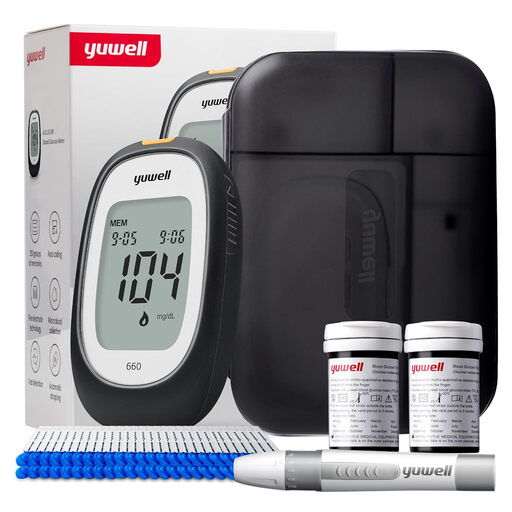
Why this product suits the profile: The kit contains a meter, 50 test strips, 50 lancets, a lancing device, case, batteries and instructions. This brings together the key components needed to get started.
The model number 660 and the exclusive use of compatible yuwell test strips are clearly stated. This makes it easier to check compatibility before buying.
Memory for up to 500 readings and average readings for several time periods, according to the product description.
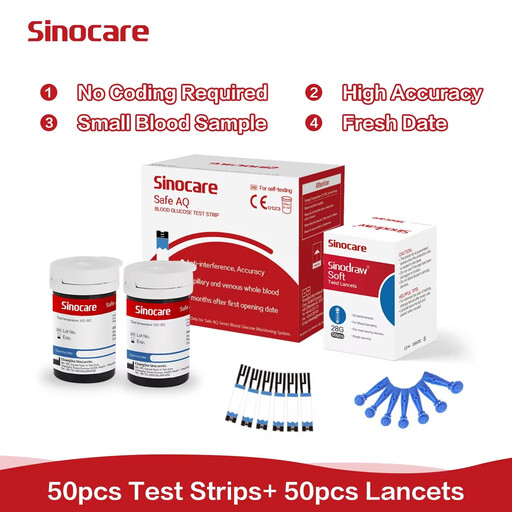
Why this product suits the profile: The stated 5-second testing time, automatic activation when the strip is inserted and low blood sample volume are designed to support a structured testing routine.
The system is identified as a complete kit. Nevertheless, the strips must only be used with the specified Safe-AQ-Smart system.
According to the product description: memory and average readings, plus an adjustable lancing device.
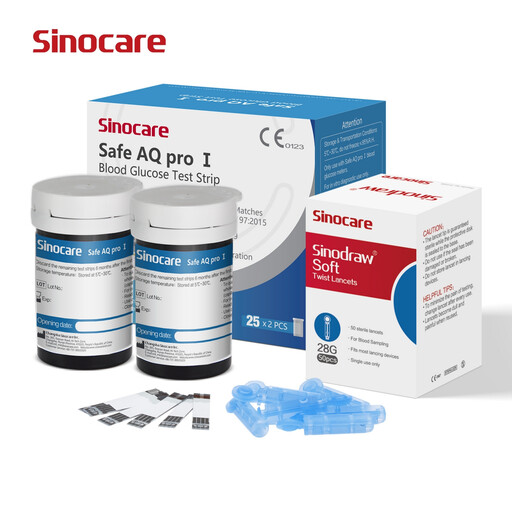
Why this product suits the profile: This refill kit is intended for people who already own a Safe AQ Pro I and test regularly.
The intended device family, pack quantity and stated use are clearly specified. This helps prevent buying the strips without the corresponding meter.
50 test strips and 50 lancets; according to the product description, testing uses automatic coding and has a stated testing time of 5 seconds.
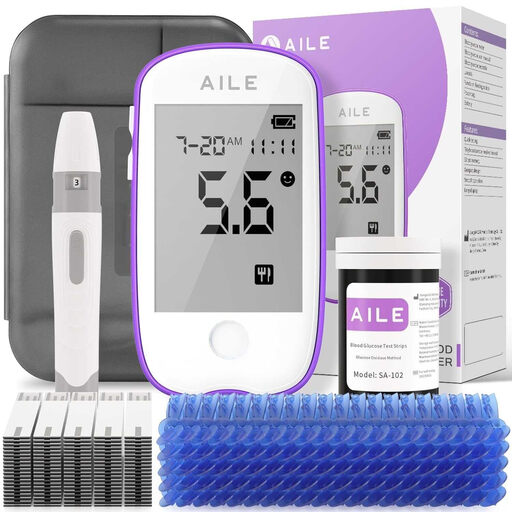
Why this product suits the profile: According to the product description, the kit offers a large display, selectable units of measurement and a lancing device with five depth settings.
The compatible models A608, A601, A606, A616 and W33 are specified. Before buying refills, check the model name of your own device.
Stated testing time of 5 seconds, automatic blood absorption and memory for average readings over several time periods.
We have put together a complete, regularly updated list of products that fully meet these strict selection criteria and the safety regulations applicable in the EU.
When measuring blood glucose, your hands should be clean and dry. Moisture, food residue or incorrect handling can affect the result. Use each test strip only as instructed and check the printed expiry date.
Lancets and lancing devices should not be shared with other people. Used lancets should be placed in a suitable puncture- and break-resistant container. Pregnant women who need increased monitoring should agree their testing schedule and target ranges with their supervising medical practice. A home device is for self-monitoring and does not replace diagnosis or treatment.
This depends on the product and its packaging. The printed expiry date and the manufacturer’s stated period of use after opening are the determining factors. The container should be closed tightly immediately after every strip is removed and stored according to the instructions.
In addition to the purchase price, there are costs for blood glucose test strips, lancets and, where applicable, batteries. A starter kit with 50 strips can be practical initially. For a realistic calculation, however, divide the price of the appropriate refill pack by the number of strips it contains.
No. As a general rule, you should only use strips that are explicitly stated to be compatible. A yuwell model, a Sinocare system and an AILE device each require the test strips designed for them. Before every refill purchase, check the manufacturer, model number and pack information.