
Lieferung heute & morgen

Qualitätsgarantie

Willkommens-Angebote freischalten: KOSTENLOSE Lieferung | Bis zu 80 % RABATT | Kostenlose 30-Tage-JoyPlus-Testphase
App herunterladen
If you want to measure your blood glucose regularly, you need not only a suitable blood glucose meter, but also the right blood glucose test strips. Many unsuitable purchases are not caused by the price, but by details that are overlooked: a strip does not fit the meter you already have, the pack is stored incorrectly after opening, or lancets are not included.
This buying guide explains what people with diabetes, relatives and anyone carrying out regular checks at home should look out for. The selection is based on clear information such as compatibility, blood volume, testing time, pack size and contents.
Blood glucose test strips are generally model-specific. A strip for a Sinocare Safe AQ Pro I will not automatically work with a Safe-Accu2 meter. Yuwell also expressly states that its own strips must not be used with meters from other brands or other model ranges.
Before buying, you should therefore:
The term compatible test strips therefore does not mean that a product will fit every blood glucose meter. The decisive factor is the device allocation specified by the manufacturer.
Blood glucose test strips, 50 strips are a practical pack size for many users. However, if you only test occasionally, an opened container may remain in use for a long time. Moisture, heat and a lid that is not fully closed can affect storage conditions.
Pay attention to:
Some products require the bottle to be used within a specific period after opening. This information can be found on the label or in the instructions and should take priority over the unit price alone.
A short testing time can make everyday use easier. However, operation, sample application and meter settings must all work together. Claims such as 5 or 10 seconds refer to the product description and do not replace proper instruction or medical assessment.
A small required blood volume is only practical if the blood sample is obtained correctly. The included lancets must fit the lancing device system and should not be shared with other people.
First check whether the test strips for the blood glucose meter are expressly intended for your model. Some systems do not require manual coding. This can eliminate an additional step during use, but it does not change the fact that the strips are model-specific.
Sinocare, for example, offers different product ranges, including Safe AQ Pro I, Safe AQ Smart, Gold AQ Plus and Safe Accu2. The strips in these ranges are not automatically interchangeable.
The required sample volume is given in microlitres. Product descriptions may specify values such as 0.6 µl, 0.8 µl or 1 µl. A smaller volume can make handling easier, provided the blood sample reaches the intended application area cleanly.
The following points are also relevant for daily use:
In Germany, an mmol/l blood glucose test or a meter displaying results in mmol/l is relevant to many users. Check whether the version you want supports this unit of measurement. Some meters allow you to choose between mg/dl and mmol/l, while others are supplied in a fixed version.
The test strips should remain in the sealed original container. Remove only one strip at a time and close the container immediately afterwards. Do not use strips after their expiry date or from damaged packaging.
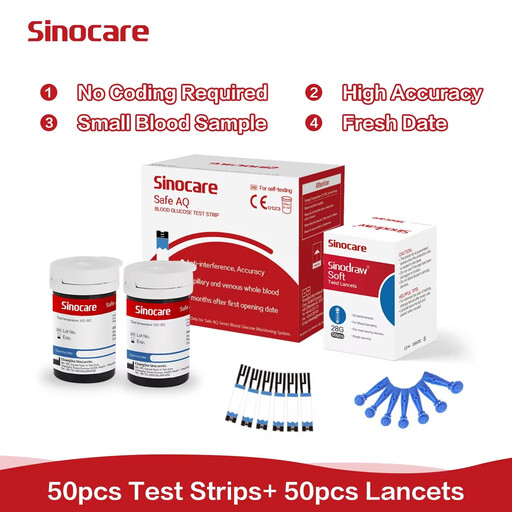
Why this product suits this profile: The blood glucose meter set includes a meter, lancing device, 50 test strips and 50 lancets. This means you do not need to put the basic equipment together separately.
The contents clearly show which components are included. The strips are intended for the Safe AQ Smart system and are not designed as a universal product.
According to the product description: 0.6 µl blood volume, no manual coding and results displayed after approximately 5 seconds.
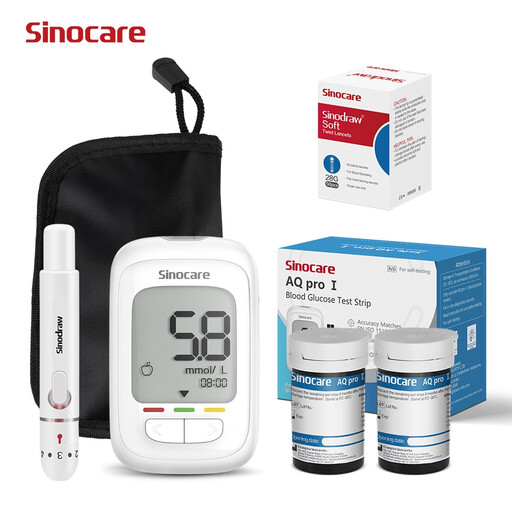
Why this product suits this profile: The set combines the matching Safe AQ Pro I meter with 50 test strips, 50 lancets, a lancing device and a case for organised use at home or on the go.
The specific device allocation is stated. This helps you avoid the common mistake of buying supposedly interchangeable strips.
According to the product description: automatic coding, 5-second testing and a stated haematocrit range of 10 to 70 per cent.
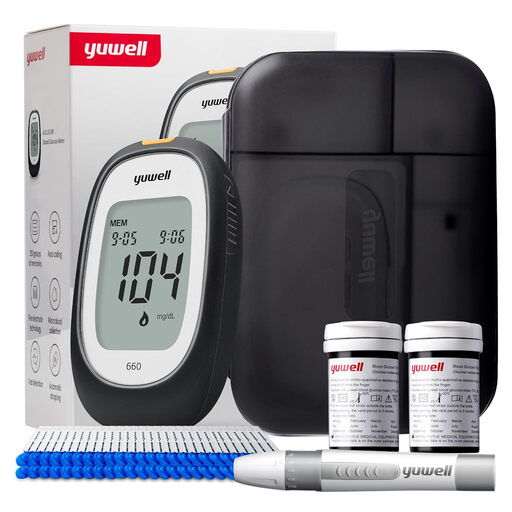
Why this product suits this profile: For regular testing, the set offers memory functions and includes 50 test strips and 50 lancets.
The product description expressly states that the meter is designed for yuwell test strips for the matching model. Switching to strips from another system is therefore not intended.
According to the product description: storage of up to 500 readings and automatic activation when the strip is inserted.
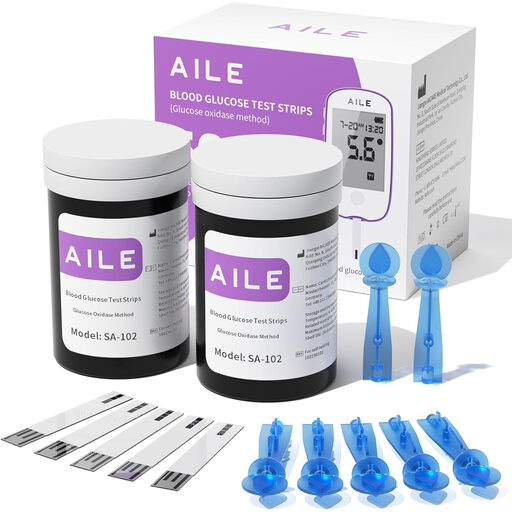
Why this product suits this profile: The pack is intended for users of the specified AILE models A608, A601, A606, A616 and W33, making it suitable for regular testing.
The supported model numbers are listed clearly. This allows you to compare them directly with your existing meter before buying.
According to the product description: no manual coding, automatic sample absorption and a stated testing time of 5 seconds.
Before using the meter and blood glucose test strips for the first time, read the instructions for use. Wash and dry your hands, use an undamaged strip and apply the blood sample to the designated area. Used strips and lancets should be placed in a suitable sealable container and kept out of children’s reach.
Readings are intended for your personal records. They do not replace a medical diagnosis or treatment. If readings are unusual, contradictory or unexpected, seek medical advice.
We have put together a complete, regularly updated list of products that fully meet these strict selection criteria and the safety regulations applicable in the EU.
The expiry date is shown on the packaging. A limited period of use after opening may also apply. The information provided for the individual product is definitive. The container should be sealed tightly immediately after each strip is removed.
Generally, no. Test strips are designed for specific meters and model ranges. Only use strips that are expressly described as compatible in the product description or instructions for use.
In addition to the meter, you will have ongoing costs for test strips and lancets. As a guide, you can calculate the cost per test by dividing the pack price by the number of strips. Also take into account the shelf life after opening and how often you actually need to test.