
Lieferung heute & morgen

Qualitätsgarantie

Willkommens-Angebote freischalten: KOSTENLOSE Lieferung | Bis zu 80 % RABATT | Kostenlose 30-Tage-JoyPlus-Testphase
App herunterladen
Regularly monitoring your blood pressure at home is a crucial part of health management for many people. However, the market for blood pressure monitors can be overwhelming. Countless models with a wide array of features make the choice difficult. Often, well-intentioned purchases lead to frustration because the device measures inaccurately or is too complicated to use. This guide will help you avoid the common pitfalls and find a device that truly fits your needs.
Before you make a decision, you should be aware of the most common issues that lead to unreliable results or cumbersome use.
To make an informed decision, you should focus on a few crucial technical parameters.
An accurate blood pressure monitor is the fundamental prerequisite for meaningful self-monitoring. Look for devices that are certified as a medical product (e.g., under the EU Medical Device Regulation, MDR). Such devices are subject to strict legal requirements for measurement precision. Some manufacturers also have their models validated by independent institutions like the German Hypertension League (DHL). This information can usually be found in the manufacturer's product description.
The choice between an upper arm blood pressure monitor and a wrist blood pressure monitor depends on personal preference and measurement accuracy.
Regardless of the type, the correct cuff size is essential. Measure your upper arm or wrist circumference and compare it with the manufacturer's specifications. Many models come with universal cuffs for common sizes, but special sizes are often required for very slim or large arms.
Modern digital blood pressure monitors offer more than just displaying systole and diastole. Some features provide real added value:
Here are some recommendations tailored to different user profiles that avoid the pitfalls mentioned above.
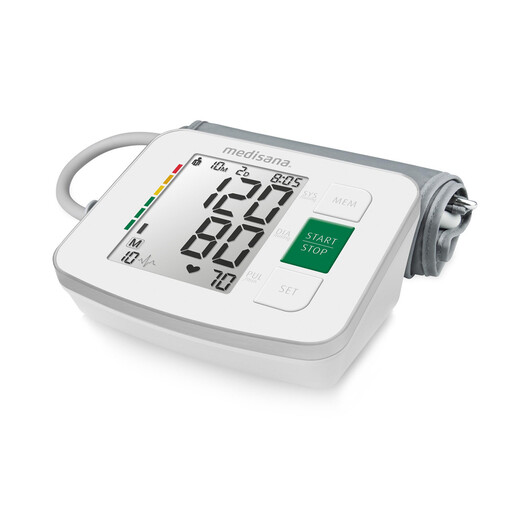
Why it's a great fit: Ideal for users who want a reliable and straightforward upper-arm monitor without app connectivity. It focuses on core functions and is easy to operate.
Avoids the complexity of superfluous smart features and offers a clear solution for multi-user households with 90 memory slots for two people.
Large, easy-to-read digits and a traffic-light colour scale for simple classification of readings. Includes arrhythmia detection.
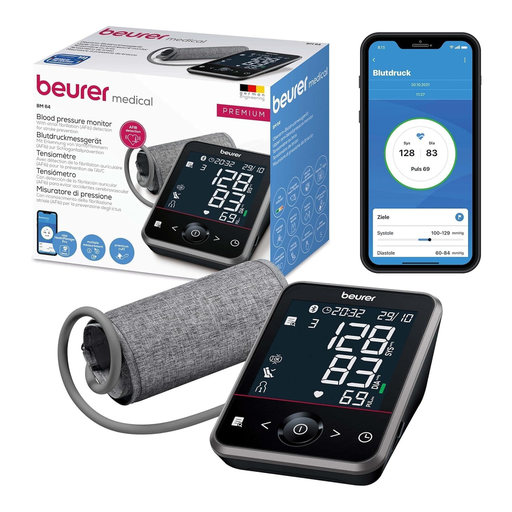
Why it's a great fit: Perfect for users who want to manage their health data digitally and analyse long-term trends. The seamless app integration makes documentation effortless.
Bluetooth transfer to the "Beurer HealthManager Pro" app automates data storage and prevents manual entry errors. The cuff for 22-42 cm fits most adults.
Advanced arrhythmia and atrial fibrillation (AFib) detection to support stroke prevention. Syncs with Apple Health and other health platforms.
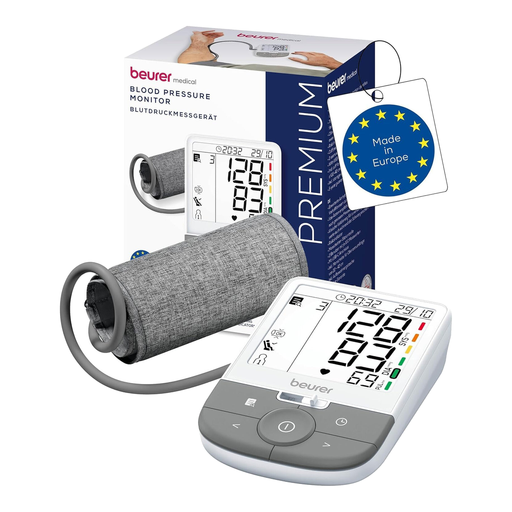
Why it's a great fit: For users who value maximum measurement reliability and advanced features for heart health monitoring, including atrial fibrillation detection.
Addresses the accuracy pitfall through clinical validation, a patented resting indicator, and a cuff fit check to minimise application errors.
Advanced arrhythmia detection (AFib) for stroke prevention. Memory for 2 users and calculation of average values for comprehensive analysis.
We have compiled a complete, up-to-date list of products that fully meet these strict selection criteria and German safety regulations.
Upper-arm blood pressure monitors measure blood pressure on the upper arm, which generally leads to more accurate and stable results as the measurement is taken closer to the heart. Wrist blood pressure monitors are more compact and easier to transport, but they require very precise positioning of the wrist at heart level to avoid measurement errors. For regular monitoring at home, an upper-arm device is often recommended.
The frequency of measurements should always be discussed with a doctor. As a general guideline for people who need to monitor their blood pressure, it is often recommended to measure at the same time every day, for example, in the morning before taking medication and in the evening. It is important to observe a rest period of about five minutes before measuring.
The battery life depends heavily on the frequency of use and the device model. Most devices run on AA or AAA batteries and last for several months with daily use. Some models offer the option of mains operation or are equipped with a rechargeable battery, which can be a practical and more environmentally friendly option for very frequent use.